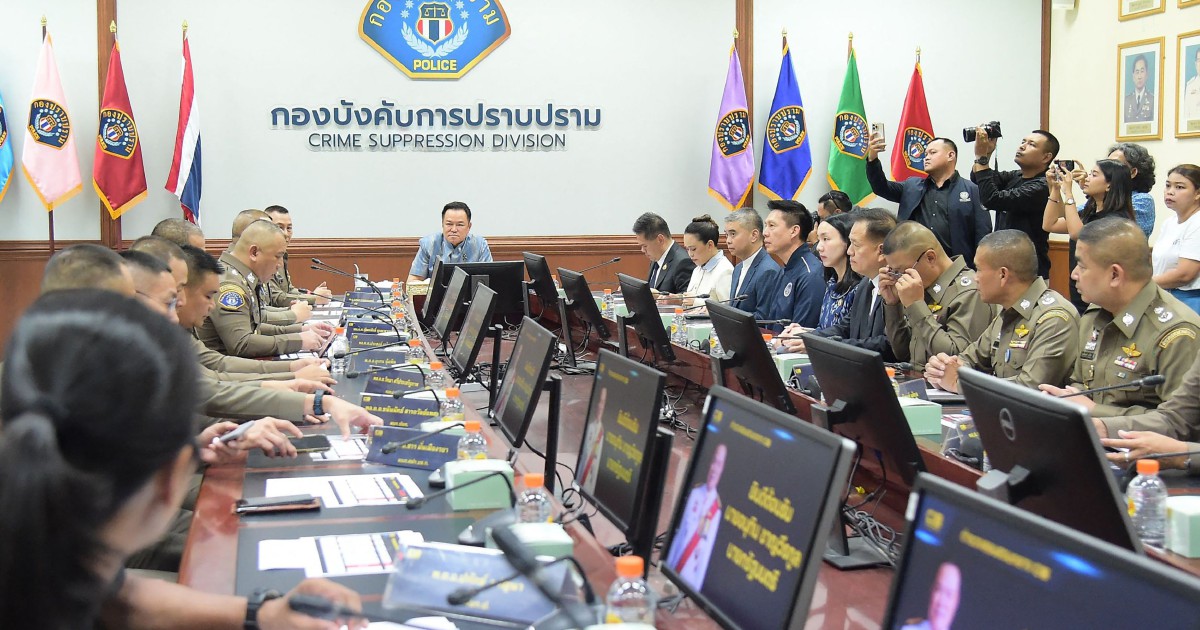
Thailand's civil service faces unprecedented upheaval as authorities prepare to suspend nearly 6,000 officials caught up in a sprawling examination fraud investigation. The announcement, made by Thai officials on Thursday, signals a significant escalation in what has become one of the most serious integrity crises to affect the kingdom's bureaucracy in recent memory. The probe, which has already culminated in three arrests, appears to be spreading across multiple government agencies and testing the institutional capacity of oversight bodies to manage such a large-scale misconduct case.
The cheating scandal strikes at the heart of Thailand's bureaucratic system at a time when public trust in government institutions remains fragile. Civil service examinations are meant to serve as a meritocratic gateway for recruitment and promotion within the state apparatus, ensuring that positions are filled by qualified candidates based on ability rather than patronage or corruption. When the integrity of these examinations is compromised, the entire legitimacy of the system comes into question. The scale of the current investigation—involving thousands of suspects—suggests that the cheating may not have been isolated incidents but rather an organised or systemic problem within the examination framework.
The Thai government's decision to pursue comprehensive suspensions demonstrates a willingness to take decisive action against institutional wrongdoing, at least in its public messaging. However, the suspension of nearly 6,000 officials simultaneously presents significant operational challenges for government administration. Removing this number of personnel from active duty, even temporarily, will strain the capacity of Thai ministries and agencies to deliver basic services. The government will need to carefully balance accountability measures with the practical necessity of maintaining governmental function across the country.
For Southeast Asian observers, Thailand's civil service corruption case carries broader implications for regional governance standards. As one of the most developed economies in Southeast Asia with a relatively established bureaucratic infrastructure, Thailand's challenges with institutional integrity filter concerns throughout the region. Other nations facing similar pressures around meritocracy and anti-corruption initiatives will be watching closely how Thai authorities manage both the investigation and the administrative fallout. The case also underscores how examination fraud, even in the civil service context, connects to broader patterns of corruption that may extend into procurement, licensing, and regulatory decisions that affect business operations and investor confidence.
The investigation's focus on civil service examinations reveals a critical vulnerability in governance systems. Unlike cases involving individual bribery or embezzlement, examination cheating suggests coordinated breach of protocols that presumably multiple officials knew about or enabled. Whether the cheating involved collaborative test-taking, leaked examination materials, tampering with answer sheets, or manipulation of scoring systems remains a question with significant implications for how thoroughly the examination process itself needs reform. Each variant of fraud points to different systemic weaknesses and would require different preventive measures going forward.
The three arrests already made represent the visible enforcement action, but the suspension of 6,000 individuals suggests that investigators have identified a much broader circle of people with varying degrees of involvement or culpability. This distinction matters considerably. Some officials may have been knowingly complicit in cheating, others may have obtained positions through fraudulent means without necessarily orchestrating the scheme, and still others might be tangentially involved simply through proximity to the scandal. The Thai authorities will face pressure to differentiate between these categories and apply proportionate disciplinary responses, rather than applying uniform suspensions across the board.
For Malaysian stakeholders and businesses operating in Thailand, the stability of the Thai civil service becomes directly relevant. Foreign investment requires reliable regulatory frameworks and consistent application of government policies. When large segments of the bureaucracy face suspension, it creates uncertainty about who is authorised to make decisions, approve permits, or enforce regulations. Malaysian companies with operations in Thailand may experience delays in licensing renewals, customs clearances, or compliance verifications during this period. The suspension wave could also affect bilateral administrative cooperation and coordination between Thai and Malaysian government agencies on matters from trade to border management.
The political dimension of this scandal warrants careful consideration. Thailand's recent political history includes military interventions and constitutional changes that have periodically restructured governmental institutions. Civil service examinations and recruitment processes are often targets of reform or manipulation during these transitions, and questions about when this cheating began, whether it predates recent political changes, and whether current authorities are using the investigation selectively could shape public perception of the response. A credible commitment to investigating and disciplining misconduct regardless of political affiliation would strengthen institutional confidence, while any perception of selective prosecution could deepen cynicism about anti-corruption efforts.
Institutional reform will likely follow once the immediate investigation concludes. Thailand may need to implement technological safeguards for examination administration, including secure digital examination systems, biometric verification, or third-party proctoring arrangements. The examination boards themselves may require restructuring to prevent internal collaboration on fraud, and oversight mechanisms for monitoring examination integrity throughout the process could be strengthened. These reforms, if implemented thoughtfully, could serve as a model for other Southeast Asian nations grappling with similar civil service integrity challenges.
The suspension of 6,000 officials also raises questions about due process and appeals mechanisms. Thai authorities will need to ensure that officials have adequate opportunity to contest their suspension and demonstrate their innocence or lack of substantial culpability. Without credible channels for challenging administrative decisions, the broad-based suspensions risk appearing as administrative overreach rather than proportionate discipline. The transparency with which Thai authorities communicate their investigative findings and disciplinary criteria will significantly influence how the public, other civil servants, and the international business community assess the legitimacy of the response.
Moving forward, the test of Thailand's institutional integrity will lie not merely in the scale of suspensions announced but in the consistency and thoroughness with which investigations are conducted and appropriate consequences are applied. The civil service examination fraud scandal, for all its institutional damage, presents an opportunity for Thailand to demonstrate that its governance structures can identify, investigate, and rectify significant wrongdoing. How effectively the kingdom executes this response will influence regional perceptions of Thai governance quality and potentially affect the country's competitiveness in attracting and retaining international investment.

