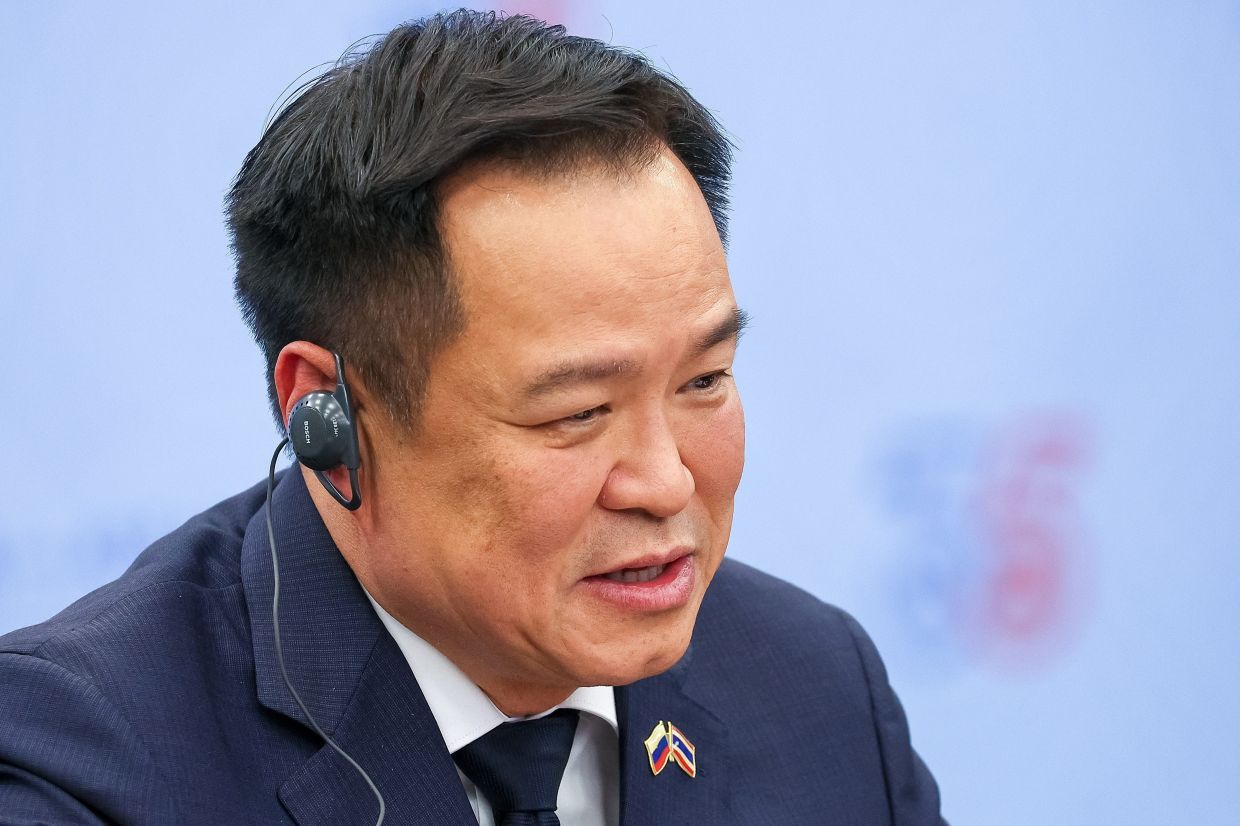
On June 27, Thailand's Prime Minister Anutin Charnvirakul completed his first hundred days in office since being sworn in on March 20 following his re-election victory. The 59-year-old leader, who first assumed the premiership in September 2025 after the Paetongtarn Shinawatra government collapsed before winning a fresh mandate in February 2026 general elections, has navigated a tumultuous early period marked by international crises and domestic economic pressures. Yet observers increasingly debate whether his administration amounts to competent caretaking or represents a missed opportunity for the transformative change Thailand's economy desperately needs.
The government's most immediate challenge emerged with stark urgency when United States and Israeli military operations against Iran on February 28 triggered severe disruptions to global oil supplies. The ensuing panic buying left petrol stations unable to meet demand while crude prices climbed above US$100 per barrel, exposing Thailand's precarious dependence on maritime trade routes beyond its control. The Strait of Hormuz became a chokepoint that reverberated through Southeast Asia's supply chains, with Thailand particularly vulnerable given its energy-intensive industries and limited domestic fuel reserves.
Anutin's response drew measured praise from political analysts who credit him with preventing the crisis from escalating into wider social unrest. The government deployed the national Oil Fuel Fund to cushion consumer fuel prices, extended reduced-rate borrowing programmes for farmers and manufacturers, and pressured state-owned power stations to operate at maximum capacity. Simultaneously, officials negotiated increased energy imports from the United States, Malaysia, and Brunei to reduce reliance on Middle Eastern sources. Mathis Lohatepanont, a political science doctoral candidate at the University of Michigan, observed that despite initial supply shocks and pricing volatility, "the government has weathered the initial storm and managed to avoid further instability." The absence of mass street protests confirmed that public discontent, while persistent, remained below flashpoint levels.
Beyond crisis response, Anutin secured early political dividends by following through on campaign promises that resonated with his Bhumjaithai Party's core supporters. The most visible achievement came through launching the "Thais Help Thais Plus" subsidy scheme on June 1, which effectively permits approximately 30 million eligible citizens aged 18 and above to purchase designated merchandise at 40 percent of retail price, with the government absorbing the remainder. Budgeted at 176 billion baht (US$5.27 billion), the programme represents a direct translation of electoral promises into tangible benefit distribution, allowing Anutin to demonstrate responsiveness to voter expectations during the critical early months when public perception solidifies.
The prime minister has similarly maintained continuity on nationalist foreign policy priorities that secured his electoral victory. His government unilaterally terminated a 2001 bilateral maritime boundary agreement with Cambodia, escalating the territorial dispute to United Nations arbitration, while preserving military leadership in border security operations. These decisions fulfilled campaign commitments to voters who rewarded Anutin's hardline stance on Cambodia relations, ensuring his base remained energized and mollified during what might otherwise have been a period of vulnerability for a newly consolidated government.
Yet beneath these headline accomplishments, analysts detect troubling patterns of shallow governance that privilege immediate stability over fundamental problem-solving. Puangthong Pawakapan from Chulalongkorn University's political science faculty bluntly characterized the subsidy scheme as providing only "temporary relief" that does "absolutely nothing to solve the underlying economic crisis." The distinction matters considerably: Thailand's economy has stagnated for half a decade without achieving annual growth exceeding three percent, a performance the International Monetary Fund projects will deteriorate further to just 1.5 percent during 2026—the slowest expansion across Southeast Asia. By contrast, Vietnam anticipates 7.1 percent growth, Cambodia four percent, and even Myanmar three percent despite active civil conflict.
This economic divergence reflects accumulating structural weaknesses that Anutin's administration has shown little appetite for addressing. Thailand confronts interlocking challenges including rapidly ageing demographics that compress the working-age population and increase welfare burdens, household debt levels that constrain consumer spending capacity, and competitive disadvantages against dynamic regional rivals capturing larger shares of technology and manufacturing investment. The administration has articulated aspirations regarding digital transformation, artificial intelligence, and clean energy development, yet observers note the complete absence of concrete roadmaps, funding mechanisms, or institutional frameworks that would translate rhetoric into reality.
Stithorn Thananithichot, a political science faculty member at Chulalongkorn University, characterized the government's effort as absorbed in "routine administration and day-to-day management rather than into any initiative aimed at meaningful economic or political change." This critique cuts deeper than mere policy disappointment; it suggests the administration has actively chosen against undertaking the difficult, disruptive work that structural reform demands. The decision appears deliberate rather than circumstantial, given the government possesses the electoral mandate, parliamentary majority, and early political capital required to launch ambitious initiatives.
Constitutional reform exemplifies this apparent reluctance toward meaningful transformation. Preceding the February general election, a referendum revealed that nearly 60 percent of Thai voters—approximately 20 million citizens—support revising the 2017 Constitution, which many regard as undemocratic given its origins in the 2014 coup and authorship by former Prime Minister Prayut Chan-o-cha. Despite this overwhelming popular mandate, the constitutional reform issue has languished without substantive progress, suggesting that even where explicit voter demand exists, the Anutin government prioritizes stability over institutional change.
Thailand's historical experience contextualizes this apparent conservatism. Two decades of military coups and short-lived governments have fractured policy continuity and prevented long-term institutional development. Earlier administrations squandered opportunities for structural reform, allowing economic weaknesses to calcify into entrenched disadvantages. The pattern raises uncomfortable questions about whether political leaders genuinely lack appetite for transformative change or whether Thailand's institutional environment makes substantive reform politically impossible once governments secure power.
Anutin's cabinet selections have also drawn scrutiny regarding reform commitment. Observers note that ministerial appointments reflect continuity with established power networks rather than injection of fresh talent from technology, academia, or reform-oriented sectors. These personnel decisions signal to analysts that substantive institutional change remains unlikely absent major external shocks that force adaptation. The question becomes whether Thailand can afford to wait for such crises when regional competitors aggressively modernize.
For Malaysian and Southeast Asian observers, Thailand's cautious trajectory offers instructive lessons about the limitations of electoral mandates and the difficulty of translating voter preference into structural policy change. Thailand demonstrates how governments can simultaneously stabilize crisis situations and avoid deeper problem-solving, essentially purchasing time rather than security. This approach preserves current arrangements but forfeits opportunities to position the economy competitively for decades ahead.
As Anutin moves beyond his first hundred days, the fundamental question confronting Thailand becomes whether the government will mature from crisis management toward systematic reform, or whether political incentives will continue favoring the immediate satisfaction of voter demands over the painful restructuring that sustainable prosperity requires. The answer likely depends on whether regional competitive pressures intensify sufficiently to overcome the natural bureaucratic and political resistance to transformative change.

