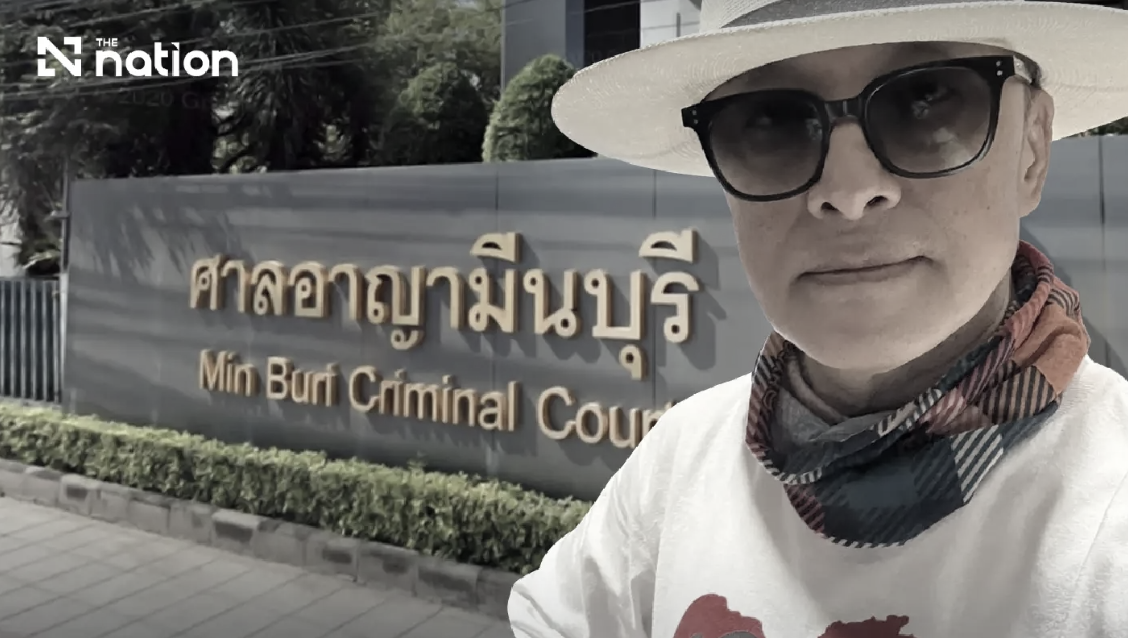
A Bangkok criminal court handed down a two-year prison sentence on Wednesday to Manasawin Nantasen, a veteran Thai singer known professionally as Tik Shiro, after he pleaded guilty to drunk driving that resulted in the deaths of two people. The sentencing drew significant public attention in Thailand, where questions about unequal justice and preferential treatment for celebrities have long simmered beneath the surface of public discourse.
Manasawin rose to international minor fame during the late 1980s and 1990s, becoming one of Thailand's most recognizable entertainers through a carefully cultivated stage persona that mirrored the iconic imagery of Michael Jackson. His trademark fedora hats, leather jackets, and fluid dance choreography earned him the nickname "Thailand's Michael Jackson" among local audiences, establishing him as a fixture in the kingdom's entertainment landscape for several decades.
The incident that precipitated the court's decision occurred in October 2024, when the 64-year-old entertainer operated his vehicle across a bridge in Bangkok while under the influence of alcohol. His car struck a stationary motorcycle, setting off a tragic chain of events. The collision killed a 28-year-old female passenger on the bike, while simultaneously ejecting her younger brother, aged 21, from the vehicle into the bridge structure, leaving him with severe injuries that required immediate hospitalization.
The younger victim's condition appeared critical following the initial impact, but he succumbed to his injuries while receiving treatment in hospital. The incident thus resulted in two fatalities and underscored the devastating real-world consequences of operating vehicles while intoxicated, a persistent public safety problem throughout Southeast Asia.
The aftermath of the accident generated considerable media coverage when footage emerged showing Manasawin on his knees at the crash scene, apparently grieving. This visual documentation circulated extensively across Thai social media platforms and news outlets, prompting widespread public discourse about accountability among Thailand's entertainment elite. The viral nature of the footage appeared to amplify public interest in whether the entertainer would face proportionate legal consequences despite his status and fame.
In rendering its verdict, the Bangkok court acknowledged mitigating factors in Manasawin's favour. The judgment noted that the defendant had surrendered himself to authorities and provided testimony that investigators found beneficial to their case documentation. Furthermore, the court observed that Manasawin had demonstrated remorse by attending the funeral ceremonies of the deceased victims and arranging financial compensation payments to their surviving family members. Nevertheless, the court imposed a mandatory revocation of his driver's license, a standard measure designed to prevent future vehicular incidents.
Manasawin's conviction comes amid a broader pattern of high-profile legal cases involving celebrities in Thailand that has fuelled public skepticism about equal application of the law. Just days before this sentencing, rock musician Sek Loso was released from prison after completing a sentence of just over one year for drug-related charges and illegal firearm possession, illustrating how entertainment personalities frequently become entangled in serious criminal proceedings.
These recent cases reignite historical comparisons that have long troubled the Thai public. The 2012 incident involving Vorayuth Yoovidhya, heir to the Red Bull beverage fortune, remains seared into public memory as a particularly glaring example of perceived justice inequality. Yoovidhya allegedly drove his Ferrari sports car into a Bangkok police officer in an upscale residential neighbourhood, killing him instantly. Despite a subsequent investigation, Yoovidhya was never formally charged with any offence, a resolution that many Thai citizens interpreted as evidence that wealth and privilege could insulate individuals from accountability.
Another instructive example involves the son of Chalerm Yubamrung, a prominent former member of parliament from the Pheu Thai party, who allegedly discharged a firearm fatally against an unidentified male in a crowded Bangkok nightclub following an interpersonal dispute in 2001. The case ultimately concluded with an acquittal based on insufficient evidentiary support, another instance that crystallized public perceptions of a two-tiered justice system operating within Thailand's legal framework.
These accumulated cases have created a lasting impression among ordinary Thais that the wealthy and famous frequently receive preferential treatment or escape prosecution entirely when facing serious charges. The judiciary's handling of Manasawin's case, resulting in a definitive custodial sentence, may represent an exception to this broader pattern, though observers note that the circumstances—the vivid video evidence, the immediate guilty plea, and the apparent sincerity of remorse—may have constrained judicial discretion.
For Malaysia and other Southeast Asian nations grappling with similar concerns about fairness and equity in legal proceedings, Thailand's experience offers both cautionary insights and a modest counterexample. The sentencing demonstrates that prominent entertainment figures can still face substantive consequences for serious crimes, particularly when evidence is overwhelming and public scrutiny is intense. Yet the glaring contrast with previous high-profile cases suggests that systematic reform may be necessary to restore public confidence in equal justice across the region.