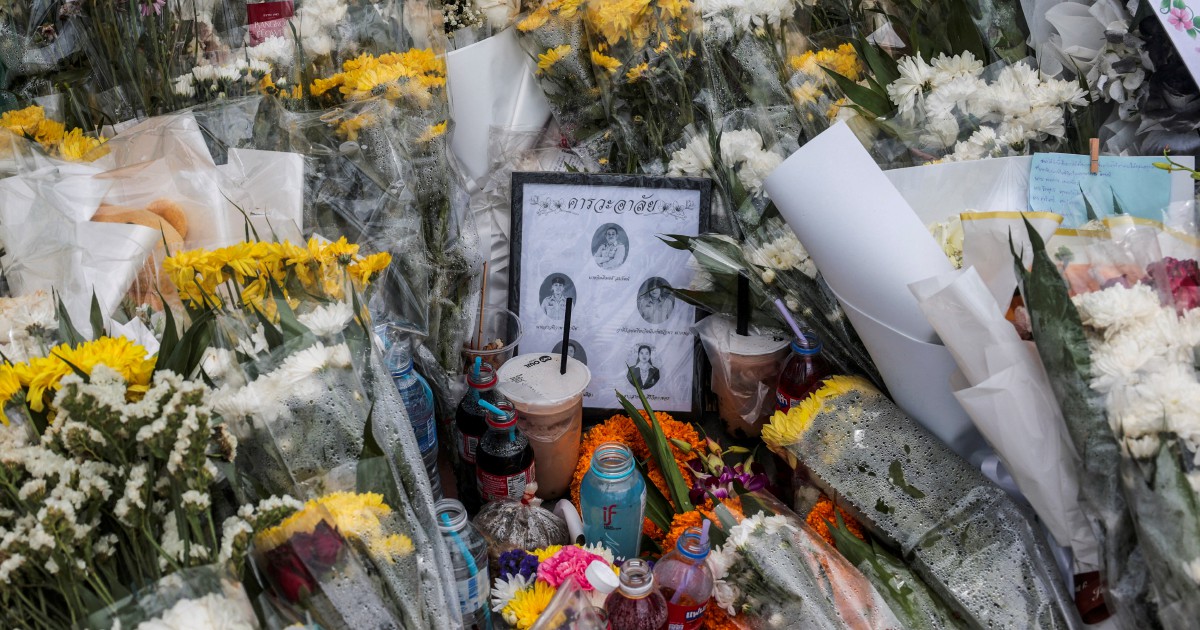
Thailand's Prime Minister announced on Tuesday that the government would suspend all new firearms licences in response to last week's school shooting that claimed multiple lives. The decision comes as the country grapples with questions about gun control and public safety, following one of the more shocking incidents of violence involving a young person in recent years. The announcement represents one of the first concrete policy responses from the administration since the tragedy unfolded.
The cremation ceremony in Nonthaburi province marked a significant moment of closure for the families involved, bringing an end to a harrowing chapter that shook Thai society. The teenage shooter and his two grandparents, whom he fatally wounded, were laid to rest in what officials confirmed as a private cremation attended by close family members. The incident has ignited widespread public concern about youth violence and the accessibility of firearms within Thai communities.
The Prime Minister's decision to suspend gun licences represents a shift toward tighter firearm regulations at a time when Thai officials have faced criticism for what advocates argue is insufficient oversight of weapons ownership. The suspension effectively halts the processing of new licence applications, though the government has not yet detailed the duration of this moratorium or the conditions under which applications might resume. Legal experts suggest this measure could signal a broader policy review on how Thailand regulates firearms among its civilian population.
The school shooting that preceded these actions left the nation reeling, with parents and educators calling for stronger safeguards in educational institutions. While official reports of the incident remain limited, the involvement of a teenage assailant has prompted discussions among Thai policymakers about mental health services for young people and the warning signs that precede violent incidents. Mental health professionals have emphasized that access to firearms combined with psychological distress creates dangerous conditions that require comprehensive intervention.
Thailand's approach mirrors responses seen in other countries following mass shooting incidents, where governments typically implement temporary restrictions on licensing while developing longer-term legislative proposals. Regional observers note that Southeast Asian nations have varying approaches to civilian gun ownership, with Thailand previously maintaining relatively permissive policies compared to some neighboring countries. This suspension suggests a potential recalibration of that position, though whether it leads to permanent legislative change remains uncertain.
For Malaysian readers, Thailand's response underscores the security challenges faced across Southeast Asia and the ongoing debate about balancing citizens' rights with public safety. Malaysia maintains its own framework for firearms licensing through the police licensing system, which requires applicants to demonstrate legitimate need and pass background checks. The Thai incident serves as a regional reminder of how quickly access to weapons can escalate isolated incidents into public tragedies affecting entire communities.
The cremation of the victims and perpetrator occurred in a solemn atmosphere, with Thai cultural practices guiding the funeral ceremonies. These events typically carry deep spiritual significance in Thai society, marking both the conclusion of earthly life and a transition in family grieving processes. The public nature of government announcements about the cremations reflects Thai media's interest in tracking developments following the tragedy.
Experts monitoring the situation expect the Thai government to continue deliberating on more comprehensive firearm reforms beyond the licensing suspension. Parliamentary committees may examine current regulations, background check procedures, and storage requirements for licensed weapons. The suspension serves as a holding measure while authorities assess how the previous system failed to prevent an underage individual from accessing lethal force.
The incident has also prompted renewed scrutiny of how firearms are stored in Thai households, particularly when young people reside with gun owners. Police have indicated they will investigate how the teenager obtained access to the weapons used in the shooting, with findings likely to inform policy discussions. Public discourse in Thailand increasingly emphasizes that responsible gun ownership requires secure storage mechanisms and family awareness of risks.
Civil society organizations in Thailand have seized the moment to advocate for stronger regulations, arguing that this suspension should become permanent and that additional measures should follow. Youth advocacy groups have called for improved mental health services in schools and communities, suggesting that firearm control alone cannot address underlying social problems that contribute to violence. These organizations frame the issue as requiring multifaceted solutions combining legislative action, educational intervention, and healthcare accessibility.
The suspension's implementation will fall to Thailand's police licensing divisions, which oversee the registration and approval process. Officials have not yet clarified whether existing licence holders will face new scrutiny or whether the suspension applies only to new applicants. Clarity on these points will emerge as the government releases more detailed guidelines about the suspension's practical mechanics and timeline.
Regionally, Thailand's action may influence discussions in other Southeast Asian countries about firearm regulation standards. With ASEAN nations facing similar challenges around urban violence and access to weapons, the Thai approach could catalyze conversations about harmonizing regional security policies. However, implementation challenges and questions about enforceability will likely characterize the coming months as Thai authorities work to operationalize the licensing suspension announced by the Prime Minister.

