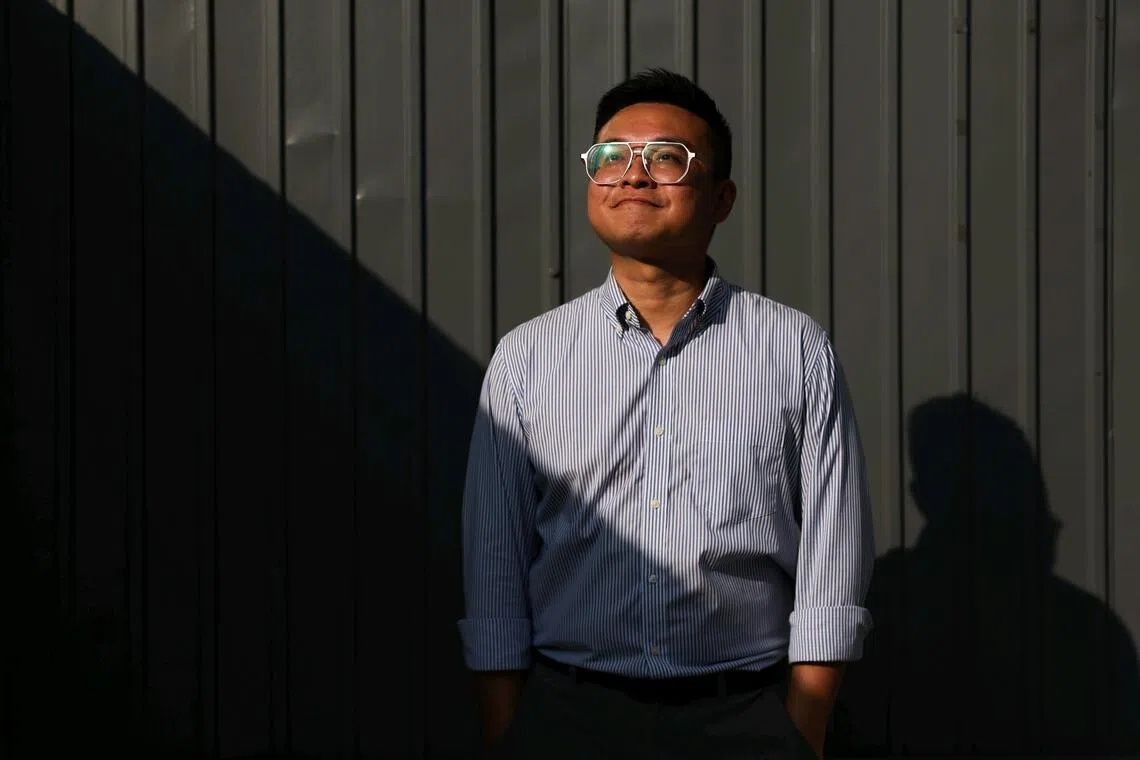
The façade of professional success can mask deeply rooted personal struggles. Cornelyus Tan appeared to have it all—a thriving marketing career, a promising trajectory in the creative industries, and the trappings of a well-ordered life. Behind closed doors, however, he was secretly consuming methamphetamine, a dependency that would eventually unravel his double existence when he was arrested in 2022 and sent to Changi Prison's Drug Rehabilitation Centre for six months. His experience proved unexpectedly revelatory: the DRC's inmate population included schoolteachers, practising lawyers, financial professionals, and other white-collar workers grappling with addiction. For Tan, now 37, the realisation was both humbling and clarifying. "On paper, we look well. We are all very successful. But at the core of it, we had a common problem – the heart," he reflected, speaking publicly about his journey for the first time.
Statistics reveal a marked transformation in Singapore's drug rehabilitation landscape. Data from the Singapore Prison Service shows that 293 inmates in the DRC possessed tertiary education or higher qualifications in 2025, a significant increase from 204 in 2021. This cohort now represents approximately one in ten newly admitted inmates, rising from 8.8 per cent four years earlier. The educational credentials ranged broadly—from polytechnic diplomas to advanced university degrees and postgraduate qualifications. While the Central Narcotics Bureau acknowledges this growth trajectory partly reflects Singapore's broader educational advancement, where the proportion of residents aged 25 and above holding tertiary qualifications expanded from 42.9 per cent to 54.5 per cent over the past decade, the shift nonetheless signals a troubling erosion of the assumption that professional status and educational attainment serve as protective factors against substance abuse.
The case of a recently convicted medical doctor illustrates how thoroughly addiction can penetrate elite professional circles, generating public shock and reappraisal. Yet counsellors and addiction specialists increasingly argue that such cases should prompt not surprise but recognition of an uncomfortable truth: drug use is fundamentally indifferent to educational background, income level, or social standing. Gopal Mahey, a senior counsellor at the Centre for Psychotherapy, emphasises that addiction operates across all demographic and socioeconomic boundaries. This understanding contradicts longstanding stereotypes that frame substance abuse as primarily a problem affecting the unemployed, poorly educated, or socially marginalised. The expansion of global drug markets and the proliferation of synthetic substances have fundamentally altered the landscape of addiction, creating new vectors for dependency that transcend traditional socioeconomic dividing lines.
Technology has emerged as a critical accelerant in democratising drug accessibility. Tham Yuen Han, executive director of We Care Community Services, notes a seismic shift in how illicit substances reach consumers. Historically, individuals seeking drugs navigated through personal networks—family members with addiction histories, neighbourhood dealers, or social circles predisposed toward substance use. Modern supply chains operate through entirely different mechanisms. Social media platforms and encrypted messaging applications, particularly Telegram channels dedicated to illicit drug peddling, have removed the necessity for personal intermediaries. "Now with technology, you don't need those connections, because sometimes it just comes to you on social media," Tham observes. This democratisation means that well-educated professionals with stable careers and established social standing encounter drug offers with unprecedented ease and plausible deniability, fundamentally altering risk profiles across society.
The appeal of drugs to highly educated professionals often operates through distinctly different psychological mechanisms than among other populations. Rather than exclusively representing escape from hardship, substances frequently present themselves as enhancement tools or coping mechanisms framed in productivity or performance language. For individuals accustomed to achievement and self-efficacy, drugs can initially appear as solutions rather than problems—chemical instruments for managing stress, amplifying creativity, or facilitating social connection. Tan's introduction to methamphetamine at a house party in 2014, when he was 25 and balancing work as an aspiring fashion photographer with arts college studies, exemplified this pattern. The drug delivered what he termed a "Superman effect"—a sustained adrenaline rush that maintained constant mental efficiency and mood elevation. "I was able to think creatively. There were many good comments about my work," he recalled, describing the subjective experience of enhanced professional performance. A news outlet subsequently profiled him as a promising young photographer, his trajectory seemingly vindicated by the substance that secretly propelled it.
Methamphetamine, alongside cannabis, Ecstasy, and heroin, dominates the drug profile among arrested tertiary-educated individuals. Its particular appeal to this demographic reflects its functional characteristics—sustained wakefulness, enhanced focus, and perceived cognitive sharpening that align with professional demands. Tan's initial period of use lasted several years before physical degradation prompted voluntary cessation. Weight loss, excessive perspiration, and visible bodily deterioration eventually compelled him to stop using meth temporarily. The respite proved temporary. In 2020, confronted with the intense professional and psychological stress accompanying his role as a regional marketing manager at an e-commerce firm, the psychological architecture supporting abstinence crumbled. The voice of rationalization returned with seductive clarity: "Why not use? You know how it might help you." This pattern of relapse under mounting pressure reveals a fundamental vulnerability among educated professionals—their tendency to rationalise drug use through cost-benefit frameworks that privilege immediate functional benefits over long-term consequences.
The capacity to maintain functional appearances while progressing deeper into addiction distinguishes many educated users. Tan developed an elaborate system: brief periods of heavy methamphetamine use followed by calculated withdrawals spanning several weeks. During the depressive crashes following intoxication, he would abstain sufficiently to stabilise mood and performance before cycling back into use. This oscillating pattern allowed him to sustain professional credibility and personal relationships while deepening his chemical dependency. A former junior college teacher, identified only as John to protect his privacy, employed similar stratagems. After being introduced to methamphetamine at a social gathering in 2015—framed initially as a mechanism for connecting with peers—he maintained his teaching responsibilities while concealing escalating addiction. The burden eventually became unsustainable. Missed classes accumulated as the substances themselves and the toxic personal relationship he was simultaneously navigating ravaged his emotional and physical resources. When his assigned reporting officer detected the absences, John fabricated explanations rather than acknowledging the reality of his deteriorating condition.
Addiction specialists observe that well-educated professionals frequently encounter particular psychological barriers to acknowledging substance abuse. Samuel Chua, principal counsellor at the Institute of Mental Health's National Addictions Management Service, argues that the underlying motivations driving educated and non-educated addicts toward substance use remain fundamentally identical—both seek chemical relief from pain, distress, and emotional dysregulation. The critical distinction lies in how the educated population perceives and processes their dependency. Confidence in their own capabilities and intelligence can paradoxically intensify denial. Many educated users possess genuine conviction that their intelligence, discipline, and professional competence enable them to exercise control over drug consumption in ways that less capable individuals supposedly cannot. This confident self-assessment frequently proves catastrophically mistaken, yet its psychological power can delay intervention and treatment-seeking until dependency has become severely entrenched.
The peer influence and cultural factors specific to educated circles present additional vectors for drug initiation and sustained use. Social settings within professional environments, university networks, and cosmopolitan social circles increasingly incorporate drug use as a normalised element of recreation or stress management. Exposure to more permissive drug attitudes encountered during overseas education or international career postings further erodes traditional inhibitions. The CNB spokesperson identifies peer influence, social media, and the glamorisation of drug use by entertainers and cultural figures as significant drivers shaping attitudes among educated populations. Liberal drug cultures encountered abroad—whether in countries with decriminalisation frameworks or where substance use carries less social stigma—can fundamentally reshape individuals' risk perception and behavioural thresholds when they return to Singapore's more restrictive environment.
Malaysia and other Southeast Asian nations face similar pressures as drug markets regionalise and cross-border accessibility increases through technological channels. The Singapore case study provides urgent cautionary evidence that educational advancement and professional achievement offer no immunity from addiction's reach. Malaysian employers, educational institutions, and public health authorities should recognise that drug prevention and intervention strategies calibrated exclusively toward socioeconomically disadvantaged populations will systematically fail to address emerging patterns of substance abuse among their own professional workforces. The sophistication and resources of educated addicts enable them to evade detection longer, sustain higher-cost drug habits, and inflict substantial damage across their professional domains before intervention occurs. Healthcare systems across the region must invest in addiction awareness and treatment capacity specifically designed for professional populations, acknowledging the particular psychological defences, denial mechanisms, and social pressures that distinguish educated users from other affected groups.

