The Metropolitan Museum of Art convened an unusual gathering in May, bringing together influential voices including editor Anna Wintour to discuss a delicate institutional question: should the museum proceed with honouring John Galliano through a solo retrospective, and if so, how? The closed-door meeting represented one of several sessions held with Jewish community leaders over the preceding year, signalling that the museum recognised the exhibition would require more than conventional curation. At stake was not merely a fashion show but a broader cultural statement about second chances, institutional accountability, and how institutions navigate the complicated terrain between artistic achievement and personal transgression.
Galliano stands as a towering figure in contemporary fashion design. His tenure as creative director of Dior from 1996 to 2011 fundamentally reshaped the storied French fashion house, transforming it from a respected heritage brand into a global powerhouse that captured imaginations worldwide. His mastery of the bias-cut dress and his theatrical, imaginative approach to collection design established him as one of the industry's most consequential creative minds. Yet this remarkable career trajectory became irrevocably altered in 2011 when video footage emerged of Galliano making antisemitic remarks in a Paris bar, comments that included shocking statements and sparked international condemnation.
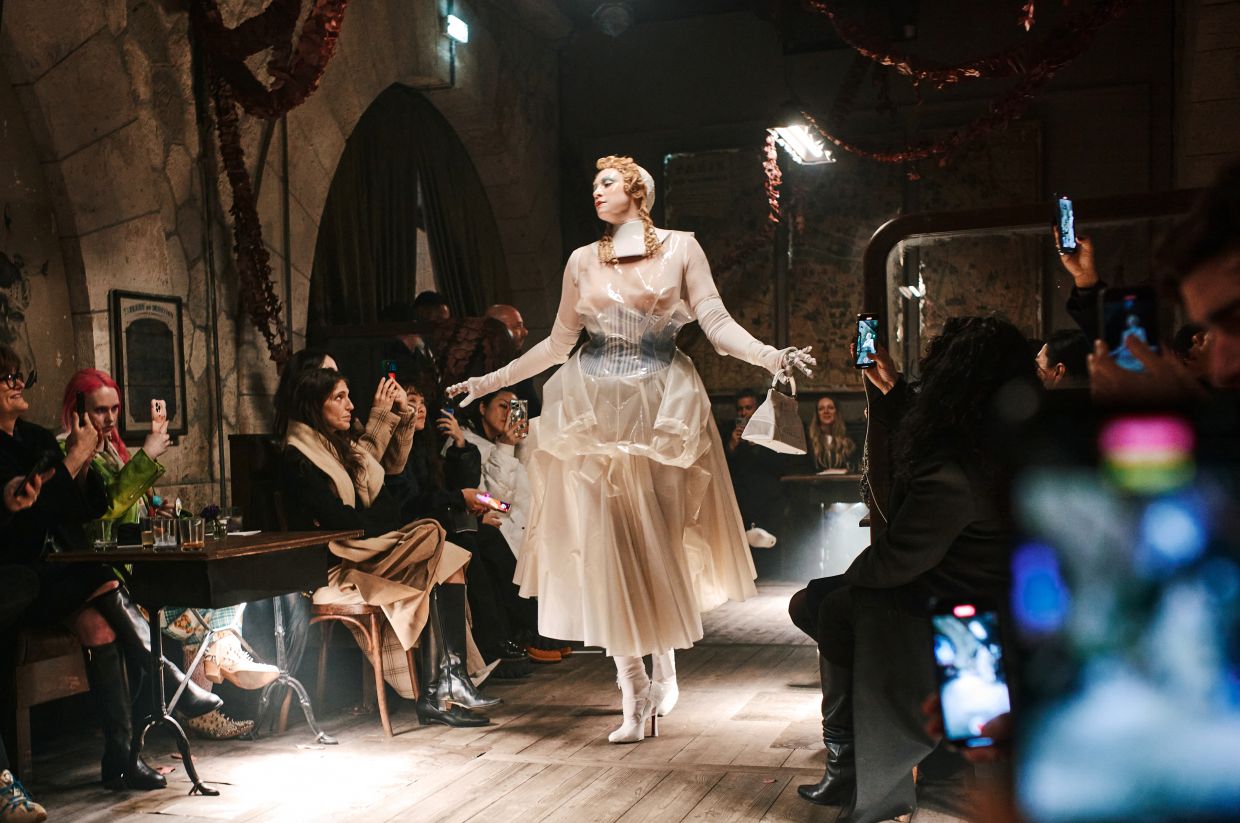
The fallout proved immediate and severe. Dior terminated his employment, the French courts convicted him of hate speech offences, and the fashion world's doors appeared to close definitively. However, Galliano undertook a serious path toward rehabilitation. He entered treatment programmes, worked with Jewish leaders and community educators in London and New York, studied Judaism and Holocaust history, and sought genuine understanding of the harm his words had caused. In 2014, he emerged to assume the position of creative director at Maison Margiela, a role in which he has worked consistently for over a decade. Contemporary celebrities including Zendaya, Tyla, and Amal Clooney have regularly worn his designs on major red carpets, and his vintage pieces command significant prices at auction houses.
The proposed Metropolitan Museum retrospective would make Galliano only the third living designer ever to receive such an honour, placing him alongside Yves Saint Laurent and Rei Kawakubo in the institution's pantheon. For many in the fashion industry, this represents a logical acknowledgement of his creative contributions. Yet the timing raises acute questions, particularly given the contemporary landscape of antisemitism. Recent violent incidents in New York, including a stabbing attack on individuals outside a Jewish community centre, have heightened tensions and deepened community concern about safety and institutional priorities.
Museum director Andrew Bolton has approached the exhibition with evident deliberation, declining to minimise the complexity involved. He acknowledged that while considering a Galliano show since 2010, he did not pursue it seriously until 2024, and that both he and the museum's board determined that additional consideration was necessary before proceeding. Rather than viewing current antisemitic tensions as a reason to cancel the show, Bolton has reframed the exhibition as an opportunity to address these concerns head-on. He plans to open the retrospective with what he calls an "orientation gallery" that will frankly delineate what he terms "the rupture" in Galliano's career—the rupture between his artistic achievements and his personal failings.
The Jewish leaders consulted during planning discussions articulated their concerns with precision. Rabbi Joshua Davidson of Temple Emanu-El, located near the museum in Manhattan, emphasised that while the exhibition could proceed, it should leverage the platform to educate visitors about the contemporary reality of antisemitism and the necessity of active resistance against such prejudice. Rabbi Rick Jacobs, president of the Union For Reform Judaism in North America, focused on the quality of Galliano's engagement during discussions, noting that the designer approached conversations with evident sincerity and directness rather than rehearsed talking points. Jonathan Greenblatt of the Anti-Defamation League stated that Galliano's efforts to repair the damage and learn from the incident merited recognition.
The discussion invoked the Jewish principle of teshuvah—repentance and restoration—suggesting that meaningful redemption might be possible within a properly constructed institutional framework. However, leaders also raised legitimate concerns about how an institution could celebrate artistic brilliance while meaningfully grappling with the consequences of antisemitic behaviour. The challenge lies not in simply ignoring what occurred, but in creating a narrative context that neither whitewashes the past nor reduces Galliano's artistic legacy to a single moment of terrible judgment.
Bolton has committed to several substantive approaches to address these concerns. Most significantly, he plans to prioritise Galliano's own words in explaining the rupture, avoiding euphemisms and instead pursuing what he describes as the most accurate version of events. This contrasts sharply with allowing Galliano to provide his own narrative sanitised version. Bolton is also considering an online forum to facilitate deeper public discussion beyond the physical exhibition, creating space for community voices to engage with the material. These measures suggest an institutional willingness to treat the exhibition not as a straightforward celebration but as an opportunity for complex cultural reckoning.
The Galliano situation resonates particularly for Southeast Asian observers given the region's diverse cultural and religious landscape. Malaysia, with its substantial Muslim, Hindu, Christian, and Buddhist populations, has navigated its own challenges regarding religious tolerance and institutional accountability. The question of whether and how cultural institutions should engage with figures whose past actions have caused genuine community harm remains pertinent across different contexts. The Metropolitan Museum's approach—neither rejecting Galliano's artistic contributions nor minimising his harmful conduct, but instead creating institutional space to address both—offers a potential model for how institutions might navigate such dilemmas elsewhere.
Fashion as an industry has evidently made peace with Galliano's return more readily than society at large has. This disconnect between industry rehabilitation and broader social accountability raises questions about whether professional communities sometimes prioritise talent over ethics, or whether genuine redemption within specific contexts deserves recognition even as broader patterns of antisemitism continue. The exhibition thus becomes less about Galliano specifically than about what institutions owe to both artists and communities when navigating the intersection of artistic achievement, personal accountability, and social responsibility in an era of heightened communal tensions.
The Met Gala that will inaugurate this exhibition represents one of the world's most visible cultural moments, broadcast globally and scrutinised intensely. That the museum has chosen to use this platform not to celebrate Galliano uncritically but to confront the complexities of his legacy suggests an institutional commitment to serious rather than superficial engagement. Whether this model of transparent, complicated curation can genuinely educate rather than alienate will ultimately determine whether the retrospective becomes remembered as a meaningful institutional moment or a cautionary tale about the limits of redemption narratives.

