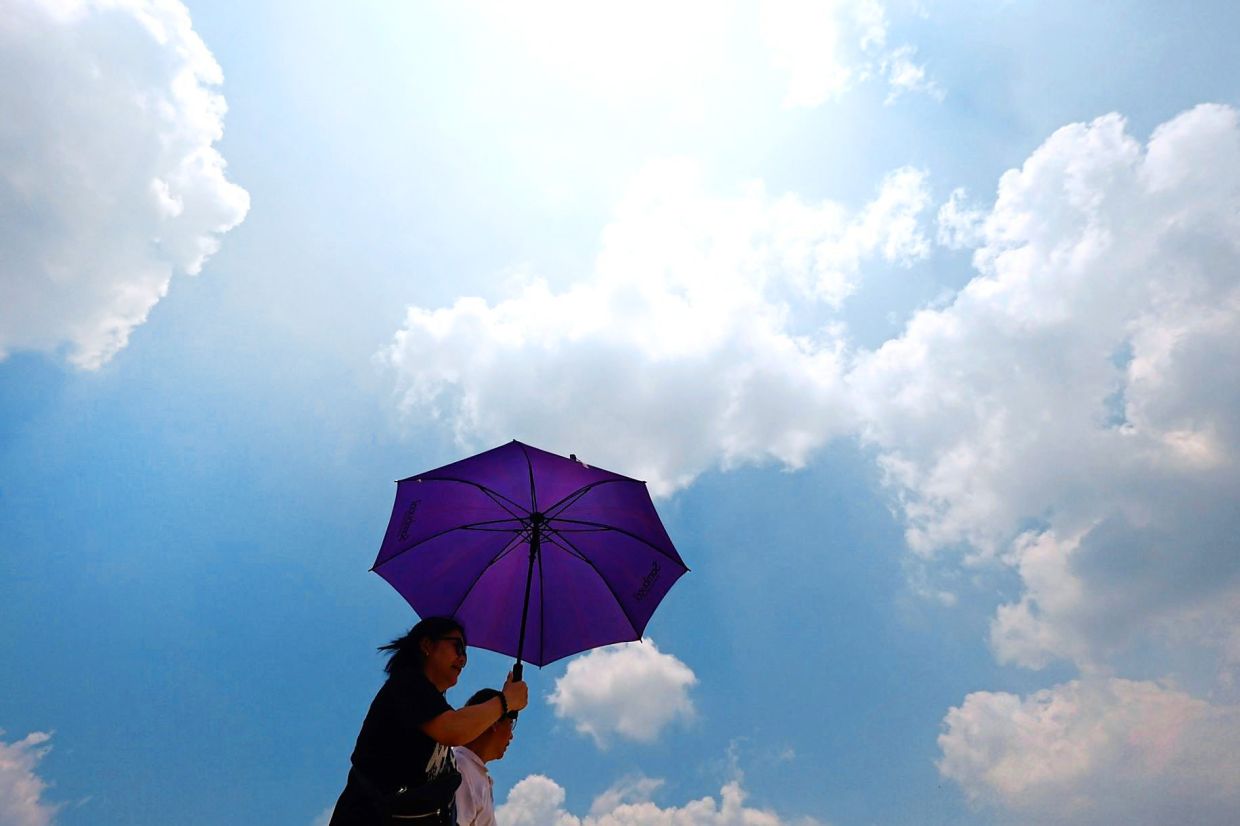
The World Health Organization delivered a sobering assessment on June 30, 2026, declaring that the world faces an intensifying crisis with heatwaves destined to strike more frequently, with greater intensity, and for longer durations. This warning came in the aftermath of record-shattering temperatures that swept across Europe, leaving dozens dead. Hans Kluge, the WHO's Europe regional director, emphasized that heatwaves have fundamentally shifted from isolated phenomena into persistent, recurring emergencies that demand urgent strategic responses.
As human-induced climate change continues to drive atmospheric heating globally, a critical question emerges for policymakers and public health authorities: can the human body meaningfully adapt to rising temperatures, or are we approaching physiological limits? The answer, according to medical meteorologist Kathrin Graw from Germany's national weather service the Deutscher Wetterdienst, is both yes and no—the body possesses adaptation mechanisms, but they are constrained by strict biological boundaries that become increasingly apparent as heatwaves persist.
Graw's analysis reveals a troubling pattern: the body's resilience deteriorates progressively as heat exposure extends day after day. When temperatures remain elevated throughout both day and night, individuals lose the recovery benefit of cooler evening hours, causing sleep quality to collapse. This cascading effect means that while the first 24 hours of a heatwave may feel manageable, by the second week the accumulated physiological stress becomes exponentially more dangerous. The body simply cannot sustain continuous heat compensation without suffering severe consequences.
Empirical data from the DWD's recent research validates these concerns with alarming precision. For people living with cardiovascular disease, heat-related excess mortality jumps from approximately 8.5 percent during the initial days of a heatwave to as high as 18 percent by the 11th and 12th days. This near-doubling of death risk illustrates how the body's adaptive capacity essentially depletes under prolonged thermal stress. The longer heat persists, the clearer this trajectory becomes: survival odds diminish measurably with each passing day above critical thresholds.
Europe's experience over recent years provides a natural laboratory for understanding these dynamics. Germany's weather service, recognizing these physiological realities, has calibrated its heat warning protocols to account for seasonal adaptation patterns. At the beginning of summer or following extended cool periods, the temperature threshold triggering official warnings drops significantly lower than the same warnings would during late summer when populations have experienced weeks of adjustment. This evidence-based approach acknowledges that bodies do possess some genuine capacity for short-term acclimation—the nervous system can learn to function somewhat more efficiently in heat, sweat production can increase, and cardiovascular systems can develop modest resilience.
Yet a more troubling question looms: as climate change forces the planet into a permanently hotter state, will humanity develop lasting, multigenerational adaptations comparable to populations already residing in traditionally hot climates? Graw identifies modest evidence suggesting this may occur, but only within narrowly constrained parameters. Populations in southern regions with centuries of heat exposure do record somewhat lower heat mortality rates than northern populations unaccustomed to extreme temperatures. This suggests some protective mechanism, whether genetic, cultural, or infrastructural, does emerge through prolonged exposure.
However, this observation offers little reassurance given the unprecedented speed of current climate change. Unlike evolutionary adaptation requiring generations, or cultural adaptation requiring decades to establish cooling infrastructure and behavioral protocols, the planetary climate is shifting at a pace that outpaces human societies' capacity for meaningful response. Graw warns explicitly that long-term biological adaptation to radically higher temperatures cannot proceed indefinitely, especially when the temperature increases themselves are accelerating. The body's plasticity has boundaries, and those boundaries remain fixed even as the thermal environment becomes increasingly extreme.
The vulnerability extends unevenly across populations, compounding the public health emergency. Older adults, young children, pregnant women, and people managing chronic cardiovascular or respiratory conditions face disproportionate risk. These groups represent substantial portions of most Southeast Asian populations, where ageing demographics are advancing rapidly alongside urbanization that concentrates heat in sprawling cities with minimal tree cover and extensive heat-absorbing concrete infrastructure.
For Malaysia and its neighbors in Southeast Asia, these warnings carry particular resonance. The region already experiences high baseline temperatures and humidity levels, and several nations have recorded deaths during recent extreme heat events. Unlike temperate Europe where heat represents a novel crisis, tropical Southeast Asia faces the prospect of heat conditions exceeding even the adapted tolerance ranges of populations who have lived with tropical climates for millennia. The medical evidence suggests that this frontier—where heat exposure transcends what any human population has successfully adapted to—is rapidly approaching.
The implications for infrastructure, public health systems, and labor policy demand urgent attention. Merely hoping that human bodies will somehow adapt to hotter futures contradicts both biological science and the evidence from accelerating mortality during recent European heatwaves. Instead, policymakers must fundamentally restructure urban environments, workplace protections, and healthcare capacity to prevent deaths that will otherwise become inevitable. The human body's limited adaptive capacity is not a constraint to work around through wishful thinking; it is a fixed parameter requiring proactive societal response.

