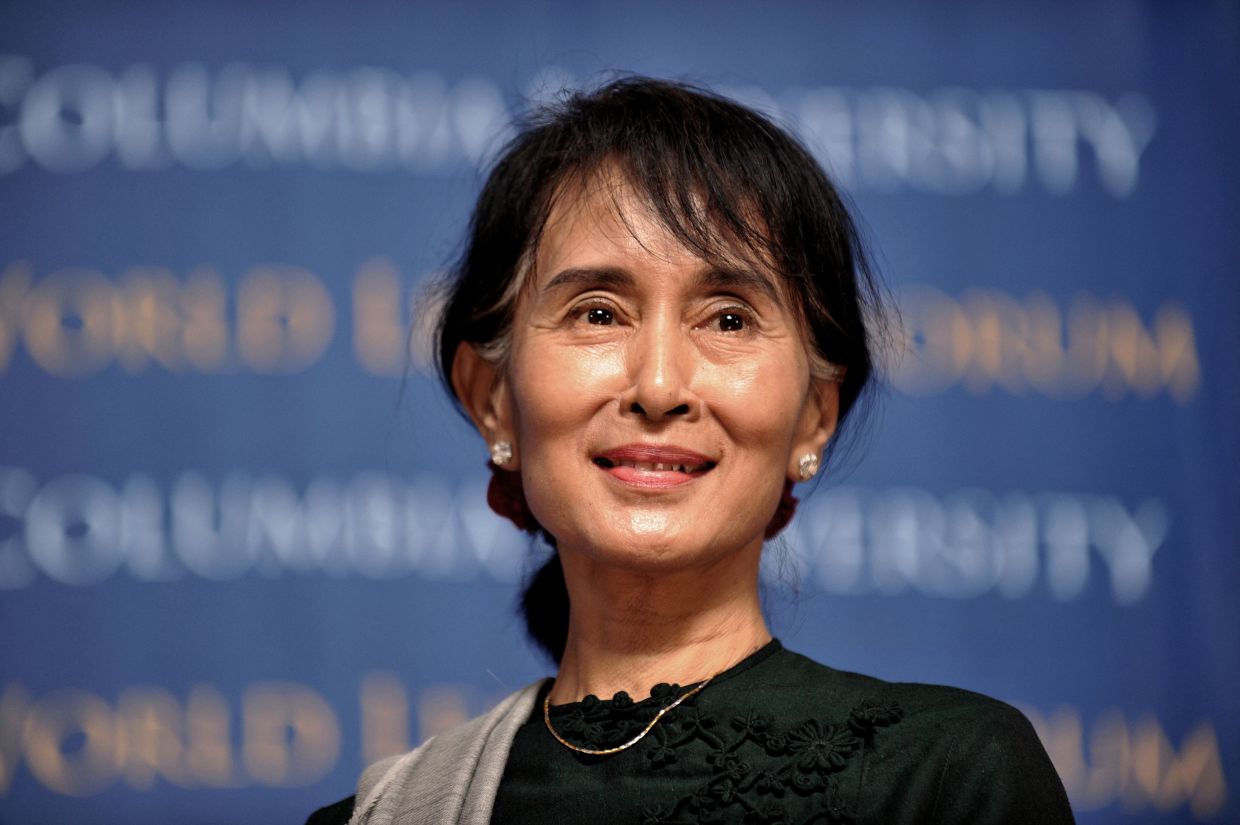
The location of Myanmar's deposed leader Aung San Suu Kyi has become an enigma within the nation's insular capital Naypyidaw, where she is officially under house arrest following her military detention. Announced in April by coup leader Min Aung Hlaing as a gesture of compassion marking his transition from military ruler to civilian president, the move has been widely dismissed as theatre—a sleight of hand designed to rehabilitate the junta's international standing while keeping the 81-year-old Nobel laureate as isolated as she was in prison.
Naypyidaw itself presents a labyrinth calculated to frustrate transparency. Built in the early 2000s as a purpose-constructed capital by former military strongman Than Shwe, the city sprawls across terrain nine times larger than New York yet houses only one million people. This massive geographic footprint is traversed by surreal 20-lane highways that cut through jungle and agricultural land with minimal traffic, creating an eerie landscape of immense infrastructure serving sparse populations. The very architecture of the capital—named "The Abode of Kings"—was conceived as an instrument of political control, deliberately situated between the traditional port city Yangon and the secondary metropolis Mandalay to insulate rulers from urban unrest and the democratic pressures that historically erupted in major population centres.
The opacity extends beyond mere geography into deliberate administrative secrecy. When authorities announced Suu Kyi's shift to house arrest, even senior members of the pro-military Union Solidarity and Development Party professed ignorance regarding her whereabouts. Thein Tun Oo, an USDP parliamentarian and party spokesman, stated bluntly: "I don't know. Because I am one of the people." This candid admission reveals the compartmentalisation of information within Myanmar's power structure, where civilian officials—despite their nominal political authority following January's heavily controlled elections—remain excluded from knowledge deemed sensitive to military security interests.
The physical landscape reinforces this culture of secrecy through infrastructure designed to disorient rather than facilitate movement. Mobile internet jammers interfere with navigation applications, rendering GPS unreliable for civilians navigating the city's expansive monotony. Accounts from residents paint a picture of routine bewilderment: one young woman acknowledged she frequently loses her bearings within her own neighbourhood, describing uniform compounds and endless highways that obscure rather than clarify spatial relationships. This disorientation is not incidental but deliberate—as architect Galen Pardee, an adjunct professor at Columbia University, observes, the city represents "the complete opposite of what a traditional urban planner would say makes a good city", reflecting a "political agenda" prioritising control over livability and transparency.
Security sources have indicated that Suu Kyi's detention location extends beyond conventional house arrest into spaces cordoned off even from local law enforcement. Police special branch officers from separate jurisdictions revealed that she had been relocated to areas officially off-limits to them, with one source asserting that even military generals lack access to her location information. This compartmentalisation suggests she is held not in a standard residential compound but in a specially secured facility, possibly within military-controlled grounds inaccessible to civilian authorities or standard administrative oversight. The demolition of a villa where Suu Kyi previously resided further complicates efforts to track her movements or reconstruct her detention history.
The historic irony cuts sharply: Suu Kyi spent 15 years under house arrest in her family's Yangon mansion during the 1990s, a confinement that paradoxically elevated her international profile as demonstrators gathered outside in homage to her sacrifice. That residence became a symbol of resistance against authoritarianism. Her present incarceration in an undisclosed location within Myanmar's secretive capital represents a distinctly modern variation—one designed to render her invisible domestically while maintaining the facade of civilian rule internationally. Min Aung Hlaing's presentation of house arrest as merciful represents what critics view as calculated propaganda, suggesting reform while perpetuating isolation.
Suu Kyi's son, Kim Aris, speaking from London by telephone, rejected the semantic distinction between imprisonment and house arrest entirely. He contended that confinement in an undisclosed location without genuine freedom of movement constitutes "a private prison rather than a residence", differing meaningfully from the home life she ostensibly should enjoy as a private citizen. His statement underscores the fundamental arbitrariness of her detention: regardless of terminology, she remains utterly subject to state control in a capital designed to facilitate precisely such subjugation. As the daughter of independence hero Aung San and the architect of Myanmar's democratic transition a decade prior, her erasure from public view serves symbolic purposes extending beyond individual incarceration.
The broader context of Myanmar's political trajectory amplifies the significance of Suu Kyi's hidden confinement. After the 2021 coup, Min Aung Hlaing orchestrated highly restricted elections in January that produced a predetermined outcome—overwhelming victory for the pro-military USDP following the exclusion of Suu Kyi's National League for Democracy. This electoral choreography was designed to legitimise military rule through civilian institutions, yet fundamental freedoms remain subordinated to junta interests. That even parliamentarians supportive of the regime possess no knowledge of Suu Kyi's location reveals the hollow nature of Myanmar's ostensible democratic transition.
For regional observers and human rights advocates, Naypyidaw's physical and administrative architecture has become a metaphor for Myanmar's political trajectory—increasingly insular, secretive, and resistant to transparency or international pressure. The city functions as a cocoon sheltering a ruling elite from accountability, with Suu Kyi's hidden detention serving as the ultimate expression of this isolationism. While Min Aung Hlaing projects civilian governance and reform, the reality remains one of deepening authoritarianism expressed through spatial control and administrative secrecy. The mystery of Suu Kyi's location is not incidental detail but rather the defining feature of contemporary Myanmar's relationship with democracy and human dignity.

