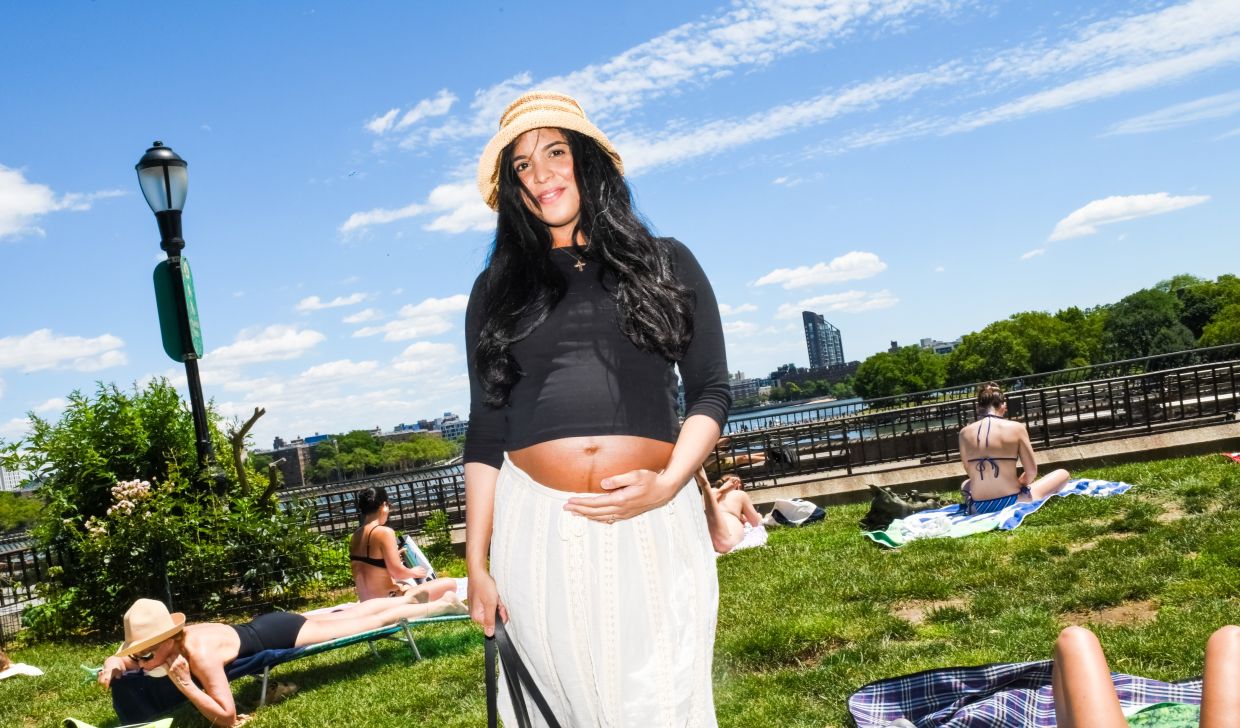
The sight of a pregnant woman deliberately revealing her belly through a crop top, cutout dress, or unbuttoned shirt has become commonplace on social media, at concerts, and in public spaces across the Western world. This shift represents far more than a fashion trend; it signals a fundamental transformation in how modern women relate to pregnancy, their bodies, and the clothes that cover them. Where previous generations of expectant mothers faced social pressure to hide their pregnancies beneath loose, tent-like garments, today's pregnant women are curating intentional maternity looks that celebrate their changing silhouettes with confidence and style.
When Sarah Brown, a 36-year-old handbag designer and stylist, began posting photographs of her bare midriff during her second trimester, her mother's well-intentioned suggestion to purchase a maternity jumpsuit revealed a generational divide in attitudes toward pregnancy presentation. Brown was deliberately styling around her growing belly, treating it not as something to conceal but as an aesthetic element to incorporate into her overall fashion choices. Her mother's reaction, rooted in older conventions about modesty and propriety during pregnancy, highlighted how dramatically cultural norms have shifted regarding the visibility of the pregnant body in public and digital spaces.
The transformation became visible first in celebrity culture, where high-profile pregnancies began generating Instagram moments rather than strategic invisibility. Demi Moore's iconic 1991 Vanity Fair cover, depicting her seven months pregnant and unclothed, became a watershed moment that would eventually normalize discussions of pregnancy as a visual phenomenon worthy of aesthetic celebration. For millennials and Generation Z, subsequent images cemented this new approach: Beyoncé's bare-bellied baby shower in 2017, where she wore a custom yellow Dolce & Gabbana gown that highlighted rather than obscured her pregnant form, became the template for expectant celebrity mothers. When Rihanna announced her first pregnancy in 2022 wearing a half-buttoned bright pink Chanel puffer jacket with her bare bump prominently displayed, she crystallized a new maternity aesthetic that has since influenced countless other public figures, including Anne Hathaway's June pregnancy announcement in a white crop top.
This cultural pivot away from concealment reflects deeper shifts in generational attitudes toward bodies and self-presentation, particularly among younger women. Laura McAndrews, an associate professor at Kent State University's fashion school who specializes in studying Generation Z's approach to maternity wear, attributes much of this change to the pervasive messaging around body positivity that younger women have absorbed throughout their lives. Unlike women in the 1990s and earlier decades who faced implicit pressure to neutralize their pregnant bodies beneath shapeless silhouettes, today's expectant mothers have internalized messages affirming all body stages as worthy of celebration and stylish presentation. This generational confidence extends beyond mere fashion choice; it represents a reclamation of pregnancy as a legitimate aesthetic moment rather than a temporary condition to be managed discretely.
Michelle Zauner, the musician and author who performed at New York's Governors Ball music festival in June while heavily pregnant, exemplifies this new approach. She specifically chose to wear an unbuttoned cardigan that revealed a lacy black bra and her bare pregnant belly, a deliberate styling decision directly inspired by Rihanna's public embrace of her pregnant form. Zauner has articulated her aversion to traditional maternity clothing, describing the standard offerings as oversized muumuu sacks that fail to engage with fashion as an expressive medium. For her, wearing clothes that celebrated rather than minimized her pregnancy aligned with her personal aesthetic and represented a refusal to accept the default maternity wardrobe options available to pregnant women. This choice also reflected something deeper: a recognition that pregnancy itself, rather than being a state to apologize for or hide, constitutes a valid subject for creative self-expression through clothing.
Historically, the impulse to conceal pregnancy through clothing emerged from social attitudes that viewed the visibly pregnant body with discomfort and even shame. Isabel Davis, author of works examining historical attitudes toward pregnancy, notes that pregnancy has long been regarded as inherently transgressive, representing visible evidence of sexual activity in a way that previous generations found inappropriate for public acknowledgment. This cultural discomfort translated directly into fashion: maternity clothes existed explicitly to obscure the pregnant form, to render the expectant mother as aesthetically neutral and non-threatening as possible. The taboos surrounding pregnancy were so pronounced that Ariane Goldman, founder of the maternity clothing brand Hatch, launched her company in 2011 during a period when many women still felt compelled to hide pregnancies from employers out of fear of termination or discrimination.
Goldman's perspective on the evolution of maternity culture over the past decade underscores the rapidity of change. She has witnessed a remarkable transformation from an era when pregnancy was whispered about and concealed to the current moment where expectant mothers openly celebrate and own their changing bodies. This shift has created a fascinating paradox for the maternity fashion industry: as women increasingly exercise the option to style pregnancies using their partners' oversized clothing, vintage pieces, and regular apparel tailored to accommodate their changing proportions, the market for dedicated maternity wear faces an uncertain future. Yet Goldman and her team have recognized that functionality remains essential; despite the enthusiasm for mixing unconventional pieces, pregnant women still require garments that perform specific tasks and accommodate their evolving bodies across different seasons and social contexts.
The practical reality of dressing a pregnant body has prompted many expectant mothers to develop hybrid approaches that blend conventional and maternity pieces. Sarah Brown managed her entire pregnancy primarily with two pairs of Los Angeles Apparel elastic-waist pants and two Paloma Wool tops featuring side unbuttoning, supplementing these with borrowed pieces from her husband and her own existing wardrobe styled creatively around her expanding belly. This strategy reflects both the limitations of traditional maternity wear and the creative resourcefulness of modern pregnant women unwilling to surrender style or comfort to pregnancy-specific clothing. The success of these ad-hoc wardrobing solutions suggests that the maternity fashion industry may need to evolve toward more versatile, hybrid pieces that function across multiple body stages rather than designing exclusively for the pregnant silhouette.
The shift toward visibility and celebration of the pregnant body carries particular significance for how women conceptualize bodily autonomy and agency during pregnancy. By styling their pregnancies intentionally and publicly, expecting mothers assert control over how their changing bodies are perceived and presented. This stands in stark contrast to historical narratives that positioned pregnancy as a condition that diminished women's capacity for self-determination or aesthetic participation. The choice to wear a crop top while pregnant becomes, in this context, far more than a fashion decision; it represents a claim to continued participation in self-fashioning and public presence even as the body undergoes radical transformation. For many young women, refusing maternity wear becomes a form of bodily autonomy, a declaration that pregnancy will not exile them from the aesthetic pleasures and expressive possibilities that clothing provides.
For Malaysian and Southeast Asian readers, this global shift in maternity fashion attitudes presents interesting cultural considerations. While traditional maternity norms remain stronger in many communities throughout the region, increasing urbanization and digital connectivity mean that younger expectant mothers are encountering these alternative approaches through social media and international fashion platforms. The tension between inherited cultural values emphasizing modesty during pregnancy and the body-positive messaging circulating globally creates a unique context where individual women must negotiate their own comfort levels and cultural contexts. As maternity fashion evolves globally, local markets may increasingly see demand for pieces that honor cultural sensibilities while allowing for the kind of intentional, celebratory styling that younger women across the world now expect from their wardrobes.

