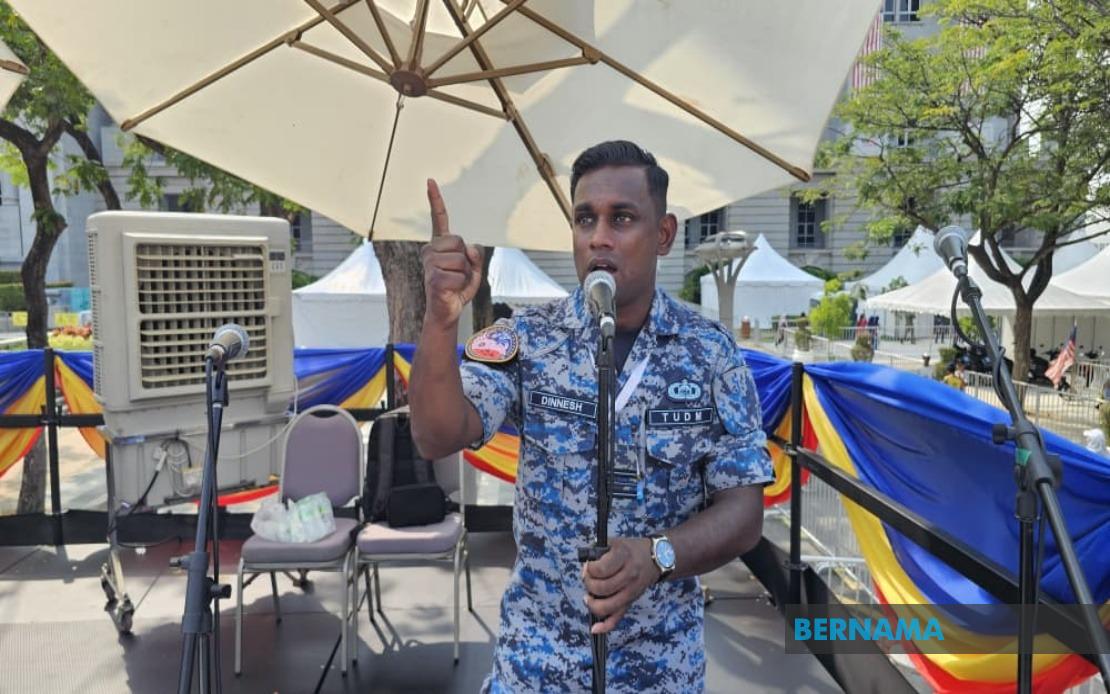
When thousands of Malaysians gathered at Dataran Putrajaya on National Day to witness the aerial prowess of the Royal Malaysian Air Force, few considered the person whose voice would weave together the dramatic theatre unfolding overhead. Major Dinnesh Nicolas Rene, a 34-year-old RMAF officer, served as one of three air commentators tasked with translating complex fighter jet manoeuvres into compelling narrative for ground audiences, transforming raw aviation spectacle into a coherent story of national pride and military capability.
The role demands far more than reading scripted descriptions into a microphone. Dinnesh's background serves as illustration of this complexity. Since joining the RMAF in 2015, he has accumulated operational experience within the Air Defence Control Division, positioning him uniquely to understand not just what aircraft do, but why they perform certain patterns and what those movements signify militarily and ceremonially. This insider knowledge distinguishes professional air show commentary from mere play-by-play narration, allowing commentators to infuse technical detail with genuine understanding that audiences instinctively recognise and appreciate.
Dinnesh's entry into air show commentary was neither accidental nor informal. He was specifically selected as a commentator for the Langkawi International Maritime and Aerospace Exhibition in 2019, an honour that sparked what has become his secondary specialisation. Following that assignment, he continued developing expertise through commentary roles during RMAF anniversary celebrations, gradually building the institutional knowledge and reputation that ultimately led to his selection alongside Major Neny Suhaida Ab Suki and Captain Muhammad Iqbal Nasrudin for Malaysia's most significant annual civic ceremony.
Preparation for such high-profile assignments extends far beyond the event day itself. Dinnesh outlined the preparatory framework required for commentary at major national celebrations. Initial phases involve extensive coordination with ground controllers and operational pilots, meetings designed to catalogue precisely what will occur, which aircraft participate, how many formations will execute manoeuvres, which squadrons are involved and what their operational mottos represent. This granular coordination ensures that no element surprises the commentator during the live broadcast—a critical safeguard given that Malaysia's National Day parade attracts the King and Prime Minister as attendees, transforming the air show into a ceremony where verbal missteps carry diplomatic weight.
Protocol mastery constitutes another demanding dimension. Unlike entertainment events where commentary can embrace spontaneity, air show narration for state occasions requires absolute awareness of institutional boundaries and acceptable discourse. Commentators must understand not merely what information to convey, but precisely when to deliver each element relative to flight movements, ensuring timing creates maximum dramatic impact while adhering to ceremonial formality. This calibration of content and cadence within rigid parameters distinguishes professional commentary from improvisation, requiring commentators to balance spontaneity's appearance with scripted precision's reality.
The physical challenge of maintaining vocal projection throughout rehearsals and the actual performance ranks among commentary's most underestimated demands. Unlike master of ceremonies at ground-level events, air show commentators must overcome genuine environmental obstacles—the overwhelming noise generated by military aircraft overhead—while projecting sufficient volume and energy to captivate audiences and maintain engagement across extended sequences. Voice deterioration represents a genuine occupational hazard, potentially compromising commentary quality during crucial moments. Dinnesh acknowledged that voice preservation and protection constitute critical professional responsibilities, requiring conscious management techniques from initial rehearsals through final performance.
Maintaining consistent energy and emotional momentum poses related challenges. Dinnesh subscribes to a philosophy wherein commentators must themselves embody and genuinely feel the excitement they wish audiences to experience. This authenticity cannot be manufactured convincingly—audiences distinguish between practiced enthusiasm and authentic awe. His approach suggests that despite years of professional proximity to high-performance military aircraft, he maintains genuine wonder at aerial displays, allowing that real excitement to infuse his narration with credibility and emotional resonance rather than scripted artificiality.
The National Day air show represents particularly significant canvas for Dinnesh's skills. Malaysia's premier annual civic celebration demands sophisticated coordination between civilian and military authorities, security agencies, and ceremonial officials. The air component specifically showcases RMAF capabilities to both domestic audiences and international observers, carrying implicit messages about Malaysia's defence posture and technological sophistication. Commentary that contextualises these displays effectively shapes audience understanding and national narrative, making the commentator's role genuinely consequential rather than merely decorative.
From a regional perspective, Malaysia's approach to ceremonial air shows reflects Southeast Asian traditions of incorporating military displays into national celebrations while emphasising technical competence and professional standards. The involvement of officers like Dinnesh—individuals holding dual operational and ceremonial roles—demonstrates military professionalism's broader dimensions. Air forces throughout the region recognise that public engagement and sophisticated communication constitute legitimate strategic functions, justifying investment in personnel development and ceremonial excellence.
The selection of three commentators for a single event indicates institutional recognition that commentary quality significantly impacts audience experience and ceremony success. This represents measured investment in civilian-facing military communication, acknowledging that how narratives are told matters alongside what events occur. For Malaysian audiences, Dinnesh's professional approach ensures that displays of national capability receive narration worthy of their significance, transforming technical flying into comprehensible, emotionally engaging performance.
Looking forward, Dinnesh's career trajectory suggests air show commentary may become increasingly recognised as legitimate military specialism rather than rotational assignment. As Malaysia continues hosting major international aerospace events and national celebrations featuring aerial components, demand will likely increase for personnel combining technical aviation knowledge, ceremonial awareness, and communication skills. His journey from 2019 selection at LIMA to National Day assignment illustrates how specialist roles develop within military institutions, creating career paths for officers seeking alternatives to operational flying or traditional defence posts.
Ultimately, when Malaysians recall their National Day experience—the spectacle of formation flying, the precision of tactical manoeuvres, the visible demonstration of RMAF capabilities—many will remember primarily the sights, the overwhelming sound, the collective national pride. Few will consciously register the careful narration guiding their attention and shaping their interpretation. Yet that invisible orchestration, executed by professionals like Major Dinnesh Nicolas Rene who understand both the technical substance of aviation and the communicative power of well-chosen words delivered at precise moments, transforms raw spectacle into memorable ceremony. In that unnoticed excellence lies the commentary profession's genuine value.

