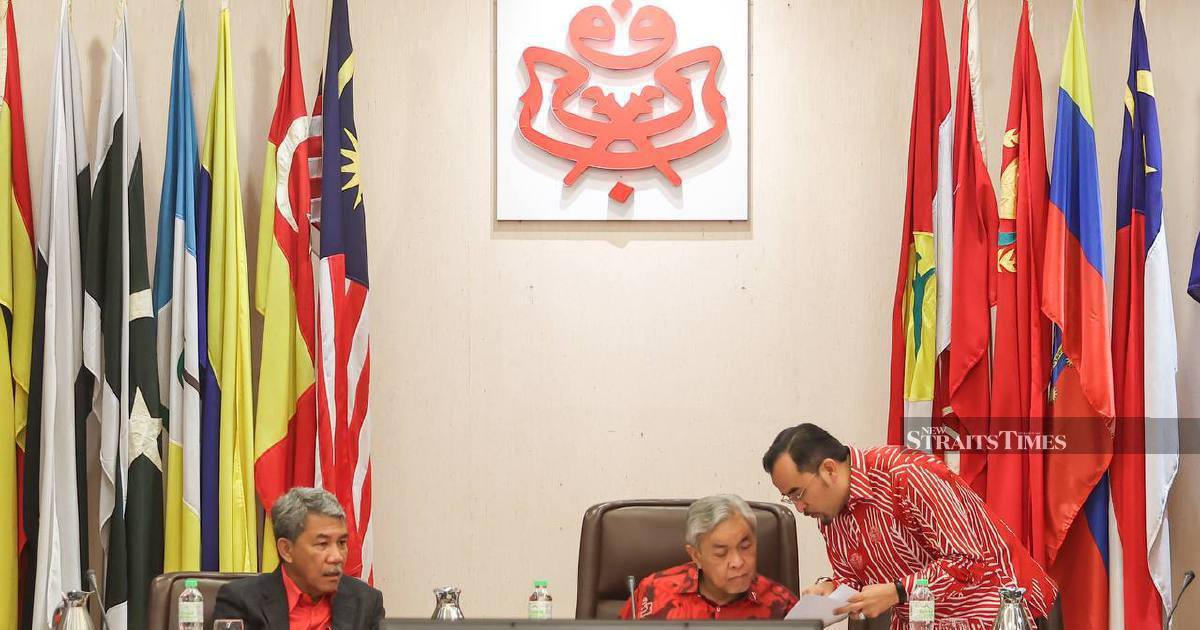
The Umno secretary-general, Datuk Dr Asyraf Wajdi Dusuki, has issued a significant statement reiterating a fundamental principle of Malaysia's criminal justice framework: those taken into custody for investigative purposes should not be stigmatised or legally regarded as wrongdoers prior to judicial proceedings. His remarks underline the critical distinction between being placed under investigation and being found accountable through the courts, a distinction that remains central to the nation's legal protections for individuals accused of wrongdoing.
The principle of presumption of innocence stands as one of the pillars of common law jurisdictions, including Malaysia's legal system. This foundational concept ensures that every person retains their legal status as innocent until the state successfully proves guilt beyond reasonable doubt in a competent court of law. By publicly affirming this principle, Asyraf appears to be addressing concerns about how individuals at various stages of the investigative and prosecutorial process are treated and portrayed in public discourse.
The timing of such a statement carries particular weight in Malaysia's current political and legal environment. The country has witnessed several high-profile investigations and prosecutions in recent years involving prominent political figures and business personalities. These cases have often generated intense media coverage and public commentary, sometimes blurring the lines between investigative proceedings and judicial verdicts in the public consciousness. When government officials, particularly those in leadership positions within major political parties, articulate support for proper legal safeguards, they signal an expectation that due process should be respected throughout the investigative phase.
Detention for investigative purposes in Malaysia is governed by specific legal provisions under the Criminal Procedure Code and other statutory instruments. While law enforcement agencies require certain powers to gather evidence and question suspects, these powers are circumscribed by constitutional protections and procedural requirements. The statement by the Umno secretary-general essentially reinforces that investigative detention, whatever its procedural necessity, does not alter a person's legal status or should not predetermine the outcome of any subsequent court proceedings.
The practical implications of such reminders extend beyond courtroom procedure to encompass societal attitudes and media responsibility. In an era of social media and instantaneous news dissemination, public opinion can crystallise rapidly around an individual facing investigation. Statements from senior political figures that reinforce the legitimacy of legal protections help counterbalance potential media sensationalism and mob psychology that can contaminate the investigative and trial process. When political leaders explicitly champion the presumption of innocence, they contribute to creating a political culture that respects judicial independence and procedural integrity.
For Malaysian readers and businesses operating within the country's regulatory environment, such clarity is reassuring. Companies and individuals who may become subjects of regulatory inquiries or criminal investigations benefit from knowing that the political leadership acknowledges the principle that investigation alone does not denote guilt. This distinction becomes especially important for foreign investors assessing the predictability and fairness of Malaysia's legal framework, as respect for fundamental legal protections influences their confidence in engaging with the Malaysian economy.
Ashraf's intervention also reflects broader developments within Umno itself, particularly regarding how the party positions itself on rule of law and governance issues. As Malaysia's largest political party and a major governing coalition partner through the Barisan Nasional, Umno's stance on fundamental legal principles carries considerable institutional weight. By ensuring that party leadership openly supports such principles, the party reinforces its commitment to constitutionalism and democratic governance, distinguishing between political opposition and criminal culpability.
The challenge of maintaining this principle in practice remains substantial. Investigative agencies require latitude to pursue leads and gather evidence, which may involve questioning and temporary detention. Media outlets seek newsworthy content, and the public naturally exhibits curiosity about prominent figures facing investigation. The political opposition has incentives to amplify allegations against ruling coalition members. Against these competing pressures, reminders from senior government and party figures that investigative processes must remain distinct from judicial verdict-setting serve as important institutional checks.
Regionally, Malaysia's approach to these principles places it within the broader commonwealth legal tradition that has substantially adopted the presumption of innocence framework. Other Southeast Asian jurisdictions continue to grapple with similar tensions between investigative efficiency and procedural fairness. Malaysia's explicit reaffirmation of these protections contributes to regional discourse on legal standards and may influence how neighbouring countries approach their own investigative procedures.
Moving forward, the substance of such statements will be tested by how investigative and prosecutorial institutions actually conduct their operations. The true measure of Asyraf's commitment to protecting the presumption of innocence will emerge through how cases progress through Malaysia's courts and whether investigative detention practices conform to stated principles. For citizens and observers concerned about the trajectory of Malaysia's legal system, such public commitments from party and government leaders, while important as statements of principle, must be accompanied by consistent institutional practices that genuinely safeguard individual rights throughout the investigative and judicial process.

