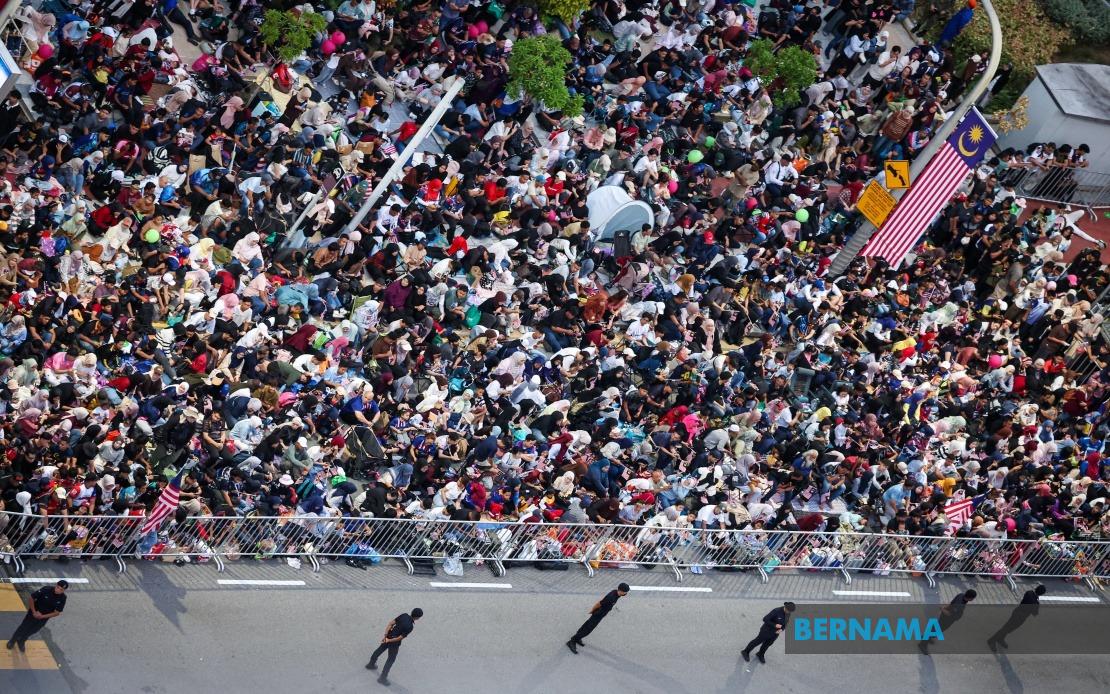
Anticipation for Malaysia's 69th National Day celebration drew large crowds to Dataran Putrajaya, with visitors arriving as early as the evening before the event to claim premium viewing spots along the parade route. The overwhelming turnout demonstrated the enduring appeal of the nation's signature patriotic commemoration, with families, photographers, and enthusiasts willing to spend the night in the open to secure unobstructed sightlines for what promised to be a memorable spectacle showcasing the country's cultural diversity and national pride.
Among the early arrivals was Mock Wei Qi, a 23-year-old freelance photographer who reached the venue at 11 pm with fellow creative professionals. His motivation reflected a growing trend of younger Malaysians using major national events as platforms to hone their craft while simultaneously celebrating their country. Mock Wei Qi explained that the team sought cinematically compelling vantage points from which to document Malaysia's distinctive characteristics through their lenses, viewing the National Day parade as an ideal testing ground for their photography and videography capabilities.
The drive to capture the perfect frame illustrated how national celebrations have evolved beyond mere spectating into opportunities for content creation and artistic expression. For photographers and videographers, events like these offer rare moments to work with large-scale productions and diverse crowds, allowing them to build portfolios while contributing to the broader visual narrative of Malaysian identity in the digital age.
Other attendees prioritised family experience over creative pursuits. A couple identified only as As and Adib brought their children, having learned from the previous year's experience when they arrived late and ended up too distant from the main proceedings to enjoy an optimal view. Their decision to camp overnight reflected a deliberate strategy to improve upon their earlier misstep, ensuring that this year their family would occupy a more advantageous position from which to observe the festivities together.
Similarly, Ahmad Azri Onn, 55, attended with his wife and three children aged between 10 and 15, transforming what might have been an uncomfortable overnight vigil into a family adventure. Having arrived around 5.30 pm the previous evening, Ahmad Azri deliberately framed the experience as a camping outing, effectively converting the waiting period into recreational activity for his younger family members during the school holidays. This perspective proved instrumental in maintaining morale and creating positive memories despite the unconventional circumstances.
Weather presented a potential challenge to overnight camping, yet participants found reason for cautious optimism. The light drizzle that fell on the evening preceding the event, rather than deterring the crowds, provided welcome relief from the oppressive heat typical of late August in the Klang Valley region. Ahmad Azri noted that his family remained comfortable throughout the night, suggesting that the meteorological conditions, though unpredictable, actually enhanced rather than diminished the overall experience for those prepared with basic weather protection.
The sheer volume of overnight arrivals underscored the competitive nature of securing advantageous viewing positions at major national events in Malaysia. Dataran Putrajaya, the carefully landscaped ceremonial precinct housing the seat of government, transformed into a makeshift camping ground as thousands of Malaysians staked claims to patches of open ground. The ground itself, designed with ceremonial occasions in mind, possessed sufficient capacity to accommodate the crowds, yet optimal sightlines remained limited, explaining the frenzied jockeying for position that characterised the hours before dawn.
By morning, the venue had filled substantially as additional spectators arrived to join those who had maintained their overnight vigil. The cumulative effect was an impressively dense gathering of humanity stretching across the landscaped expanse, all oriented toward the same focal point where the official proceedings would unfold. The sight of hundreds or thousands of umbrellas, blankets, and makeshift seating arrangements painted a vivid picture of collective anticipation.
The 69th National Day celebration carried the thematic designation "Malaysia MADANI: Kesejahteraan Dinikmati," a phrase emphasising inclusive prosperity and shared wellbeing across the Malaysian population. This official theme, with its implicit emphasis on societal cohesion and equitable development, provided ideological framing for the spectacle about to unfold. For many attendees, particularly families introducing younger generations to this annual ritual, the symbolic content of National Day extended beyond pageantry into the realm of civic education and national identity formation.
The scheduled 8 am commencement time meant that early arrivals would endure several additional hours of waiting following the overnight camps. For many, particularly families with young children, this extended period tested patience and physical endurance. Yet the willingness to undergo such inconvenience spoke volumes about the continued resonance of National Day in Malaysian popular consciousness, suggesting that despite modernisation, economic development, and social change, the impulse to gather collectively and affirm national identity remained potent.
The phenomenon of overnight camping for parade viewing access reflected broader patterns evident across Southeast Asia, where major national celebrations frequently draw enormous crowds willing to sacrifice comfort for proximity to ceremonial proceedings. This behaviour pattern transcended socioeconomic boundaries, encompassing working-class families, young professionals, and retirees alike. The diversity of motivations—from personal photography projects to multigenerational family bonding to simple patriotic observance—revealed the multifaceted role that such occasions play in Malaysian society.
For venue organisers and government officials responsible for crowd management and public safety, the enthusiastic turnout presented both logistical challenges and validating evidence of public engagement with national commemorations. The successful accommodation of thousands of overnight visitors, while maintaining orderly conditions, reflected the institutional capacity developed through decades of organising such events at Dataran Putrajaya.

