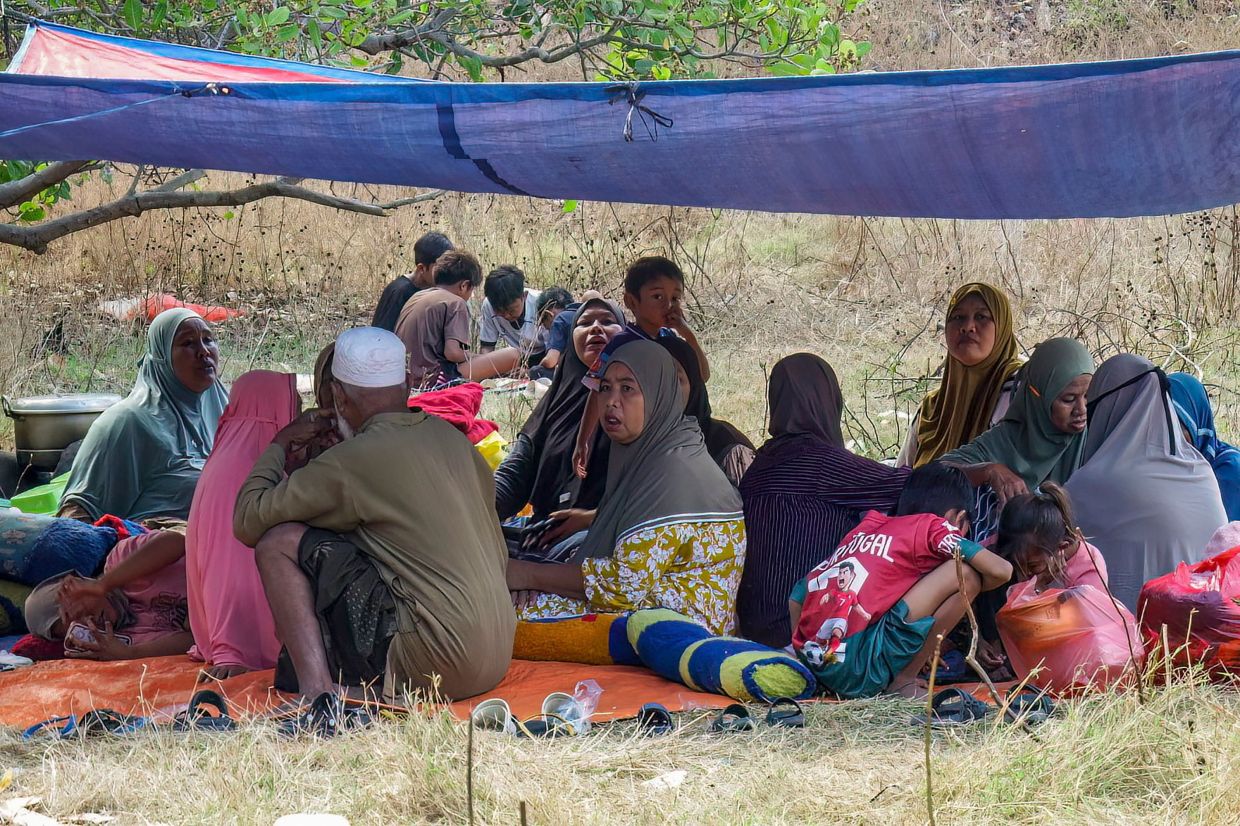
Thousands of displaced residents remained in temporary shelters on Indonesia's Flores island on Sunday, a day after a devastating 7.7-magnitude earthquake claimed 48 lives and triggered widespread destruction across communities. The powerful tremor, which struck early Saturday morning off the north coast of the island in East Nusa Tenggara province, forced approximately 5,000 people to abandon their homes in panic, with many still too frightened to return even as rescue and assessment operations continued.
The scale of the seismic event and its aftermath became clearer as disaster officials released detailed casualty and damage figures. According to Berton Suar Pelita Panjaitan, a spokesman for Indonesia's BNPB national disaster agency, at least 101 residents sustained injuries requiring medical attention. The death toll climbed by one overnight as rescue teams continued to search through rubble and damaged structures. Beyond the human toll, the earthquake caused substantial infrastructure damage that has severely disrupted normal life for survivors. At least 914 houses suffered severe damage, while hundreds more sustained varying degrees of harm, leaving vast swathes of the island uninhabitable.
The disaster also crippled public services across affected areas. Educational facilities bore the brunt of the damage, with 93 schools either destroyed or severely compromised. The healthcare system proved equally vulnerable, with 36 medical facilities damaged, severely hampering the ability to treat the injured at a critical moment. Government administrative offices and other public infrastructure, numbering 38 damaged facilities, further complicated relief coordination. The earthquake's shallow depth and offshore location, combined with the predominantly low-rise character of Flores settlements, helped prevent even greater loss of life, though the toll remains substantial for this corner of Indonesia.
Fears of a secondary disaster compounded the crisis immediately after the initial quake. Residents reported observing the sea withdrawing from coastal areas, a phenomenon that typically precedes tsunami waves. In response, thousands fled to higher ground, with some communities climbing hillsides to escape potential inundation. While Indonesia's BMKG geological agency later reported waves reaching up to 1.6 metres in some coastal regions, the anticipated catastrophic tsunami did not materialise and authorities eventually lifted the tsunami warning. However, officials maintained strict warnings against returning to damaged structures, as the extraordinary aftershock sequence—341 separate tremors in the hours following the main quake—posed an ongoing risk of building collapses.
The human dimension of the disaster became evident in accounts from survivors clinging to hillsides. Umri, a 55-year-old resident of Nangahale village on the island's north coast, described spending an entire day and night on an exposed hilltop alongside neighbours, afraid to risk returning home even as hunger and thirst set in. Speaking to reporters on Sunday morning, he articulated the immediate survival crisis gripping evacuees: "We need food, drink, medicines, and diapers for the children." Similarly, Nurhidayati, also 55, spent the night sleeping on a mat on the same hillside, her trauma compounded by horrific memories of a previous catastrophe.
Nurhidayati's anxiety reflected a deeper historical wound affecting the island's population. Three decades earlier, in 1992, Flores had been struck by an identical 7.7-magnitude earthquake followed by a tsunami that killed approximately 2,500 people. That tragedy remained etched into the collective memory of long-term residents, with many survivors of the 1992 disaster now reliving their worst fears. For Nurhidayati and others traumatised by that prior experience, the latest seismic event triggered acute psychological distress alongside physical displacement. "I'm still terrified; my heart is pounding hard remembering yesterday's tremor," she told rescue workers, emphasising her reluctance to leave the temporary safety of the hilltop. Such accounts underscore how repeated seismic disasters create layers of vulnerability and trauma within affected communities.
The international response mobilised rapidly to address the humanitarian emergency. The government itself dispatched 50,000 aid packages totalling 275 tonnes of supplies to affected areas, providing immediate relief to displaced residents in emergency shelters. The International Federation of Red Cross and Red Crescent Societies began preparing to expand assistance to thousands sheltering in makeshift camps. European Union Commission President Ursula von der Leyen offered technological support, announcing that the bloc's Copernicus Earth observation satellite system would be deployed to assist search and rescue operations. Her statement posted on X platform declared: "Europe stands ready to deploy Copernicus, our eyes in the sky, to support search and rescue efforts. Indonesia, we stand with you," reflecting international solidarity with Indonesia during the crisis.
Disaster authorities identified critical gaps in emergency response capabilities, listing urgent requirements for comprehensive relief operations. Beyond food and water, survivors desperately needed emergency tents to provide shelter during the coming weeks, medical supplies to treat injuries and prevent disease outbreaks in crowded temporary camps, blankets and camp beds for protection against the elements, mats and other bedding materials, and electrical generators to restore power to areas still without electricity and telecommunications. Search and rescue official Fathur Rahman reported that initial combing operations had found no reports of people buried under collapsed structures or missing, suggesting that the relatively low population density and single-storey construction in most areas had limited entrapment incidents.
The provincial government of East Nusa Tenggara, which encompasses Flores, moved swiftly to formalise emergency protocols. Officials announced they were processing a formal decree to establish an official emergency response status lasting fourteen days, a legal designation that expedites resource allocation and coordination between government agencies. This administrative action underscores the need for sustained, intensive relief efforts extending well beyond the immediate aftermath, as displaced populations require weeks to rebuild basic services, structures, and psychological resilience.
Indonesia's vulnerability to seismic disasters reflects its treacherous geographical position within the Pacific "Ring of Fire," a horseshoe-shaped zone of extraordinary tectonic activity encompassing Japan, Southeast Asia, and the broader Pacific basin. The Indonesian archipelago sits atop converging tectonic plates where some of Earth's most violent seismic activity occurs with disturbing regularity. This reality came into sharp focus during the 2004 Indian Ocean earthquake, when a catastrophic 9.1-magnitude tremor off Sumatra's coast unleashed a tsunami that killed approximately 220,000 people across the region, with roughly 170,000 deaths in Indonesia alone. That event remains etched into modern history as one of the deadliest natural disasters ever recorded, demonstrating the apocalyptic potential of large-scale earthquakes in the region.
The Flores earthquake, though deadly and destructive, pales in absolute terms compared to 2004, yet it carries significance for regional disaster preparedness. Each seismic event adds to the body of experience informing evacuation protocols, building codes, and emergency response systems. For Malaysia and other Southeast Asian nations sharing similar tectonic exposures, the Flores disaster serves as a sobering reminder of the region's seismic reality and the imperative for robust disaster management infrastructure. The psychological and infrastructural recovery required in Flores will extend far beyond the fourteen-day emergency period, illustrating how earthquakes create long-term development challenges for vulnerable communities in Southeast Asia.

