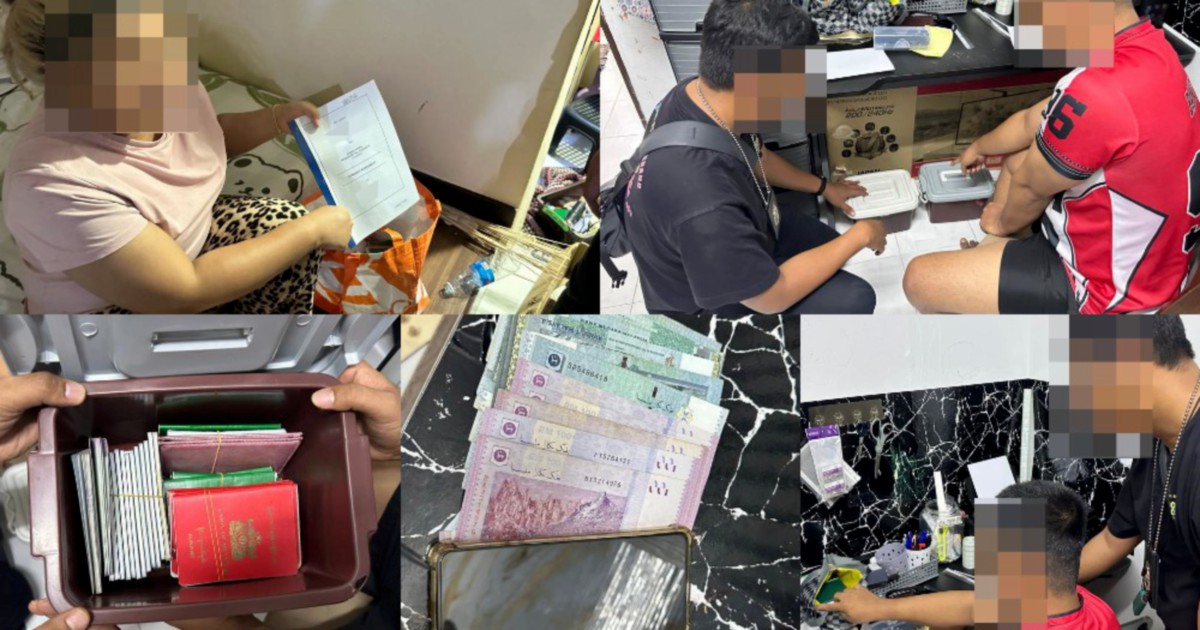
The Immigration Department has secured the arrest of three individuals in Kuala Lumpur, with investigators identifying one suspect as the suspected architect of an elaborate passport-forging operation. Datuk Zakaria Shaaban, director-general of the Immigration Department, announced the apprehension following what authorities describe as a coordinated enforcement action targeting the clandestine syndicate.
The targeting of the alleged ringleader represents a strategic shift in the department's approach to combating document fraud, moving beyond the apprehension of lower-level operatives to pursue those directing and profiting from forgery operations. Such networks have long posed a significant challenge to Malaysian border security and immigration management, as forged documents enable individuals to circumvent identity verification systems and facilitate irregular migration across Southeast Asian borders.
Passport forgery remains one of the most serious immigration-related offences in Malaysia, carrying substantial criminal penalties and reflecting the government's commitment to protecting document integrity. The crime carries implications that extend beyond immigration violations, as forged travel documents often intersect with human trafficking, transnational organised crime, and terrorism financing. By pursuing those at the apex of such organisations, authorities aim to disrupt the entire operation rather than merely addressing symptoms.
The Kuala Lumpur operation reflects broader regional trends in document fraud, where criminal networks exploit porous enforcement mechanisms and the high demand for travel documents among individuals seeking to migrate to developed nations. Southeast Asia has emerged as a significant hub for document fabrication, with syndicates leveraging access to legitimate blank forms, security printing technology, and corrupted officials to produce counterfeit documents of increasingly sophisticated quality.
The arrests underscore the escalating technological sophistication of forgery operations in the region. Modern counterfeit passports incorporate security features including holograms, microprinting, and digital encoding that mirror legitimate documents, making detection increasingly difficult at border checkpoints. This technological arms race between forgers and immigration authorities has prompted Malaysia and neighbouring countries to invest in advanced document verification systems and enhanced training for immigration officers.
For Malaysian travellers and legitimate immigrants, such enforcement actions carry important implications. The presence of sophisticated forgery networks can lead to increased scrutiny of all travel documents at border controls, potentially slowing processing times and creating complications for law-abiding citizens. Enhanced security protocols implemented in response to syndicate activities, while necessary, inevitably impose additional burdens on the travelling public.
The three-person arrest figure suggests the syndicate operated with a relatively lean operational structure, a common characteristic of successful criminal organisations that minimise exposure and reduce communication chains that might betray their existence to authorities. Such tight-knit groups typically rely on trusted associates and compartmentalised roles, making infiltration by undercover operatives particularly challenging.
The investigation leading to these arrests likely involved months of surveillance and intelligence gathering, though the precise methodology remains undisclosed by the department. Such investigations frequently involve coordination between the Immigration Department and the Royal Malaysia Police, as well as international partners through regional law enforcement networks such as the ASEAN Community Surveillance Coordination Centre.
The successful identification and apprehension of the suspected mastermind carries symbolic significance within Malaysian law enforcement circles, demonstrating the department's capability to progress investigations beyond initial arrests. However, authorities acknowledge that dismantling individual syndicates, while important, requires sustained investment in border technology, personnel training, and international cooperation to address the systemic vulnerabilities these networks exploit.
Regional security implications also merit consideration. Document fraud directly affects Malaysia's standing within international travel security frameworks and its participation in visa waiver schemes with developed nations. Countries scrutinising the integrity of Malaysian travel documents may impose reciprocal restrictions or enhanced verification requirements on Malaysian travellers, indirectly punishing the broader population for security failures.
Looking forward, the case underscores the necessity for comprehensive approaches combining law enforcement action with preventive measures such as advanced document security features and improved verification infrastructure. The Immigration Department continues working to modernise its systems and strengthen international intelligence-sharing arrangements that enable earlier detection of forgery operations before they reach operational maturity.
As investigations proceed against the detained suspects, prosecutors will need to establish the scope of the syndicate's operations, identify downstream recipients of forged documents, and determine whether the network maintained connections to other criminal enterprises. The outcomes will likely shape subsequent enforcement priorities and inform policy discussions regarding immigration security in Malaysia.

