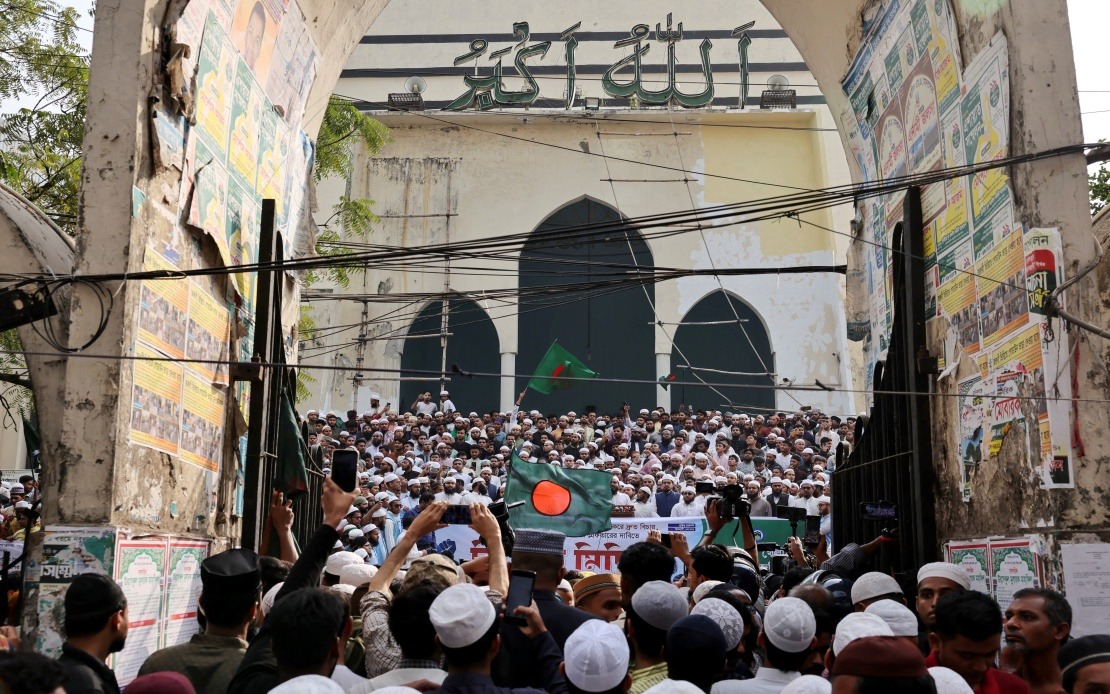
A special tribunal in Bangladesh delivered death sentences against three senior police officers on Sunday, finding them guilty of crimes against humanity stemming from their involvement in the killing of protesters during the tumultuous 2024 uprising that ultimately brought down the government. The International Crimes Tribunal, chaired by Justice Md Golam Mortuza Mozumder, issued the verdicts following extensive proceedings that examined the circumstances surrounding multiple deaths during the July uprising. The three convicted officers, all currently fugitives, include former Dhaka Metropolitan Police Commissioner Habibur Rahman, former DMP Additional Deputy Commissioner Md Rashedul Islam, and former Rampura Police Chief Md Mashiur Rahman. The tribunal additionally sentenced two other defendants to life imprisonment plus 20 years in connection with the same incidents.
The deaths that triggered these prosecutions gained international attention after graphic videos circulated on social media depicting brutal treatment of civilians during the mass protests. Among the most shocking cases was the killing of a young man who was shot while hanging from a building in central Dhaka, an image that became symbolic of the uprising's violence. The tribunal's evidence showed that police officers under the command of the convicted defendants were responsible for multiple fatal shootings that month, incidents that catalysed widespread outrage and accelerated momentum for political change. These killings were not isolated events but part of a broader pattern of state violence employed to suppress the uprising that began in July and intensified through August.
The unrest that began as student-led protests over job quota policies rapidly transformed into a national uprising against the government of Prime Minister Sheikh Hasina. According to United Nations estimates, approximately 1,400 people were killed during the uprising, with thousands more suffering injuries, the vast majority inflicted by police gunfire. Security forces acting under Hasina's direction and the control of her Awami League party deployed increasingly lethal tactics as protests expanded across urban centres and spread to rural areas. The scale and intensity of the crackdown revealed a government determined to maintain power through force rather than engage with legitimate grievances about governance and economic management. By early August, the pressure had become insurmountable, and Hasina ultimately fled the country, going into exile and leaving behind a shattered political landscape.
The tribunal's handling of these cases represents a critical test of Bangladesh's commitment to accountability and rule of law in the aftermath of political upheaval. In November, the same court had already sentenced Hasina herself to death in absentia on separate charges relating to crimes against humanity, establishing a precedent for holding senior government figures responsible for state violence. The conviction of serving police officers builds on this foundation, signalling that responsibility extends beyond political leaders to security force commanders who implemented lethal policies. However, the fact that all convicted defendants remain fugitives—with Habibur Rahman having already received a death sentence in another case—underscores the practical challenges Bangladesh faces in enforcing accountability. The absence of the accused from courtrooms raises questions about whether justice can be fully served when the convicted cannot be physically apprehended.
These prosecutions carry significant implications for Southeast Asia's broader struggle with accountability mechanisms and transitional justice. Many countries in the region have experienced similar cycles of political upheaval accompanied by security force violence, yet rarely have senior officers faced meaningful consequences. Bangladesh's tribunal approach, rooted in international law standards and addressing crimes against humanity rather than ordinary criminal charges, offers a template that other nations might consider. The prosecutions also demonstrate that even after a government has fallen, successor authorities can pursue systematic investigations and legal action against perpetrators of state violence. This capability may influence how future security forces operate during moments of political instability, potentially creating deterrent effects beyond Bangladesh's borders.
The broader context of the 2024 uprising reveals deep fractures within Bangladesh's political system and society that extend far beyond the immediate trigger of job quotas. The Awami League's decades of dominance had created entrenched networks of patronage and corruption that alienated many citizens, particularly younger generations facing limited economic opportunities. When students mobilised against perceived nepotism in government hiring, they tapped into accumulated grievances about governance, inequality, and democratic decline. Security forces responded not with restraint or negotiation but with escalating violence, a choice that ultimately proved catastrophic for the government's survival. The uprising thus reflected a fundamental loss of legitimacy and willingness among significant segments of the population to accept authoritarian governance, regardless of the administration's development credentials.
For Malaysian observers, the Bangladesh case offers instructive lessons about the fragility of political systems that rely excessively on security force dominance and the concentration of power. While Malaysia's democratic institutions have proven more resilient over time, periodic tensions around governance, accountability, and equitable economic opportunity persist. The tribunal convictions underscore the long-term costs of failing to address legitimate public grievances through dialogue and reform. They also highlight the importance of maintaining security force discipline and ensuring that police and military leadership understand that following patently unjust orders carries personal legal consequences. In Bangladesh's case, the fact that high-ranking officers like a former metropolitan police commissioner could be convicted suggests that senior positions offer no shield against accountability when institutions function with sufficient independence.
The practical challenges of enforcing these sentences remain considerable. Habibur Rahman, the former DMP Commissioner, had already fled Bangladesh and is unlikely to voluntarily surrender. Similarly, the other convicted officers have evaded capture despite their high profiles and the resources available to pursue them. This raises questions about whether Bangladesh's successor government has sufficient political will and institutional capacity to pursue extradition or capture these individuals, particularly if they have fled to countries with limited extradition agreements. The tribunal's convictions acquire moral and symbolic weight in establishing official accountability and historical record, yet their practical enforcement may prove elusive. International cooperation mechanisms, still developing in South Asia, will be tested in seeking compliance from other nations that might harbour fugitives.
The convictions also reflect the International Crimes Tribunal's interpretation of crimes against humanity in the specific context of the 2024 uprising. By prosecuting police commanders for killings committed during civilian protests, the tribunal has essentially declared that such conduct violates international humanitarian standards regardless of claims about maintaining order or preventing further unrest. This interpretation aligns with global best practices in international criminal law but represents a significant development for Bangladesh's justice system. The tribunal's work signals that future security force operations will be evaluated against international standards, not merely domestic legal frameworks that might permit broader latitude for official violence. This recalibration of legal standards may have lasting effects on how police and military personnel approach public order situations in the coming years.
Looking forward, Bangladesh faces the challenge of building a more inclusive and responsive political system that can accommodate diverse interests and address grievances through democratic means rather than through force. The tribunal convictions represent one dimension of accountability, but sustainable change requires broader institutional reforms in security sector governance, anti-corruption enforcement, and democratic participation. The ousted Hasina government had initially claimed to represent progressive development and women's empowerment, yet its reliance on security force violence ultimately delegitimised these claims. Future governments, both in Bangladesh and throughout the region, will face pressure to demonstrate that development and security can be achieved alongside accountability and respect for civil liberties. The tribunal's work provides a foundation, but the heavy lifting of genuine reform remains ahead.

