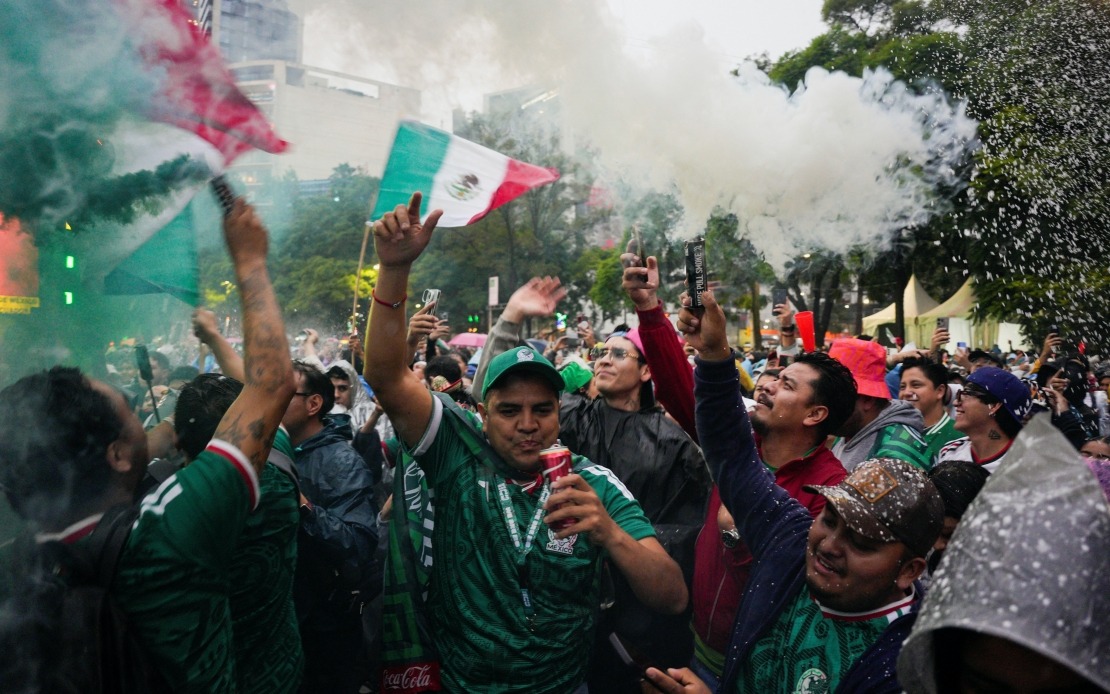
Three people have been pronounced dead in Mexico City following jubilant street celebrations after the national football team secured passage to the World Cup knockout stages on Tuesday night. Authorities confirmed that the victims—a 44-year-old man, a 19-year-old woman, and a 48-year-old woman—all succumbed to asphyxiation injuries near central Mexico City's Paseo de la Reforma district. The tragic incidents unfolded as thousands of supporters converged on the capital's thoroughfares following Mexico's commanding 2-0 defeat of Ecuador at the Estadio Azteca.
The Mexico City Secretary of Public Health formally documented the three deaths, with emergency response teams deployed immediately upon receiving initial reports of unconscious individuals scattered across different locations in the Paseo de la Reforma vicinity. Despite prompt medical intervention and the activation of all available emergency protocols, medical personnel proved unable to revive any of the three patients. The circumstances surrounding each incident remain under investigation, though asphyxiation has been cited as the common cause across all three fatalities.
Clara Brugada, serving as head of government in Mexico City, acknowledged the tragedy through a formal statement posted to her X account. She referenced the health department's initial assessment and confirmed that emergency teams had responded rapidly to separate reports of unresponsive individuals throughout the central district. Brugada extended formal condolences to the bereaved families, emphasizing that the city administration has established direct contact with relatives to coordinate support services and assistance during this period of loss.
The tragedy introduces a sobering dimension to Mexico's footballing achievement and raises broader questions about public safety during mass celebrations in densely populated urban environments. Large-scale sporting celebrations—particularly those involving hundreds of thousands of people converging on limited street space—inevitably create hazardous conditions including crush injuries, restricted airflow, and panic situations. Mexico City, as one of the world's largest metropolitan areas with a population exceeding 20 million across its metropolitan zone, presents particular challenges when managing spontaneous public gatherings.
Mexico's advancement to the World Cup's knockout round came at the expense of Ecuador, whom they defeated with clinical efficiency at their fortress venue of the Estadio Azteca. The victory ensured their passage from the group stage and kept alive the possibility of facing England in the subsequent round, contingent upon Thomas Tuchel's team overcoming DR Congo in their Wednesday fixture. For Mexican supporters, the qualification represented a moment of national pride after months of preparation and anticipation surrounding their World Cup campaign.
Brugada's formal statement included an explicit appeal to the public regarding celebratory conduct, urging citizens to express their enthusiasm "with responsibility, care, and empathy" in future occasions. This messaging reflects a growing awareness among city authorities of the tension between permitting legitimate public expression and maintaining baseline safety standards during uncontrolled gatherings. The appeal acknowledges that celebratory enthusiasm, while understandable and natural, must be tempered by awareness of surrounding individuals and potential hazards.
For Malaysian observers and Southeast Asian sports enthusiasts more broadly, the Mexico City incident offers a cautionary example of how major sporting moments can generate unintended consequences despite their inherent celebratory nature. Southeast Asian nations have experienced similar crowd-related incidents during football celebrations, particularly surrounding major tournaments and derby matches. The capacity for sporting passion to override safety consciousness represents a persistent challenge for metropolitan authorities across the developing world.
The incident also highlights disparities in emergency response capabilities across different global cities. Mexico City's health authorities responded swiftly with multiple emergency teams mobilized to different locations, yet this rapid deployment and comprehensive medical protocol proved insufficient to prevent the tragic outcomes. This underscores how certain physical circumstances—particularly asphyxiation in densely packed crowds—may resist intervention regardless of response speed or medical sophistication.
Looking forward, the tragedy may influence how Mexican authorities approach public celebrations should the national team progress further in the tournament. Potential measures might include establishing designated celebration zones with controlled access, deploying additional safety personnel in high-risk areas, and implementing public awareness campaigns regarding crowd safety. Other nations preparing for major tournaments may similarly reassess their crowd management protocols based on this incident.
The deaths represent a stark reminder that sporting achievement and national celebration, while legitimate expressions of collective joy, require thoughtful management and continuous attention to participant welfare. As Mexico City mourns the loss of three citizens whose final moments coincided with national celebration, the broader question emerges regarding how societies can preserve the emotional authenticity of sporting achievement while implementing necessary safeguards to protect public welfare and prevent tragedies.

