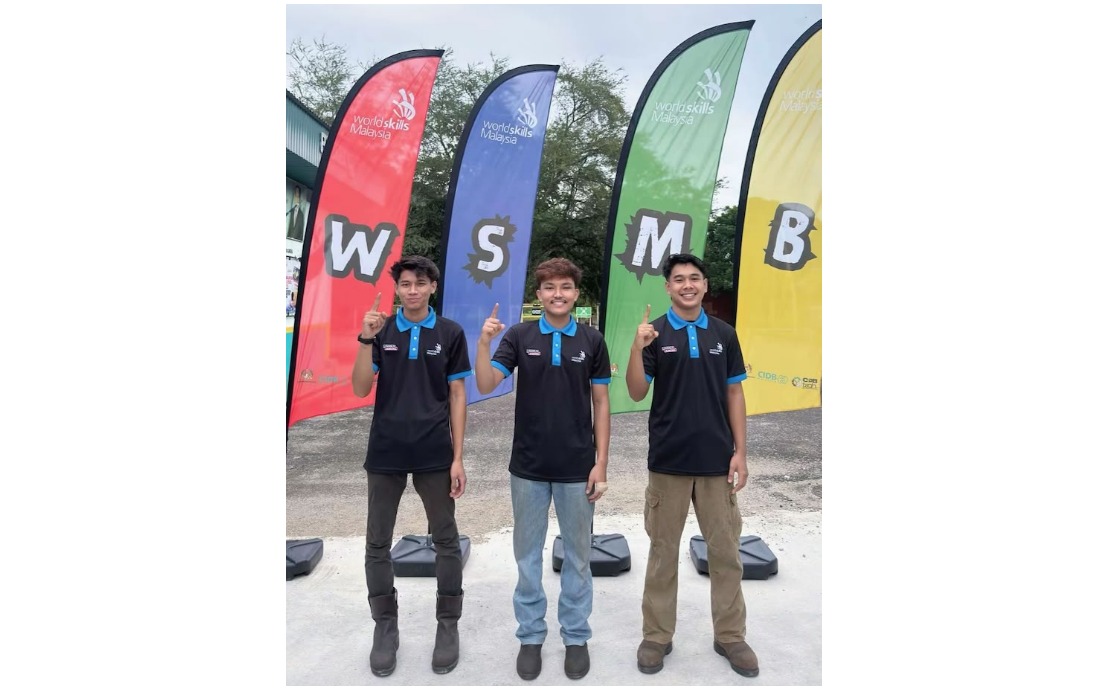
WorldSkills Malaysia Belia (WSMB) has spent more than three decades cultivating skilled professionals for Malaysia's construction sector, beginning its journey in 1990 under the vision of former Prime Minister Tun Dr Mahathir Mohamad. Originally established as the Malaysian Skills Champion Competition, the initiative underwent multiple transformations reflecting changing priorities and industry demands. It became the Anugerah Tangan Emas Perdana Menteri from 1991 to 2006, subsequently rebranded as MySkills between 2007 and 2013, before adopting its current name in 2014. Each evolution of the programme reflected a deepening commitment to aligning skills development with national economic objectives and global benchmarking standards.
The true value of WSMB extends far beyond hosting annual competitions. Successful participants advance through comprehensive development and training initiatives designed to prepare them for Malaysia's representation at the WorldSkills international competition, an elite platform where nations showcase their most exceptional tradespeople. This pathway transforms regional champions into ambassadors capable of competing against the world's best-trained craftsmen and women. The structured progression model ensures that Malaysia consistently fields competitive teams whilst simultaneously building a domestic talent pipeline of internationally-calibre professionals.
The programme's institutional backbone comprises the Malaysian Construction Academy (ABM) and CIDB Technologies, both CIDB-accredited facilities housing state-of-the-art infrastructure meeting international certification requirements. These training centres provide participants with access to equipment, methodologies and mentorship reflecting current industry practices. The investment in physical infrastructure and human expertise demonstrates Malaysia's serious commitment to skills development rather than treating it as a peripheral initiative. This institutional embedding ensures programme continuity and quality irrespective of political cycles or budgetary pressures.
Mohd Hafiz Dasahi, the chief executive of CIDB Technologies, articulated a vision extending beyond competition mechanics. He emphasised WSMB's role in cultivating a generation of construction professionals equipped to catalyse industry transformation. This perspective reframes skills competitions as strategic investments in national competitiveness. By prioritising work-ready graduates capable of meeting international standards and integrating cutting-edge technology, the programme addresses a persistent challenge facing developing economies—the gap between qualifications and industry-ready capability. Dasahi's emphasis on aligning training with actual industrial demands, rather than theoretical curricula, reflects sophisticated understanding of workforce development.
Assessment methodology within WSMB reflects comprehensive evaluation beyond technical competence. Zarulhakim Abdul Rahim, heading CIDB Technologies' welding division, outlined criteria encompassing dimensional precision, workmanship quality, adherence to welding protocols, temporal management, problem-solving capability and occupational safety compliance. This multifaceted evaluation framework cultivates rounded professionals rather than narrowly-skilled technicians. Participants simultaneously develop softer competencies including self-assurance, organisational discipline, perseverance and commitment to continuous improvement. The exposure to international technologies and methodologies during competition preparation extends their capabilities beyond domestic practice, positioning them for careers in globalised supply chains.
The construction and allied industries face persistent talent shortages across Southeast Asia, with Malaysia no exception. WSMB addresses this challenge by producing workforce members genuinely meeting sectoral requirements across construction, manufacturing, petroleum, energy and maritime domains. The programme strengthens institutional collaboration between training providers and industry enterprises, ensuring curriculum relevance amidst rapid technological evolution. This partnership model prevents training disconnection from market realities, a common failing in traditional vocational education systems that often lag industry advancement.
Private sector engagement amplifies programme effectiveness. Lincoln Energy and Vinxus Mark, welding equipment and technology providers, donate machinery, consumables and technical expertise to WSMB participants. Sales engineer Putra Faisal Ashraf Idris articulated this industry perspective: companies recognise shared responsibility for workforce cultivation. By supplying contemporary equipment and authentic workplace conditions during training, industry partners ensure participants experience genuine industrial environments. This approach bridges the historical gap between training simulations and real workplace demands, accelerating new workers' productivity and reducing employer training burdens.
Participant testimonials illuminate WSMB's transformative potential. Ahmad Syafie Dasuki, twenty years old from Kelantan, accumulated workshop experience in Terengganu before joining the competition. His journey illustrates how WSMB serves as acceleration mechanism for workers already displaying aptitude, enabling them to formalise skills and access international exposure. His emphasis on encountering latest technology through the programme reflects youth aspirations to engage contemporary practice rather than accepting stagnant techniques. Similarly, Muhammad Fazran Md Rashid's welding career in Kedah demonstrates that competition participation extends beyond elite athletes to encompass working professionals seeking skill advancement.
Mohd Sahmi Irfan Sulaimi, from Terengganu, embodied a mentoring perspective, encouraging broader youth participation. His observation that WSMB delivers tangible career benefits beyond competition credentials—including networking with industry specialists, professional relationship building and employment pathway opening—addresses practical concerns facing Malaysian youth contemplating vocational trajectories. His encouragement to embrace challenges as learning opportunities reflects psychological resilience development, an often-overlooked competitive advantage in knowledge-intensive industries requiring continuous adaptation.
The programme's evolution across 36 years reflects Malaysian policymaking responsiveness to economic transformation. From initial emphasis on gold-standard craftsmanship through to current integration of Industry 4.0 technologies, WSMB demonstrated adaptive capacity. This institutional flexibility enables Malaysia to maintain workforce relevance amidst technological disruption affecting traditional construction trades. As economies across Southeast Asia navigate automation and digital integration, skills development systems maintaining this adaptability will prove increasingly valuable.
Looking forward, WSMB occupies strategic importance within Malaysia's broader economic positioning. Southeast Asian economies compete intensely for manufacturing and construction investment. Nations cultivating demonstrably superior workforces attract higher-value activities. WSMB contributes to this competitive advantage by producing internationally-benchmarked professionals capable of executing complex projects demanding precision, technological sophistication and commitment to quality. The programme thus transcends workforce development to become component of national economic strategy, directly influencing Malaysia's capacity to capture regional economic opportunities.
The continuing success of WorldSkills Malaysia Belia demonstrates that systematic investment in skills development yields measurable returns across individual, sectoral and national levels. Participants gain career prospects and personal development. Industries secure competent workforces aligned with technological requirements. Malaysia strengthens competitive positioning within regional and global contexts. Three decades onward, the initiative originating from visionary leadership continues generating tangible benefits, suggesting that sustained commitment to skills excellence remains fundamental to inclusive economic development.

