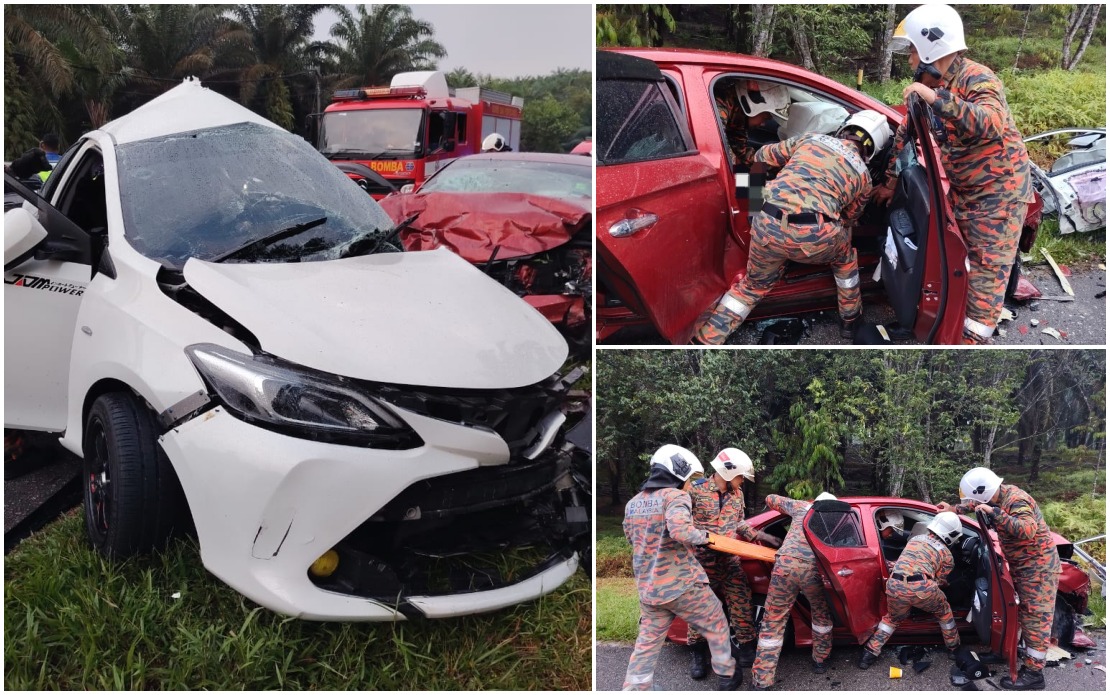
A fatal two-vehicle collision in Kota Tinggi on Sunday afternoon claimed three lives, underscoring the ongoing road safety challenges on Johor's major routes. The crash, which occurred near a petrol station in Tanjung Leman along Jalan Jemaluang, involved a Honda City and a Toyota Vios, both common commuter vehicles on Malaysian roads. The victims included two occupants from the Honda City—a 21-year-old man and a 20-year-old woman—alongside a 31-year-old driver in the Toyota Vios. All three were pronounced dead at the scene by Health Ministry personnel.
Emergency responders from the Fire and Rescue Department received notification of the incident at 5.05 pm and mobilized a team of eight firefighters to the location, which lay approximately 45 kilometres from their station. Given the distance and the critical nature of the emergency, the firefighting unit wasted no time in reaching the crash site in an effort to assist any survivors and remove trapped occupants. The response time reflects the challenges faced by emergency services in more distant areas of the district, where infrastructure and personnel are spread across larger geographical areas.
Upon arrival, Senior Fire Officer II Azlan Hamzah's team discovered the extent of the collision and immediately began extraction operations. Using specialized rescue cutting equipment and stretchers, firefighters worked to remove all three victims from the mangled vehicles. The use of rescue cutters, standard equipment at major incidents involving significant vehicle deformation, indicates that the force of the collision was substantial enough to require mechanical assistance for extraction. The operation concluded at 6.59 pm, meaning the entire emergency response and victim recovery process spanned nearly two hours.
The incident represents another reminder of the vulnerability of road users during peak travel periods. The late afternoon timeframe of the collision—5.05 pm—coincides with the tail end of the working day when traffic volumes on main roads typically increase. Driver fatigue, reduced visibility as daylight fades, and the rush to reach destinations are all factors that commonly contribute to accidents during this period. The location near a petrol station in an established commercial area suggests this was a busy stretch of road where traffic patterns and driver behaviour can significantly influence collision risks.
Kota Tinggi district police chief Superintendent Othman acknowledged in an initial statement that the circumstances surrounding the crash remain under investigation. While preliminary details confirm the vehicles involved and the fatalities, investigators will be examining multiple factors to determine causation. These may include vehicle speeds immediately before impact, road conditions, weather circumstances, whether any traffic violations occurred, and the mechanical condition of both vehicles. Such investigations are typically comprehensive and may take several weeks to complete before formal findings are released.
The collision highlights broader road safety concerns affecting Malaysian highways and district roads. Johor, as one of the country's most densely populated states with significant commercial activity and substantial daily traffic volumes, experiences regular incidents across its road network. The mix of heavy commercial vehicles, private cars, motorcycles, and varying driver experience levels creates complex traffic dynamics. Accidents involving passenger vehicles like the Honda City and Toyota Vios, which dominate Malaysia's domestic vehicle fleet, typically result in higher fatality rates compared to crashes involving larger vehicles due to reduced structural protection.
Emergency services in Malaysia have made significant advances in rescue capabilities and response coordination, yet the outcome of this incident underscores the limitations of even well-trained responders when prevention fails. While firefighters and paramedics can save lives at crash scenes, preventing collisions in the first place remains paramount. The three deaths in this single incident represent individual tragedies—families disrupted, potential cut short—that extend far beyond the statistics recorded in traffic reports.
For Malaysian motorists, particularly those regularly traveling through districts like Kota Tinggi on routes connecting major centres, this incident serves as a sobering reminder of the consequences of inattentive or aggressive driving. Speed management, maintaining safe following distances, and heightened alertness during peak hours are fundamental practices that can prevent such tragedies. The long-term investigation by Kota Tinggi police will eventually provide more specific insights into what led to this particular crash, information that road safety authorities can incorporate into education and enforcement strategies.
The emergency response procedures demonstrated by the Fire and Rescue Department, while professional and efficient, represent the reactive phase of road safety. Public awareness campaigns, driver education initiatives, vehicle maintenance standards, and road infrastructure improvements represent the proactive approaches necessary to reduce incident frequency. Regional publications like this serve as platforms to reinforce such safety messaging alongside reporting on individual incidents, creating awareness among Southeast Asian readers about the shared challenges all nations face in managing increasingly complex traffic environments.
As investigators continue their examination into the circumstances of the Kota Tinggi collision, motorists across Johor and beyond should reflect on their own driving practices. The three victims of this Sunday afternoon crash represent preventable losses in a nation working steadily to improve road safety outcomes. Their deaths will contribute to official statistics, but the human cost—felt deeply by families, friends, and communities—transcends numerical reporting.

