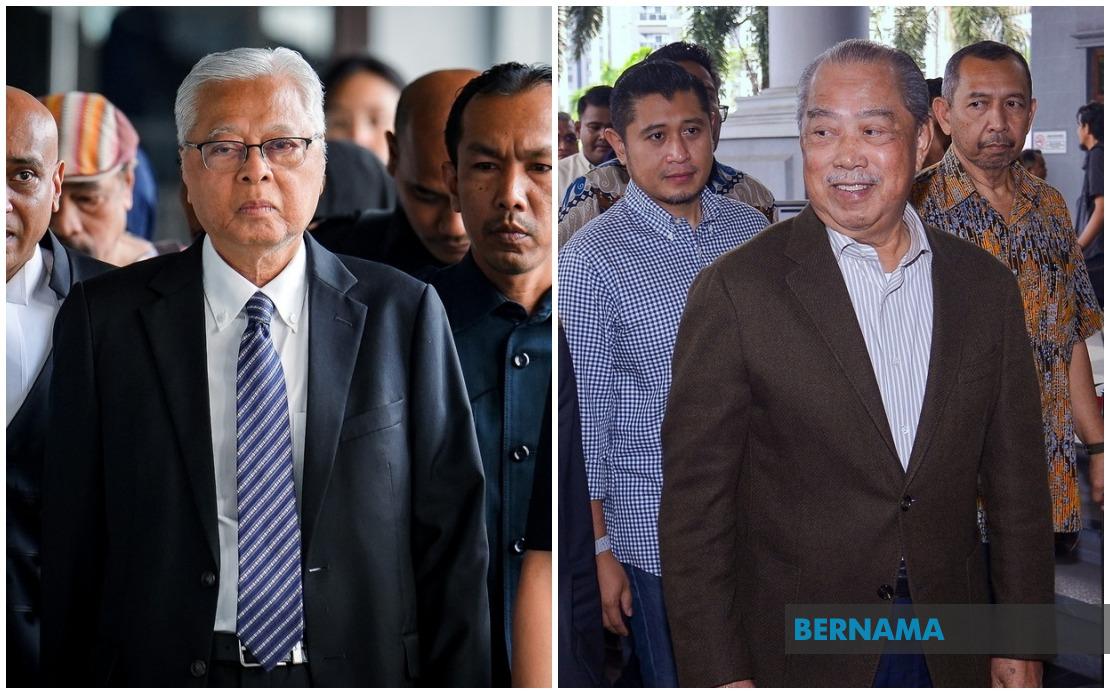
The simultaneous presence of three former prime ministers at the Kuala Lumpur Court Complex on August 27 created an extraordinary moment in Malaysian legal and political history, as Datuk Seri Najib Tun Razak, Tan Sri Muhyiddin Yassin, and Datuk Seri Ismail Sabri Yaakob attended separate court proceedings on the same day. The rare occurrence drew unprecedented media attention and raised questions about the judicial trajectory of Malaysia's recent political leadership and the implications for democratic accountability and governance standards in Southeast Asia.
The convergence underscores the complex legal landscape facing Malaysia's recent administrations. Over the past several years, the country has witnessed an unusual phenomenon of former heads of government facing formal charges or civil actions, reflecting broader tensions between political transitions, anti-corruption efforts, and institutional checks on executive power. This development stands in sharp contrast to the historical pattern in many Southeast Asian democracies, where former leaders often maintained privileged positions or informal immunity from prosecution. The simultaneous court appearance of all three recent predecessors signals a potential structural shift in how Malaysia's institutions address accountability at the highest levels of government.
Journalist V. Anbalagan of Free Malaysia Today, a veteran court reporter with extensive experience covering Malaysia's legal proceedings, characterized the moment as genuinely historic. He emphasized that during his career in journalism, he had never observed such a scenario unfold, describing it as a defining day in the nation's record. Anbalagan suggested that the probability of this exact situation repeating remains exceptionally low, given the unique confluence of timing, legal circumstances, and political factors that produced it. His perspective carries weight given the institutional memory required to assess such claims accurately within Malaysia's judicial and political contexts.
The logistical and security dimensions of managing three former prime ministers at a single venue simultaneously presented considerable organizational challenges. Court officials, working in coordination with police personnel from Sentul district headquarters and security teams from the Palace of Justice, implemented comprehensive preparations beginning the previous afternoon. The authorities issued between three and six categories of security passes distributed to different groups, including members of the public, accredited journalists covering open proceedings, and media personnel accessing video-link courtrooms. This differentiated access system reflected careful consideration of security protocols while maintaining principles of judicial transparency and press freedom.
Reporting on the events proved demanding for Malaysia's media fraternity, requiring coordination across multiple news organizations and outlets. Siti Zanariah Nor Zin, a Bernama TV news officer with sixteen years of journalism experience, noted the operational complexity of covering three simultaneous proceedings while maintaining journalistic standards. She emphasized that the staggered arrivals of the former prime ministers and their legal representatives provided sufficient intervals for news organizations to transmit updates to their headquarters, preventing the situation from descending into pure chaos. The controlled security environment outside the court premises allowed journalists to monitor movements and developments throughout the proceedings without significant disruption or safety concerns.
The first case involved Najib appearing before Judicial Commissioner Mohamad Redzuan Idrus for proceedings in a USD5.64 billion civil suit filed by 1Malaysia Development Berhad (1MDB) and its subsidiary against Najib and multiple other defendants. This matter, dealing with allegations of financial misappropriation connected to the sovereign wealth fund, represents one of the most significant civil recovery actions undertaken by Malaysian authorities in recent years. The scale of the claimed damages and the prominence of the defendant underscore the stakes involved in contemporary Malaysian governance litigation.
Muhyiddin's attendance centered on separate criminal proceedings before Judge Noor Ruwena Md Nurdin involving seven charges related to alleged abuse of power and money laundering connected to the Jana Wibawa programme. These charges emerged from investigations into how government resources were allocated during specific periods of his administration, reflecting ongoing scrutiny of spending practices and program administration during his tenure. The combination of abuse of power charges with money laundering allegations indicates serious concerns about potential improper enrichment or misuse of state resources.
Ismail Sabri faced charges before Judge Suzana Hussin concerning alleged failures to declare assets, including approximately RM14.7 million in cash, multiple foreign currencies totaling millions, and gold bars. Asset declaration requirements represent foundational elements of governance accountability systems, designed to prevent conflicts of interest and detect potential unexplained wealth accumulation. The specificity of the charges—naming particular currency amounts and precious metals—suggests documentary evidence supporting the allegations. Ismail Sabri subsequently posted RM300,000 bail with one surety and departed the court complex at 11:43 am.
The security officer Nik Zainab Jusoh reported that ground-level conditions remained calm and orderly throughout the proceedings, attributing this partly to advance briefings conducted with all deployed personnel. Security monitoring concentrated on upper-floor areas adjacent to courtrooms, where judicial proceedings occurred, while maintaining routine presence on ground floors. The briefing process ensured personnel remained alert to potential incidents, yet the actual execution proceeded without significant disruption or untoward events.
From a broader Southeast Asian perspective, Malaysia's willingness to prosecute or sue multiple recent heads of government through its courts reflects institutional resilience and independence, even when politically controversial. Many regional democracies struggle with or avoid such confrontations, fearing destabilization or civil-military complications. The Malaysian approach, whatever one's views on individual cases, demonstrates functioning judicial institutions capable of operating independently from political pressures. However, observers also note that such concentrated litigation against former leaders sometimes correlates with political score-settling or selective prosecution patterns, requiring sustained scrutiny of case selection criteria and evidentiary standards.
The media coverage itself represented a significant moment for Malaysian journalism, with reporters from Free Malaysia Today, Bernama, Utusan Malaysia, and television crews all converging to document proceedings. Amirul Aiman Osman of Utusan Malaysia noted that despite the hectic conditions and crowded circumstances, tight security protocols prevented any untoward incidents, though he had positioned himself at the venue since 7:00 am to ensure comprehensive coverage. His willingness to arrive hours early demonstrated journalism's commitment to institutional accountability and public information dissemination.
This convergence ultimately reflects Malaysia's complex political moment. The simultaneous legal entanglement of three consecutive prime ministers raises questions about whether existing governance standards and accountability mechanisms are functioning appropriately, whether selective prosecution is occurring, or whether genuine breaches of legal and ethical standards across multiple administrations warrant such proceedings. Malaysian citizens, observers, and regional analysts will monitor these cases closely to assess both the substantive outcomes and their implications for executive accountability and political stability in Malaysia's ongoing democratic trajectory.

