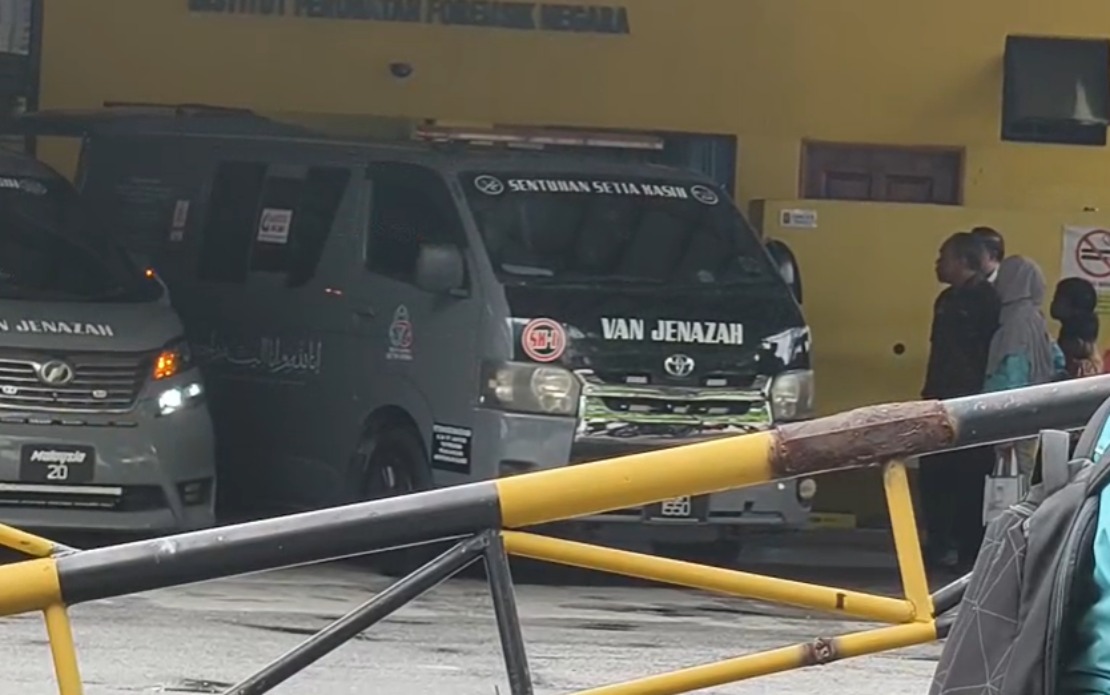
A Malaysian Immigration Department (JIM) lorry involved in a fatal collision on Jalan Sultan Ismail in the early hours of Monday has left three family members dead, with their remains now released for funeral proceedings. The bodies of Shaik Mohd Firdaus Shaikh Yahya, 53, and his two daughters Siti Nor Sazlin, 25, and Siti Darwisyah Auni, 12, were discharged from the National Institute of Forensic Medicine (IPFN) at Kuala Lumpur Hospital at approximately 5.45 pm following completion of post-mortem examinations. The three hearses departed the hospital to be handed to grieving relatives for funeral arrangements, marking a devastating conclusion to the forensic investigation phase.
According to the family's burial plans, the three victims will first be taken to Jamiul Ehsan Mosque on Jalan Pahang in Kuala Lumpur, where they will undergo Islamic funeral rites including bathing, shrouding, and prayers. Following these ceremonies, their remains will be transported to Kampung Air Hitam Labu Muslim Cemetery in Kampar, Perak, where they will be laid to rest. The transfer to Perak reflects the family's roots and cultural connections to the northern state, a common practice within Malaysian Muslim burial traditions.
The tragedy unfolded when the JIM's Black Maria transport vehicle, which was unoccupied at the time, collided with multiple vehicles and pedestrians near the Maju Junction intersection. The incident occurred at approximately 1 am, when the lorry was en route to Chow Kit to conduct an enforcement operation targeting undocumented migrants. Security measures including beacon lights and audible sirens were activated during the transit, yet the collision still occurred.
Investigators have determined that the JIM vehicle allegedly breached a red traffic light while traversing the Maju Junction intersection. The lorry subsequently collided with a Proton Saga that was proceeding lawfully on a green signal through the same intersection. The impact proved severe enough to cause the JIM vehicle to lose directional control, skid across the roadway, and strike four pedestrians who were in the immediate vicinity. The uncontrolled lorry then struck an Inokom Matrix multi-purpose vehicle, compounding the scale of the collision.
Beyond the three fatalities, another individual sustained serious injuries in the accident, requiring hospitalization and medical intervention. The precise identity and current condition of this fourth victim have not been disclosed in immediate reports, though the severity of their injuries suggests significant trauma from the impact. The collision represents one of several high-profile traffic incidents involving government vehicles in urban areas, raising ongoing concerns about driving protocols during emergency operations.
Malaysian authorities have opened a formal investigation into the incident under Section 41(1) of the Road Transport Act 1987, a provision that addresses traffic violations and motor vehicle accidents resulting in injury or death. This legal framework allows investigators to examine multiple dimensions of the collision, including whether procedural requirements for emergency vehicle operations were properly observed, vehicle maintenance standards, driver conduct, and intersection management protocols. The investigation will likely determine whether criminal negligence charges are warranted against the driver.
The incident highlights persistent tensions within Malaysian road safety discourse, particularly regarding the operational conduct of government vehicles conducting enforcement activities. While security operations targeting undocumented migrants are routine functions for JIM, the deployment of heavy vehicles for such purposes during night hours in congested urban intersections presents inherent risks to public safety. The activation of warning lights and sirens, while procedurally correct, does not automatically grant immunity from traffic regulations, and the alleged red-light violation suggests potential lapses in driver judgment or training.
For the broader Malaysian public and particularly residents of central Kuala Lumpur, the collision serves as a sobering reminder of the unpredictability of road accidents and the vulnerability of pedestrians in high-traffic urban environments. The incident occurred during early morning hours when traffic volumes are typically lighter, yet the collision still resulted in multiple casualties, underscoring that serious accidents can occur regardless of time of day. Questions regarding intersection design, visibility conditions at the Maju Junction site, and whether additional safety measures might prevent similar incidents will likely emerge during public discourse following the investigation's conclusion.
The Malaysian Immigration Department has not issued a formal statement regarding the incident, its circumstances, or operational implications for future enforcement activities. The agency faces potential scrutiny regarding vehicle operation protocols, driver training standards, and whether current procedures adequately balance operational efficiency with public safety considerations. Future policy discussions may examine whether modifications to emergency vehicle deployment procedures, particularly in urban areas during night hours, are warranted to prevent recurrence of similar tragedies.

