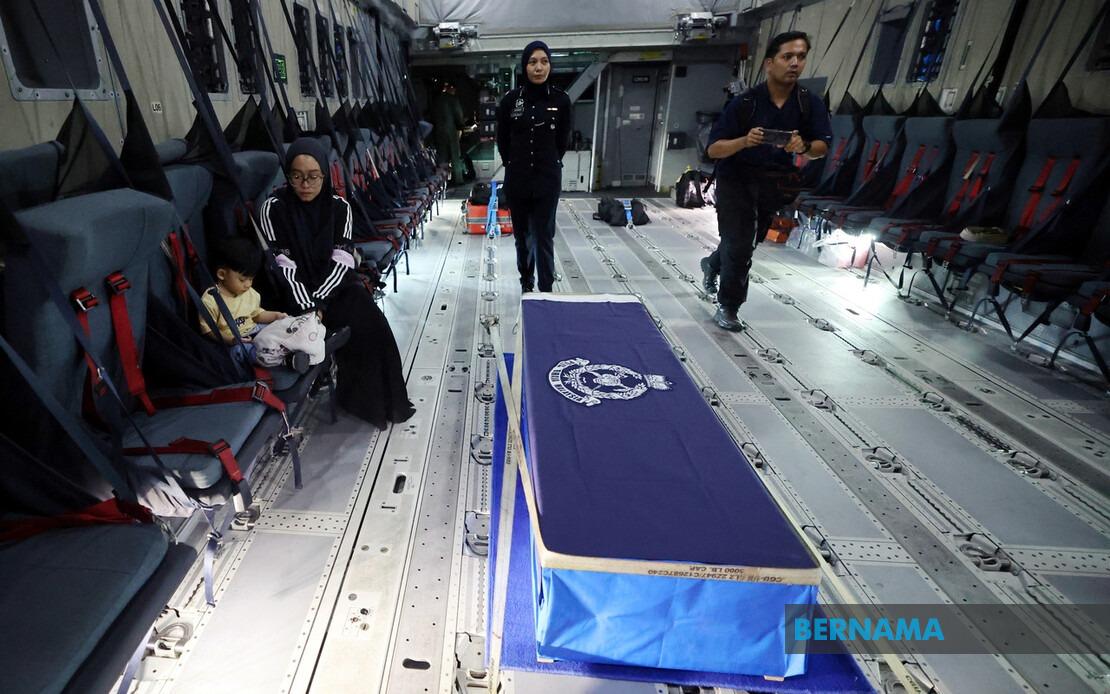
The tragic repatriation of three Royal Malaysia Police officers who perished in an electrocution incident outside Weston Police Station in Beaufort has been completed, with their bodies flown to different destinations across Malaysia late yesterday evening. The incident, which claimed the lives of Corporal Chiu Teck Siong, Corporal Mohamad Nur Hafiz Ibrahim, and Constable Muhammad Raimi Ismarubee, represents a devastating loss within the police force and has renewed attention on workplace safety protocols at government facilities.
The incident occurred at 5.50 pm on August 6 outside the Weston Police Station in Beaufort, though initial reports provided limited detail about the circumstances leading to the electrocution. All three officers were pronounced dead at the scene, marking a rare but serious occupational hazard within the law enforcement community. The rapid response by medical and security personnel highlighted established procedures for managing critical incidents at police facilities, though questions remain about what electrical hazards may have been present at the station.
Following standard protocol, the three bodies were transferred to the Forensics Department of Queen Elizabeth Hospital in Kota Kinabalu for post-mortem examinations, which were conducted at noon on August 7. The examinations, which are mandatory in cases of unnatural death, were completed efficiently, allowing the bodies to be released for repatriation by 2.56 pm. This relatively swift processing enabled families to receive their loved ones within 24 hours of the incident, a consideration that acknowledged both the need for thorough investigation and the urgency of returning the deceased to their families.
The repatriation operation itself demonstrated the coordinated response capabilities of Malaysia's security and defence establishment. A Royal Malaysian Air Force aircraft departed Kota Kinabalu International Airport at 7.10 pm carrying the bodies of Corporal Mohamad Nur Hafiz Ibrahim and Constable Muhammad Raimi Ismarubee. This aircraft was scheduled to fly to the RMAF Air Base in Kuantan before proceeding to the RMAF Air Base in Gong Kedak, Terengganu, ensuring that both officers would reach their respective home states. The use of military transport for the fallen officers underscored the ceremonial respect accorded to those who lose their lives in the course of duty.
Meanwhile, the body of Corporal Chiu Teck Siong was taken to the Royal Malaysia Police Air Operations Force base in Kota Kinabalu before being transported to Sarawak aboard a police aircraft. This parallel arrangement reflected the geographic dispersal of the three officers' home states—Terengganu, Kelantan, and Sarawak—and the logistical complexities of repatriation across the country. The involvement of both RMAF and police aviation assets in the operation highlighted the significance placed on honouring the fallen personnel.
Chiu, aged 40 and hailing from Sarawak, represented the more senior member of the deceased trio. Mohamad Nur Hafiz Ibrahim, 29, was from Kelantan, while Muhammad Raimi Ismarubee, 26, originated from Terengganu. The ages of the three officers—spanning nearly two decades—suggest they came from different generational cohorts within the police service, with Chiu likely a more experienced officer and the younger constables potentially early in their careers. The loss of officers at varying career stages compounds the tragedy's impact on police department operations and morale.
Electrocution incidents, while uncommon in modern urban Malaysia, remain a persistent occupational hazard in environments where electrical infrastructure intersects with personnel movement or maintenance activities. The incident at Weston Police Station raises broader questions about electrical safety audits at government facilities across Sabah and Sarawak, where aging infrastructure and challenging climate conditions can accelerate deterioration of electrical systems. Whether the electrocution resulted from damaged wiring, inadequate grounding, or exposed electrical components remains unclear pending any investigation findings.
The tragedy carries particular significance for the Royal Malaysia Police, an institution that bears responsibility for public safety across the nation. Workplace fatalities within the force are exceptionally rare in contemporary Malaysia, making this incident unusual enough to warrant comprehensive investigation. The incident will likely trigger reviews of safety protocols at police stations nationwide, particularly in older facilities where electrical systems may require upgrading or enhanced maintenance procedures.
For the families of the three officers, the swift repatriation process provided some measure of closure, enabling them to proceed with funeral arrangements and grieving processes within their respective states. The use of official military and police aircraft conveyed the government's acknowledgment of their sacrifice and the institutional support extended to bereaved families. Such gestures, while symbolic, carry meaning within Malaysian culture and reflect the duty of care the state bears toward those in its employ.
The incident also highlights the ongoing need for investment in workplace safety infrastructure across Malaysian government facilities. As the nation continues to modernise, ensuring that public institutions maintain current electrical safety standards becomes increasingly critical for protecting personnel. The deaths of these three dedicated officers serve as a sobering reminder that administrative and technical oversight, however routine it may seem, carries profound consequences for real lives and families.

