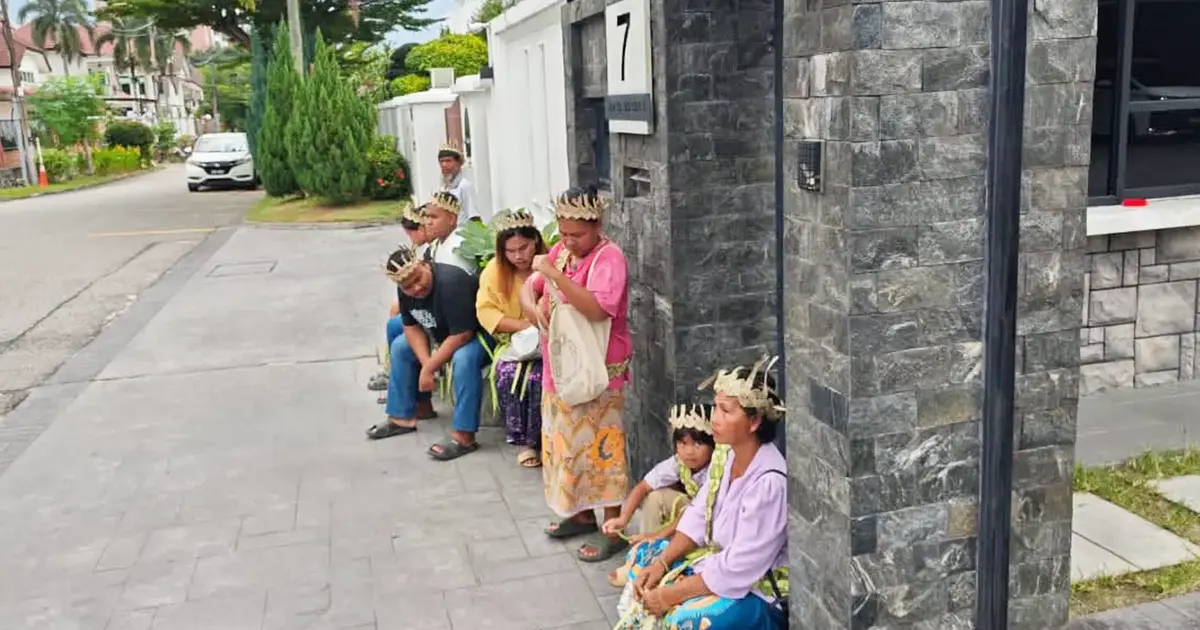
Prime Minister Anwar Ibrahim has confirmed the release of three Orang Asli individuals who had been detained as part of an ongoing land dispute in Pahang, marking a potential turning point in a case that has drawn scrutiny from indigenous rights advocates and civil society groups across Malaysia. The development underscores the delicate balance between federal intervention and state autonomy in navigating sensitive indigenous land claims that have increasingly become flashpoints for political attention in recent years.
The detention of the three individuals sparked concern among various quarters, who viewed the matter as an illustration of broader tensions surrounding Orang Asli land rights and resource access. Pahang, like other states in Malaysia, has substantial Orang Asli populations whose historical claims to ancestral lands have frequently collided with commercial development, agricultural schemes, and state-administered resource management initiatives. The circumstances surrounding the detention and the advocacy efforts that preceded their release highlight the complexities inherent in resolving land disputes that involve vulnerable indigenous communities with limited institutional representation.
Anwar's announcement signals federal awareness of the situation and acknowledgment that such cases merit high-level political engagement. However, the Prime Minister was careful to demarcate the boundaries of federal responsibility, noting explicitly that land affairs in Malaysia fall squarely within state jurisdiction according to the constitutional division of powers. This clarification reflects the federalist structure embedded in Malaysia's constitutional framework, where states retain primary authority over land administration, alienation, and management—a system that has long constrained federal capacity to unilaterally resolve indigenous land grievances.
The decision to commit to raising the matter with the Pahang government represents a diplomatic channel through which the federal government can exercise influence without transgressing constitutional limitations. Engagement at the state level offers opportunities for negotiation between parties and exploration of resolutions that respect both indigenous interests and state development objectives. Such an approach depends heavily on receptiveness within state administrations and the willingness of state officials to prioritise indigenous land claims alongside other economic and development priorities that state governments traditionally emphasize.
For Orang Asli communities throughout Malaysia, the immediate relief of the three individuals' release carries symbolic importance beyond the individual cases. It demonstrates that persistent advocacy and elevated political attention can produce tangible outcomes, encouraging communities to pursue formal channels for grievance resolution. Simultaneously, it illustrates the limitations and uncertainties these communities face when navigating disputes involving state institutions and commercial interests with significantly greater legal and economic resources.
The Pahang case also reflects broader regional patterns affecting indigenous populations across Southeast Asia. Malaysia's approach to indigenous land rights, while more developed in certain institutional respects than some neighbouring countries, nevertheless continues to subordinate indigenous tenure to state sovereignty and development imperatives. The ability to secure release in this instance may owe partly to the matter gaining national media attention and political prominence at the federal level—a dynamic that smaller cases without such visibility may never experience.
Looking forward, the effectiveness of federal engagement with Pahang authorities will depend on concrete follow-up and measurable progress toward addressing the underlying land dispute rather than merely resolving the detention aspect. Previous experience suggests that raising matters with state governments frequently produces limited substantive outcomes without supplementary pressure from multiple stakeholders and continued political attention. The quality of federal advocacy, including whether specific recommendations or proposals are conveyed to the state and backed by resources or incentive structures, will substantially influence whether this intervention generates lasting improvements for the affected individuals and their communities.
The incident also underscores the fragmented nature of indigenous land policy implementation across Malaysian states. While federal-level pronouncements and constitutional protections exist for Orang Asli rights, on-the-ground implementation varies considerably depending on state government priorities, bureaucratic capacity, and local political considerations. This variation creates circumstances where identical grievances may receive vastly different treatment in different jurisdictions, undermining consistency and predictability in the protection of indigenous rights across the federation.
Moving forward, strengthening coordination mechanisms between federal and state authorities on indigenous affairs could mitigate similar disputes. Enhanced data sharing regarding land claims, standardized procedures for investigating disputes, and joint mechanisms for mediation might reduce circumstances where detentions occur before exhausting alternative resolution pathways. The federal government's engagement in this particular case, while administratively constrained, suggests openness to greater involvement in indigenous grievance resolution—a potential avenue for institutional reform that Malaysian policymakers might productively explore.

