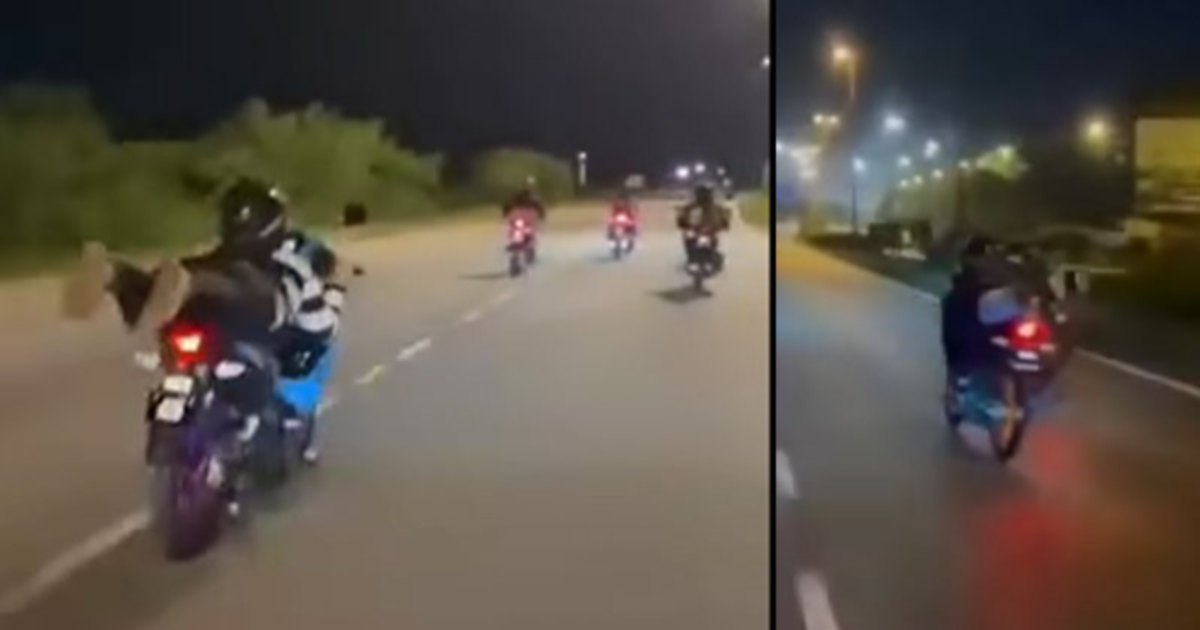
Three teenage girls have been arrested in Kuantan following a dangerous motorcycle stunt that drew widespread attention online. The youth performed what is known as a Superman stunt along the Kuantan Bypass-Gebeng road last week, where riders stand on the motorcycle seat while the vehicle is in motion, creating the illusion of flying. The incident caught public attention after video footage circulated across social media platforms, prompting police intervention.
Such stunts have become an increasing concern for authorities across Malaysia, particularly among younger riders who seek online validation through increasingly risky behaviour. The Superman stunt, though visually striking, represents a severe safety hazard. Riders performing this manoeuvre lose stability control and cannot respond quickly to traffic changes, emergency situations, or obstacles in the road. The practice puts not only the stunt performers at risk but also endangers other road users who share the same thoroughfare.
The arrest of these three girls highlights a troubling trend of young people engaging in life-threatening driving behaviour specifically to create shareable content for social media platforms. What may seem like harmless fun to teenage performers carries genuine consequences—loss of vehicle control can result in fatal collisions, serious injuries to themselves or innocent bystanders, and trauma to witnesses. The Kuantan Bypass-Gebeng road is a busy commercial thoroughfare, making the timing and location of this stunt particularly reckless.
Law enforcement agencies throughout the country have intensified efforts to tackle road safety violations, especially those involving young drivers. The viral nature of such incidents amplifies their danger by potentially inspiring copycat behaviour among other youth. Each video shared and viewed can motivate others to attempt similarly dangerous stunts, creating a cascading problem that extends far beyond the original offenders. Police awareness campaigns have consistently warned about the consequences, yet the allure of social media fame continues to drive participation.
The investigation into this specific incident underscores the need for stronger intervention at multiple levels. Beyond criminal consequences for the offenders, there is a necessity to educate young people about responsible road conduct and the psychological mechanisms driving viral trend participation. Schools, parents, and community leaders play crucial roles in fostering a culture where safety takes precedence over online popularity metrics.
Motorcycle-related incidents already constitute a significant portion of Malaysia's road fatalities and serious injuries. Stunts like the Superman manoeuvre disproportionately affect younger riders, who represent a vulnerable demographic. Insurance data and hospital records consistently show that riders under 25 years old have substantially higher accident rates, and deliberately dangerous driving multiplies these risks exponentially. The arrested teenagers may now face charges under relevant traffic and road safety legislation, potentially including reckless driving and endangering others on the road.
The responses from online communities following such arrests reveal a complex social dynamic. While many citizens support police action against dangerous driving, some younger social media users continue defending stunt riders as merely expressing themselves. This generational divide in perception of risk and responsibility creates challenges for public safety messaging. Authorities must frame enforcement not as suppression of youth expression but as protection of life—both the riders' own safety and that of innocent road users.
Parental supervision and family discussions about road safety become increasingly important given the peer pressure and social media influences shaping teenage decision-making. The incident serves as a stark reminder that consequences extend beyond potential physical injury; criminal records can affect educational opportunities, employment prospects, and social development. Legal consequences, though necessary, should ideally accompany rehabilitative education about road safety and conscious social media use.
Looking forward, stakeholders across Malaysia's transport and safety sectors must collaborate on comprehensive approaches. This includes stricter content moderation by social media platforms regarding dangerous driving videos, increased public awareness campaigns emphasizing the severe risks and legal consequences, and community-based programmes teaching alternative ways for young people to gain peer recognition without endangering themselves or others. The arrest in Kuantan sends a clear message that authorities will not tolerate such behaviour, but sustained cultural change requires broader societal commitment to valuing safety over viral moments.

