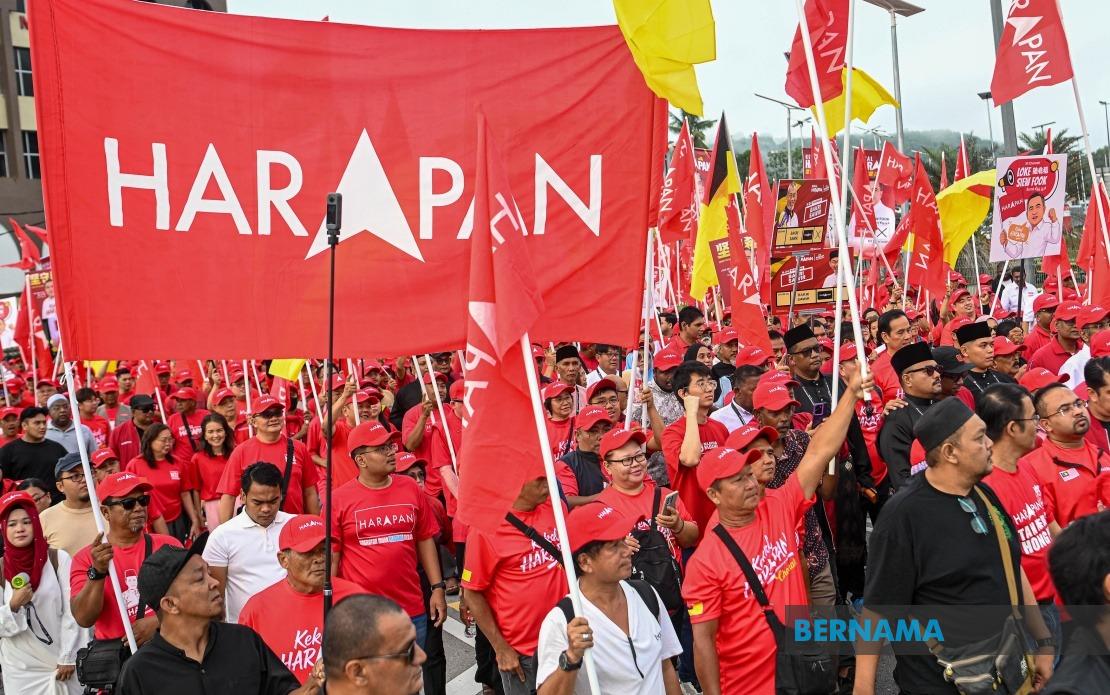
The 16th Negeri Sembilan State Election will see competitive three-way battles unfold across three key state constituencies, as the nomination process closed on July 18 in Jelebu. Jelebu Parliamentary returning officer Abdul Rahim A Aziz confirmed the contests after completing the nomination phase at Dewan Besar Kuala Klawang, setting the stage for an intriguing electoral contest that will test voter sentiment across the state's political landscape.
In the Pertang state seat, incumbent Datuk Seri Jalaluddin Alias of Barisan Nasional faces a two-pronged challenge from Mohd Umry Abdul Khois representing Pakatan Harapan and Mohd Faizal Fadli Mohd Idrus of Bersatu. Jalaluddin's previous electoral performance suggests he holds the advantage going into this race. In the last state election, he secured 5,634 votes and defeated his nearest rival Amirudin Hasan of Perikatan Nasional by a commanding 2,844-vote majority, a margin that demonstrates significant support within the constituency.
The Sungai Lui constituency will present a fascinating interpersonal dimension to the campaign, as voters will witness a three-cornered fight that includes former schoolmates competing directly against one another. Datuk Mohd Razi Mohd Ali represents Barisan Nasional in this race, while Zainal Fikri Abd Kadir stands as the Pakatan Harapan candidate and Mazrulhisham Abd Mansor carries the Bersatu banner. The personal history connecting these candidates adds an unusual element to what might otherwise be a straightforward partisan contest, and could influence the tone and nature of campaigning in the seat.
The Klawang state seat rounds out the three constituencies with another three-way contest. Incumbent Datuk Bakri Sawir of Pakatan Harapan will seek to retain the seat against Muhammad Adib Musa from Bersatu and Danni Rais representing Perikatan Nasional. Unlike Pertang, where the incumbent comes from the traditional ruling coalition, Bakri's Pakatan Harapan government represents a shift in Negeri Sembilan's political direction and his re-election campaign will test whether voters endorse the state administration's track record.
These three-way contests reflect Malaysia's increasingly fragmented political landscape. The presence of Bersatu in all three seats signals the party's determination to expand its foothold in Negeri Sembilan, a state that has seen shifting allegiances in recent years. Bersatu's participation effectively splits the opposition or ruling coalition support, depending on voter perceptions, and could prove decisive in constituencies where vote margins are narrow. This pattern mirrors broader trends across Malaysia where the traditional two-coalition framework has given way to more complex multi-party competitions.
For Barisan Nasional, the Pertang and Sungai Lui contests represent opportunities to defend seats within Negeri Sembilan, where the coalition has historically performed strongly. However, BN's recent electoral challenges across the country suggest these seats cannot be taken for granted. The coalition will need to mobilize effectively and articulate a compelling vision to voters who may be considering alternative options.
Pakatan Harapan faces a mixed electoral landscape in these constituencies. The coalition governs the state and will campaign on its record, but governing parties often face voter fatigue or discontent over unmet promises. Bakri Sawir's defence of Klawang and Umry Abdul Khois's challenge in Pertang will test whether PH has successfully consolidated support among voters who backed the reform agenda that propelled the coalition to state power.
The Election Commission has scheduled early voting for July 28, providing voters who are unable to cast ballots on the main election day with an alternative opportunity to participate. Polling day itself is set for August 1, giving candidates and their supporters roughly two weeks to conduct their campaigns and attempt to sway undecided voters. This compressed campaign timeline will require campaigns to focus their resources efficiently and identify core constituencies where persuasion efforts can prove most effective.
Negeri Sembilan's election carries significance beyond the state itself. The results will offer insights into voter sentiment in a state that sits geographically and politically between more politicized federal territories and more traditionally BN-leaning states. Electoral outcomes here could provide early indicators about national political trends and the strength of various coalitions ahead of potential federal-level contests. Political analysts will scrutinize voting patterns to assess whether Bersatu's presence is cannibilizing votes from established coalitions or creating new electoral dynamics.

