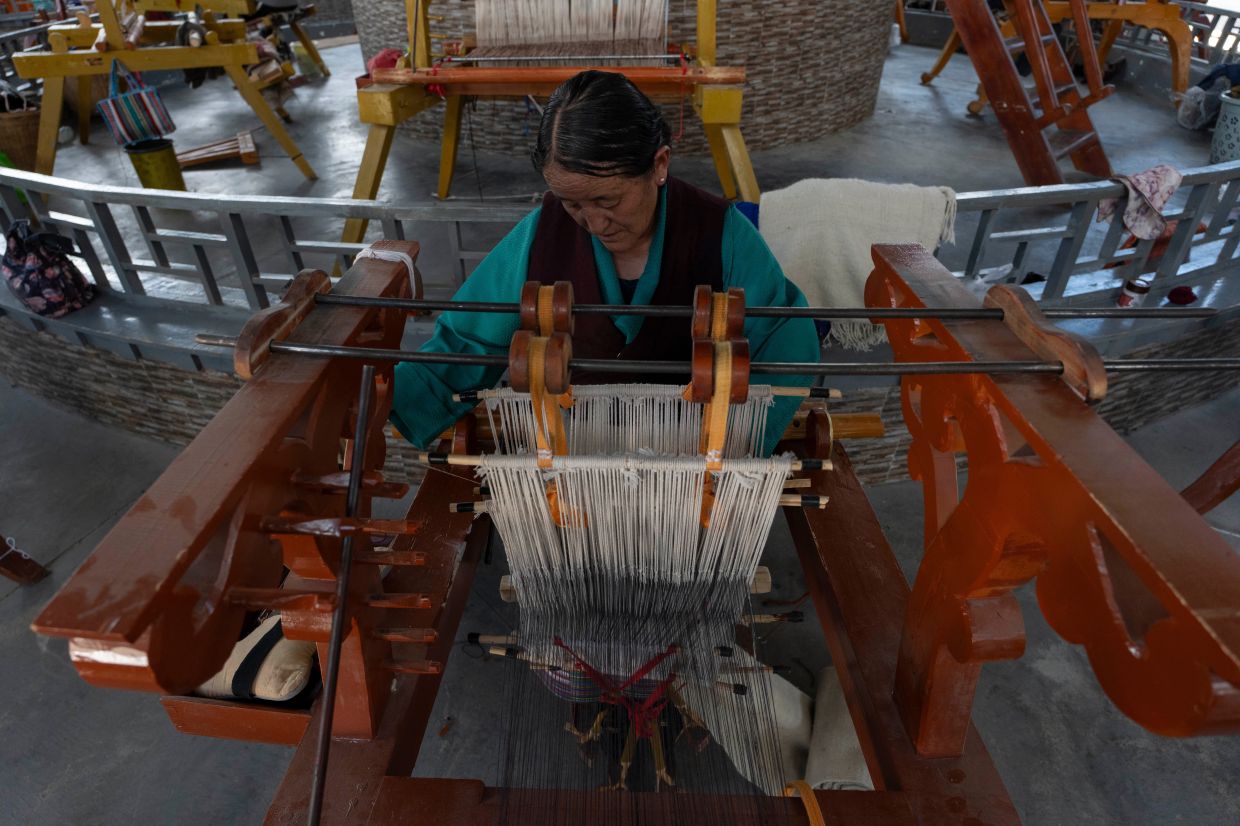
In a workshop nestled on the Tibetan plateau at 3,700 metres elevation, artisans move methodically at wooden looms, their hands performing movements refined over countless generations. The rhythmic sliding of shuttles through wool yarn and the careful tightening of each thread represents far more than simple labour—it embodies a cultural practice that has warmed and clothed mountain communities since antiquity. At the Ethnic Huaji Handwoven Cooperative in Shannan, this intricate dance of tradition continues, defying pressures that have nearly extinguished the craft in recent decades.
The cooperative, established in 2008 by Tibetan master weaver Pasang, operates as both cultural institution and economic engine. With a workforce exceeding 100 individuals drawn from the surrounding region, the facility demonstrates how heritage preservation and sustainable livelihoods need not be mutually exclusive. Notably, the cooperative extends employment opportunities to people with disabilities, reflecting a broader commitment to inclusive economic development that extends beyond mere production quotas. This integration of vulnerable populations into meaningful work addresses both social welfare concerns and the persistent challenge of rural unemployment across the Tibetan plateau.
The fabric produced here—known as Pulu in its traditional form—carries historical significance rooted in the region's complex cultural narrative. According to local oral tradition supported by official Chinese historiography, the weaving techniques arrived in Tibet during the marriage of the 7th century King Songtsen Gampo to Princess Wencheng of China. Statues of the royal couple stand at the workshop's centre, physical reminders of this foundational moment. For centuries, Pulu served as essential clothing for highland communities where extreme weather demands durable, insulating materials capable of withstanding harsh conditions.
Pasang refined his skills in a particularly sophisticated variant called Zeter, derived from the exceptionally soft wool harvested from the necks and backs of sheep. This finer material requires advanced spinning techniques that differentiate it from standard Pulu production. The resulting fabric—lighter, softer, and more refined than ordinary varieties—held such prestige during the Ming dynasty that it was presented as tribute to the imperial court. This historical pedigree underscores how rural craft traditions in Asia often carried diplomatic and cultural significance far beyond their practical utility.
When Pasang established the cooperative, the craft faced extinction. Fewer than ten people in the entire region possessed knowledge of authentic Zeter weaving when he began his preservation efforts. Having learned the craft directly from his parents, Pasang recognised both the urgency and his responsibility to ensure transmission to younger generations. This intergenerational transfer remains critical, as traditional knowledge systems leave no room for written instruction manuals or video tutorials—the craft requires hands-on apprenticeship under experienced practitioners.
Official recognition of Pulu weaving as part of China's national intangible cultural heritage provides institutional validation and potential protective frameworks. Such designations, increasingly common across Asia as governments grapple with rapid cultural change, signal commitment to preserving practices considered significant to national identity. However, designation alone proves insufficient without viable economic models sustaining practitioners. The cooperative's market-oriented approach—producing contemporary goods including scarves, shawls, jackets, and bags—acknowledges that heritage crafts must adapt to modern consumer preferences to survive.
Current market reach remains predominantly within Tibet, though customers from other Chinese regions increasingly discover these products. This geographic limitation reflects both the niche positioning of handwoven luxury textiles and transportation challenges endemic to the region. For Malaysian and Southeast Asian observers, the cooperative illustrates tensions familiar throughout the region: how indigenous crafts compete against industrial production, how economic development pressures traditional knowledge systems, and what institutional mechanisms might effectively support artisanal communities.
Tsering Yangchen, an 80-year-old cooperative member who has contributed her labour for seven years, exemplifies the workshop's social impact. Having relocated from another county seeking employment, she struggled in the local labour market before discovering opportunity at the cooperative. Instructors trained her in weaving skills, transforming her from economically vulnerable to productively employed. Yangchen's testimony reveals how heritage preservation initiatives can simultaneously address rural development challenges and cultural conservation—outcomes that often advance together rather than competing.
For Yangchen and other workers, Pulu transcends economic commodity status. She emphasises that wearers typically craft these textiles for personal use and family benefit, viewing them as essential garments rather than luxury items. This perspective reflects the original function of these fabrics before modern market mechanisms transformed them into commercial products. The pure wool composition—unchanged across centuries—connects contemporary production to historical authenticity, suggesting that genuine preservation maintains not merely aesthetic or technical elements but also the material substance that gave these crafts their original purpose.
The cooperative's success in maintaining employment at over 100 workers while preserving techniques represents a meaningful achievement for rural Tibet's development trajectory. As mechanisation and globalised manufacturing displace traditional craftspeople across Asia, instances where heritage production sustains contemporary livelihoods become increasingly significant. Pasang's explicit commitment to ensuring younger generations continue the practice provides foundation for hope that this ancient tradition might endure into the future, reshaped by modern contexts yet fundamentally continuous with practices spanning centuries.

