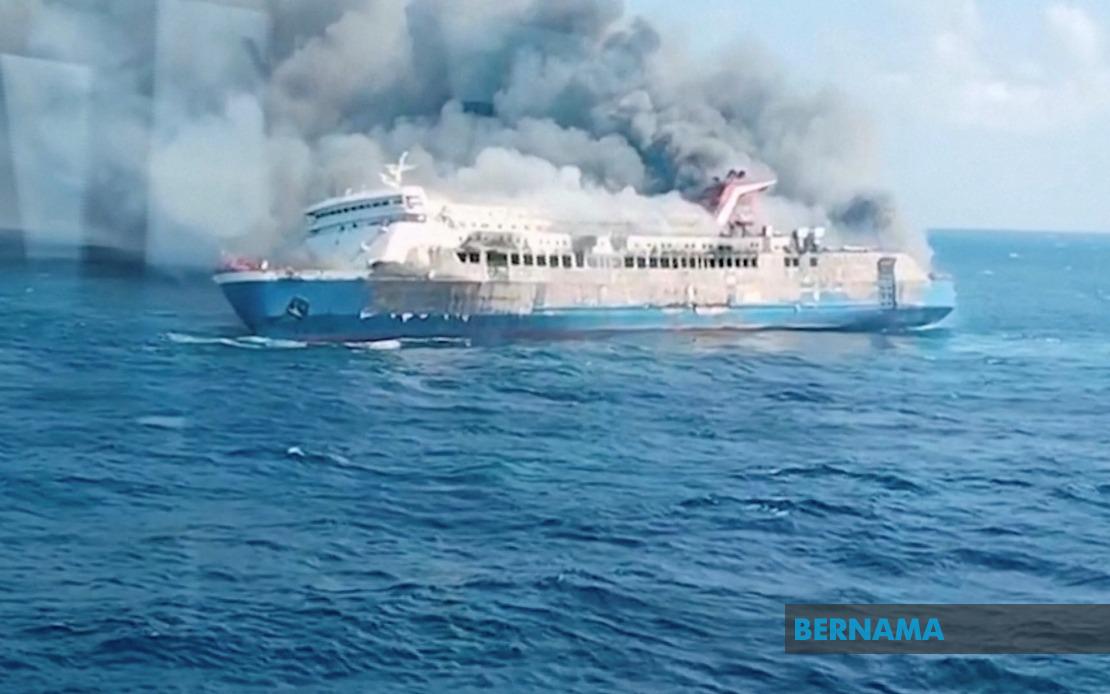
Rescue operations for the KMP Mutiara Sentosa II ferry intensified dramatically on their second day as Indonesian authorities brought in additional military and civilian resources to locate the remaining missing passengers and crew. The ferry had been engulfed in flames in waters north of Sumenep, Madura, on Monday morning, creating one of Indonesia's most significant maritime emergencies in recent months and mobilising a substantial search operation across the northern Java Sea.
The addition of the TNI warship KRI Bung Hatta-370 to the operation marked a significant escalation in the rescue effort, reflecting the severity of the situation and the Indonesian military's commitment to the recovery mission. Beyond the naval vessel, authorities deployed the State Ship Grantin P.211, the patrol vessel Manyar 5003, and an East Java Police helicopter to systematically search the waters where survivors and victims had been last seen. This comprehensive deployment of assets underscored the Indonesian government's determination to locate the missing individuals and recover any remaining victims from the disaster.
According to Nanang Sigit, the chief of the Surabaya Search and Rescue Office, the coordinated effort continuing into the second day represented the most intensive phase of the operation to date. Speaking through an official statement, Sigit confirmed that searchers remained focused on locating those still unaccounted for following the catastrophic fire that had consumed significant portions of the ferry's structure. The operation reflected standard Indonesian maritime rescue protocols, which prioritise rapid coordination between military, civilian, and local authorities to maximise the chances of locating survivors in the critical hours following a disaster.
The ferry was carrying a substantial complement of 232 passengers and 39 crew members when it caught fire at approximately 8.24 am local time on Monday morning. The blaze spread with alarming speed, consuming much of the vessel and forcing a chaotic evacuation. The initial reports suggested that the rapid spread of flames and the difficulty in coordinating an orderly evacuation from the crowded vessel had created a dangerous situation for those aboard, with many forced to seek refuge in the water or makeshift life rafts.
By the time the second day of the operation began, authorities had managed to evacuate 229 survivors and transport them in stages to Tanjung Perak Port in Surabaya, where they underwent medical examinations to assess injuries sustained during the fire and evacuation. This relatively high survival rate indicated that while the fire had been destructive, the quick response of nearby vessels and rescue teams had prevented a complete catastrophe. However, the situation of the missing individuals remained deeply concerning, as rescue workers understood that survival prospects diminished significantly after the first 24 to 48 hours.
The bodies of five confirmed victims had been transferred to Bhayangkara H.S. Samsoeri Mertojoso Hospital in Surabaya for formal identification and autopsy procedures. This grim toll represented only the confirmed fatalities, and authorities anticipated that the final death count would likely increase as the search operation progressed and additional bodies were recovered from the water or the wreckage. The identification process would be complicated by the fire's destructive impact on physical remains, necessitating advanced forensic techniques and coordination between hospital authorities and family members seeking to identify their loved ones.
For Malaysia and the broader Southeast Asian region, this disaster carried particular significance given the heavy reliance on maritime transport across the archipelago. Ferry services remain among the most economical and widely utilised transportation options connecting Indonesia's thousands of islands, making maritime safety standards and disaster response capabilities critical infrastructure concerns. The fire on the KMP Mutiara Sentosa II raised urgent questions about routine safety inspections, crew training, and emergency response protocols aboard passenger vessels operating throughout the region.
The incident also highlighted the vulnerability of ageing maritime infrastructure across Indonesia, where many ferries serving inter-island routes are decades old and operate with varying levels of maintenance and safety oversight. The rapid deployment of TNI assets demonstrated the military's capacity for emergency response, but also underscored the broader challenges facing Indonesian authorities in ensuring consistent safety standards across a vast fleet of commercial vessels serving millions of daily passengers. Regional maritime authorities throughout Southeast Asia would likely intensify scrutiny of similar vessel operations following this disaster.
The search operation represented an ongoing challenge for Indonesian rescue teams working in open water conditions that could shift rapidly with changing weather patterns and currents. Each passing hour reduced the likelihood of locating additional survivors, though experienced rescue coordinators remained committed to thorough searches of the affected area and surrounding waters where drifting survivors might have been carried. The international maritime community typically maintains heightened alert status following such disasters, with neighbouring nations' coast guards potentially offering assistance or maintaining standby capacity should resources be required.

