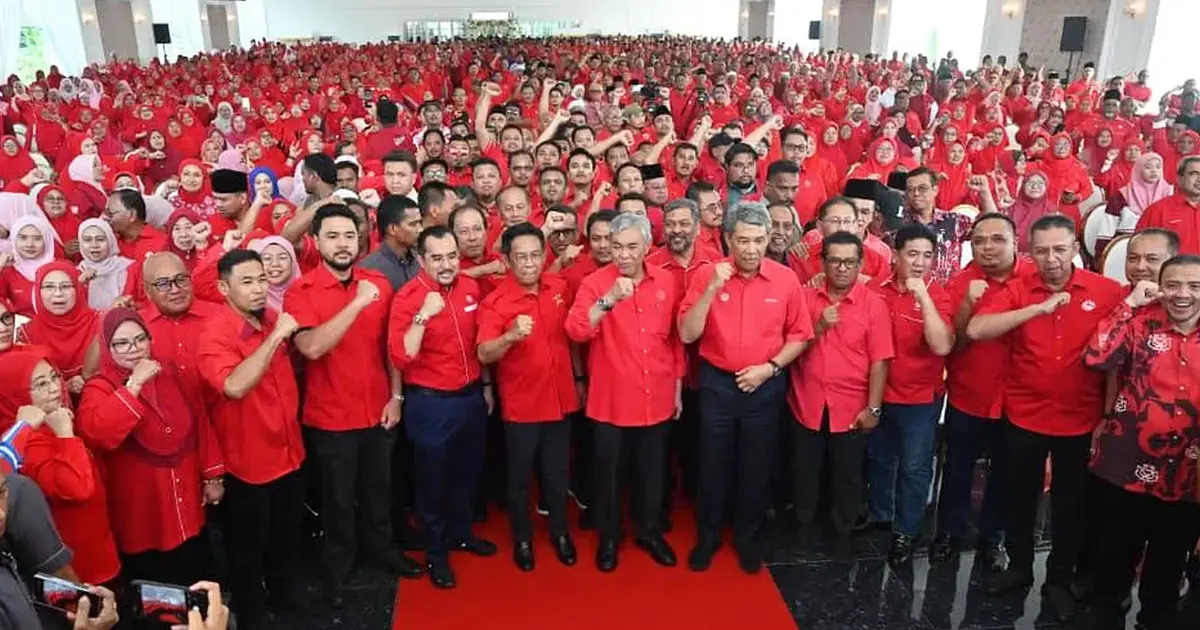
Barisan Nasional has delegated the crucial responsibility of selecting candidates and negotiating seat distribution for the Negeri Sembilan state election to the coalition's state leadership. The decision reflects a decentralised approach to candidate vetting, with BN chairman Ahmad Zahid Hamidi indicating that he has handed authority to the Negeri Sembilan BN chief to manage these sensitive negotiations independently.
The shift in decision-making authority highlights the structural flexibility within BN's coalition architecture, where state-level operations retain considerable autonomy over candidate selection processes. Rather than imposing candidates from the federal level, the arrangement allows for localised input from constituent parties and state party leadership, potentially easing tensions that often arise when seat allocations disadvantage certain parties or candidates. This model proves particularly relevant in Negeri Sembilan, where multiple BN component parties—including UMNO, MIC, and MCA—maintain significant presence and historical claims to certain constituencies.
Candidate selection has historically been one of the most contentious processes within multi-party coalitions in Malaysia. Previous state elections have witnessed disputes when component parties felt marginalised or when promised seats were reallocated. By empowering the Negeri Sembilan BN chief, the coalition leadership appears to be delegating responsibility for managing these inter-party dynamics to someone with greater familiarity with local political relationships and grievances. This approach also provides the state chief with political cover when making difficult decisions that might disappoint certain quarters.
The Negeri Sembilan state assembly consists of 36 seats, with BN historically commanding significant presence though exact seat distribution among coalition partners remains subject to negotiation. The allocation process typically involves balancing electoral viability against fairness to component parties, ensuring that strong candidates receive winnable seats while maintaining the coalition's internal harmony. Each party's historical performance, membership strength, and demographic representation in particular constituencies all factor into these complex calculations.
For Malaysian readers, this development carries implications beyond Negeri Sembilan. State elections frequently serve as testing grounds for coalition dynamics and electoral strategies that subsequently influence federal politics. How smoothly the candidate selection and seat negotiation process unfolds in Negeri Sembilan could provide indicators of BN's internal cohesion heading into future electoral contests. Recent years have seen various challenges to coalition stability, making smooth coordination particularly important for demonstrating organisational strength.
The empowerment of state-level leadership also reflects broader debates within Malaysian politics about centralisation versus federalism. States maintain significant autonomy under Malaysia's constitutional framework, and allowing the Negeri Sembilan chief to orchestrate candidate processes respects this federalist principle. It simultaneously acknowledges that state-specific knowledge and relationships cannot easily be substituted by federal-level directives, particularly when navigating the intricate web of party rivalries and constituency politics.
Ahmad Zahid's decision to remain backstage during this process signals confidence in the Negeri Sembilan BN leadership while also strategically distancing the BN chairman from potentially controversial candidate selections. Should controversies arise regarding seat allocations or candidate eligibility, the state chief bears immediate responsibility, creating a buffer between federal leadership and grassroots discontent. This arrangement follows established practice in Malaysian coalition politics, where federal leaders often maintain deniability regarding state-level operational decisions.
The timing of formalising these arrangements suggests preparation for an election that could occur within the foreseeable future. Negeri Sembilan voters have not participated in state elections since 2018, and electoral cycles typically run their course within five-year periods. Early initiation of candidate selection allows sufficient time for party machinery to mobilise support, candidates to establish visibility, and any internal disputes to be resolved before nomination papers are submitted.
For BN component parties, particularly smaller coalition members, the candidate selection process represents a critical juncture for securing representation and maintaining relevance within the broader coalition framework. Parties that secure competitively viable seats strengthen their hand in future coalition discussions, while those marginalised in the selection process may experience demoralisation among grassroots members. The state chief's role therefore extends beyond administrative coordination to encompassing delicate political diplomacy among coalition partners.
The delegation strategy also enables the Negeri Sembilan chief to conduct more thorough ground-level assessments of candidate suitability. Unlike federal-level leadership working with limited local information, a state chief can directly evaluate candidates' performance in previous elections, community standing, factional alignments within parties, and potential vulnerabilities that might emerge during campaigning. This granular knowledge proves invaluable when matching candidates to constituencies most likely to deliver electoral victories.
Seat negotiation between BN component parties typically considers several factors beyond pure electoral calculations. Representation of minority communities, ensuring geographic distribution across the state, and maintaining internal party balance between factions and demographic groups all influence final allocations. A state chief overseeing these negotiations must therefore balance electoral pragmatism against broader considerations of fair representation and coalition sustainability.
As Negeri Sembilan moves toward its eventual state election, the framework established for candidate selection will be closely monitored by political analysts and BN members alike. Success in conducting a transparent, reasonably consensual selection process strengthens the coalition's capacity to present a united front during campaigning. Conversely, significant disputes during selection could presage broader coalition challenges and signal internal fractures that opposition parties might exploit during the actual election campaign.

