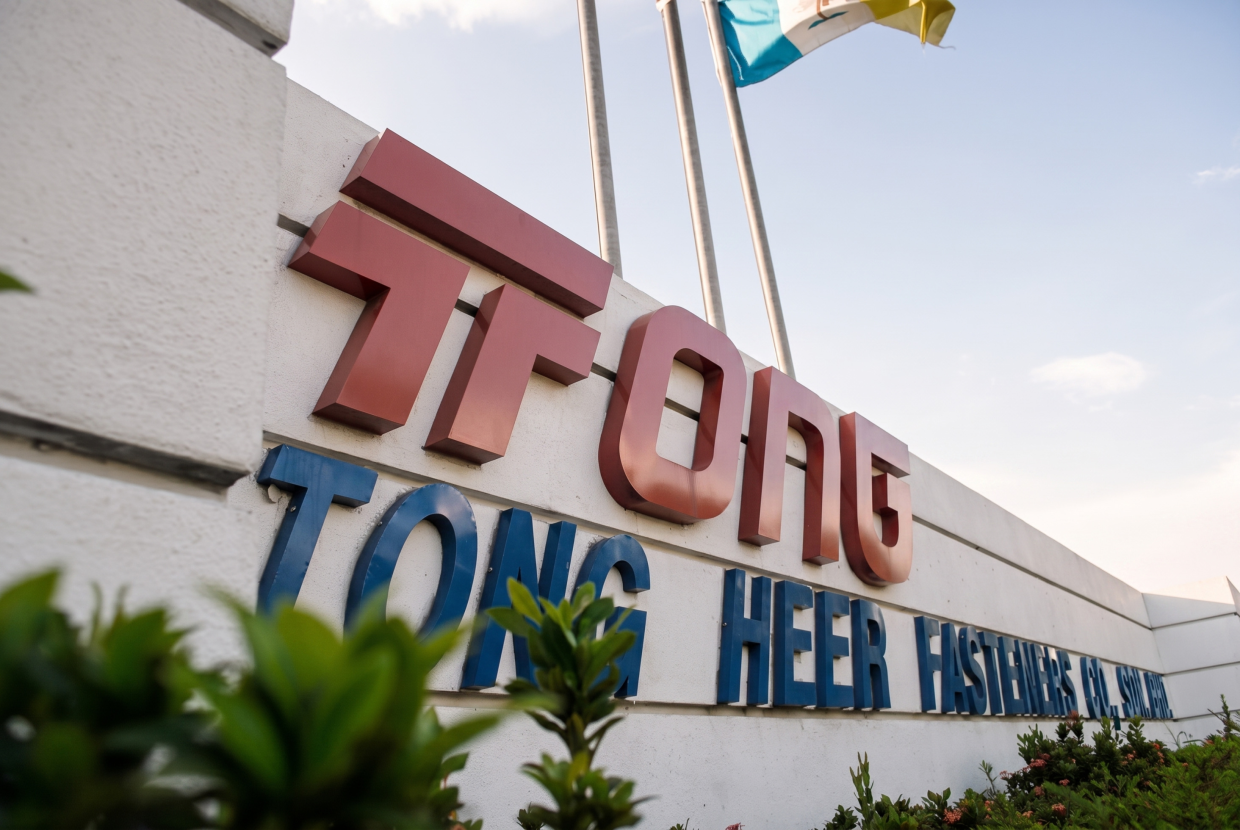
Controlling shareholders of Tong Herr have initiated a bid to remove the stainless steel fasteners and aluminium extrusions manufacturer from public markets, proposing an offer price of RM2.55 per share that represents a significant premium to recent trading levels. The initiative, filed with Bursa Malaysia, marks a strategic shift by the company's dominant investors toward private ownership, citing mounting costs of maintaining listed status and limited market activity as primary motivations for the delisting proposal.
The privatisation proposal emanates from Allrich Corp and Richard Holdings Ltd, which respectively command 39.68% and 31.95% stakes in Tong Herr. When combined with their associated ultimate offerors and persons acting in concert, these parties collectively control approximately 114.38 million shares, equating to roughly 74.5% of the company's total issued capital. This substantial voting block provides the proponents with considerable leverage in advancing their proposition, though formal approval from minority shareholders remains a procedural requirement.
The valuation attached to this bid demonstrates a meaningful uplift from Tong Herr's trading trajectory. At RM2.55 per share, the offer embodies a 34.2% premium relative to the company's previous closing price of RM1.90. When measured against the RM1.80 closing price recorded on August 5, 2026, the offer represents a 41.7% premium, calculated using the volume weighted average price methodology over the preceding period. This pricing structure suggests the controlling parties view the company as undervalued by public markets, potentially reflecting investor skepticism about the company's growth prospects or market circumstances affecting fastener and extrusion manufacturers across Southeast Asia.
The mechanism for executing this privatisation represents a sophisticated corporate restructuring approach. Rather than pursuing a conventional mandatory general offer, the shareholders have chosen to employ a selective capital reduction and repayment exercise. This route permits them to compress the company's share base through a capital reorganisation, effectively bundling the delisting process with shareholder liquidity provision. The structure reflects evolving market practice among Malaysian-listed entities seeking to simplify ownership structures whilst rewarding remaining shareholders.
The joint offerors have articulated a compelling business rationale underpinning their delisting aspirations. They contend that maintaining public company status imposes substantial compliance burdens, managerial overhead, and financial expenditures that constrain the organisation's capacity to pursue aggressive growth initiatives and develop shareholder value over extended timeframes. For an industrial manufacturer in the fasteners and extrusions sector—traditionally capital-intensive and focused on operational efficiency—these administrative constraints may prove particularly onerous, diverting resources from competitive positioning and market expansion.
A critical driver of the privatisation push stems from Tong Herr's persistently anaemic trading activity on the public market. Over the preceding three-year period, the company recorded an average daily trading volume of merely 21,075 shares, a figure that represents only 0.05% of its free float. This pronounced illiquidity indicates that minority shareholders face significant practical obstacles to liquidating their holdings at reasonable valuations, effectively rendering the listing an ornamental status without corresponding liquidity benefits. The offer price consequently addresses this structural disadvantage by providing an immediate exit pathway for all shareholders unwilling to remain invested under private ownership arrangements.
The proposed transaction framework incorporates multiple safeguards designed to protect the interests of non-controlling shareholders whilst establishing procedural legitimacy. Approval requires securing a special resolution from non-interested shareholders through an extraordinary general meeting, necessitating endorsement from both a numerical majority and at least 75% in aggregate value of votes cast by disinterested parties. Additionally, the proposal incorporates a veto threshold whereby opposition from more than 10% in value of non-interested shareholder votes would defeat the measure, preventing execution absent substantial consensus from the minority.
Beyond shareholder approval, the privatisation requires confirmation from the High Court, a judicial gate-keeping mechanism embedded within Malaysian corporate law to ensure procedural propriety and fair treatment of all stakeholder constituencies. This multi-layered approval architecture reflects regulatory frameworks designed to prevent exploitation of majority shareholders' numerical advantages through carefully calibrated voting thresholds and independent judicial oversight. The cumulative effect creates meaningful obstacles to executing a privatisation lacking demonstrable support from the broader shareholder base.
Tong Herr's independent directors, those lacking financial or structural interests in the transaction's outcome, must now undertake substantive deliberation regarding whether to advance the proposal toward shareholder vote or recommend alternative pathways. Their assessment will likely examine whether the valuation adequately reflects the company's intrinsic worth, whether realistically achievable superior alternatives exist, and whether the privatisation genuinely serves the interests of non-controlling shareholders or primarily benefits the controlling parties. This director-led appraisal mechanism serves as a critical checkpoint within Malaysia's regulatory regime, ensuring board-level scrutiny precedes shareholder consideration.
For Malaysian investors and the broader corporate governance environment, this transaction illustrates a widening trend among smaller-cap listed entities toward voluntary delisting when trading liquidity proves insufficient to justify continued regulatory compliance expenses. The industrialised manufacturing sector, encompassing fasteners and precision extrusions, has experienced consolidation pressures across Southeast Asia as supply chains reorganise and competitive dynamics favour larger, globally integrated manufacturers. Tong Herr's privatisation bid may therefore reflect not merely internal capital structure preferences but also sector-wide circumstances challenging standalone listed manufacturers to compete effectively against larger integrated competitors.

