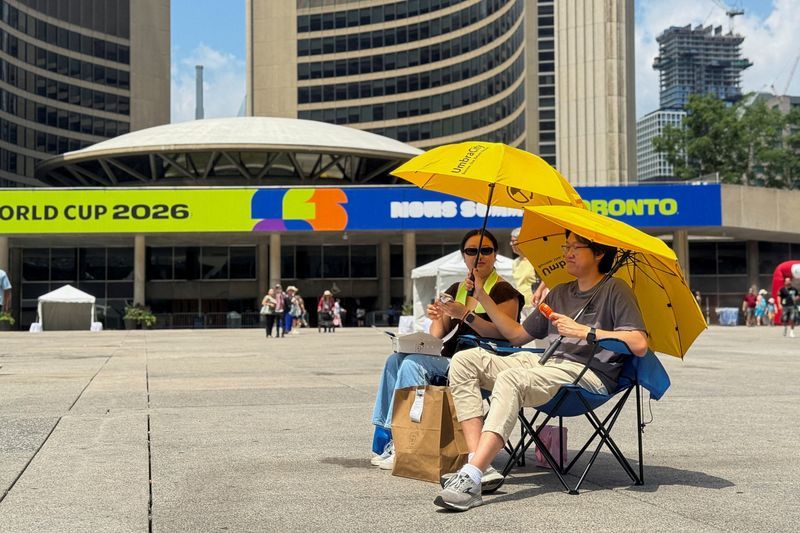
Thousands of spectators converging on Toronto for Thursday's World Cup round of 32 encounter between Portugal and Croatia face a stern health warning as the Canadian city braces itself for oppressive summer conditions. Environment Canada has flagged dangerously high temperatures, with the mercury expected to climb above 35 degrees Celsius, compounded by humidity that could make conditions feel as much as 40 degrees Celsius—pushing the match into a sweltering weather scenario that poses genuine risks for outdoor gatherings.
The City of Toronto's chief medical officer Michelle Murti has taken the unusual step of publicly advising match-goers on hydration and alcohol consumption strategies, reflecting institutional concern about heat-related illness during the high-profile fixture. Her counsel to fans emphasizes beginning fluid intake early rather than waiting for thirst signals to kick in, a principle rooted in the delayed nature of the body's thirst response under heat stress. The medical guidance extends to moderating alcohol consumption throughout the day, as the diuretic properties of alcohol accelerate dehydration—a particular concern when spectators may spend hours outdoors in fan zones or queuing for entry.
The weather threat carries additional complications beyond direct heat exposure. Environment Canada's forecast includes the possibility of thunderstorms sweeping through the region, a scenario that would fundamentally disrupt the viewing experience and potentially force cancellations of organized public gatherings. Toronto's health establishment has already begun contingency planning around this meteorological uncertainty, recognizing that sudden electrical storms could scatter crowds and compromise the infrastructure supporting outdoor fan engagement across the city.
Toronto Stadium, designated as the tournament's smallest venue, will host its final World Cup match with the Portugal-Croatia clash, marking a significant moment for Canadian soccer infrastructure. The city has mobilized its public spaces to accommodate global interest in the competition, establishing multiple fan zones and organizing coordinated watch parties throughout downtown Toronto. The decision to maintain these outdoor gathering points despite severe weather warnings reflects both municipal commitment to public engagement and the logistical challenges of accommodating overwhelming spectator demand.
Canada has experienced exceptionally volatile weather patterns across multiple provinces in recent weeks, with regions ranging from British Columbia to Atlantic Canada reporting destructive flooding alongside dangerous heat waves. The convergence of these extreme conditions just before Canada Day celebrations has created a broader context of environmental stress, with citizens across the country adapting to unpredictable atmospheric conditions. Wednesday's national holiday preparations have been complicated by this unstable weather backdrop, adding urgency to public health messaging.
Nathan Phillips Square, Toronto's iconic gathering space at City Hall, has been outfitted with misting stations designed to provide temporary relief from the oppressive heat. These installations represent pragmatic urban adaptation, offering respite to visitors who congregate in the open plaza to absorb the festive atmosphere surrounding the World Cup match. Residents and visitors have been utilizing these cooling facilities extensively, reflecting widespread acknowledgment of the genuine heat stress being experienced across the metropolitan area.
On-the-ground accounts from spectators reveal the tangible burden being imposed by the weather conditions. Megan Rennie, a Toronto resident present at Nathan Phillips Square, articulated the difficulty of remaining outdoors despite her enthusiasm for the football match, describing the heat as sufficiently intense to force an early departure. Her perspective captures the tension between sporting passion and physical discomfort—a trade-off that many fans attending the Portugal-Croatia match will need to navigate.
International visitors present additional human interest dimensions to the story. Laura Albarez, visiting from Colombia, found the Toronto heat surprisingly intense despite originating from a tropical climate, highlighting how the combination of temperature and humidity created conditions exceeding her expectations. Her inclination to retreat indoors while await later opportunities to venture outside illustrates how extreme heat fundamentally alters urban behavior patterns and visitor experiences during major sporting events.
The convergence of global sporting interest with severe weather represents a recurring challenge for tournament host cities, particularly as climate patterns grow increasingly volatile. Toronto's response—combining medical guidance with infrastructure adaptations and contingency planning—reflects institutional learning about managing large outdoor public gatherings under atmospheric duress. The Portugal-Croatia match will test whether these comprehensive measures adequately protect public health while preserving the celebratory atmosphere intended to characterize World Cup participation.
For Malaysian and Southeast Asian observers, Toronto's experience offers relevant parallels to heat management challenges in tropical and subtropical regions. The Canadian city's approach to balancing public engagement with health precautions during extreme weather provides transferable lessons for sporting infrastructure planning in the Asia-Pacific region, where similar heat and humidity combinations routinely challenge event organizers managing outdoor spectator gatherings during major international competitions.

