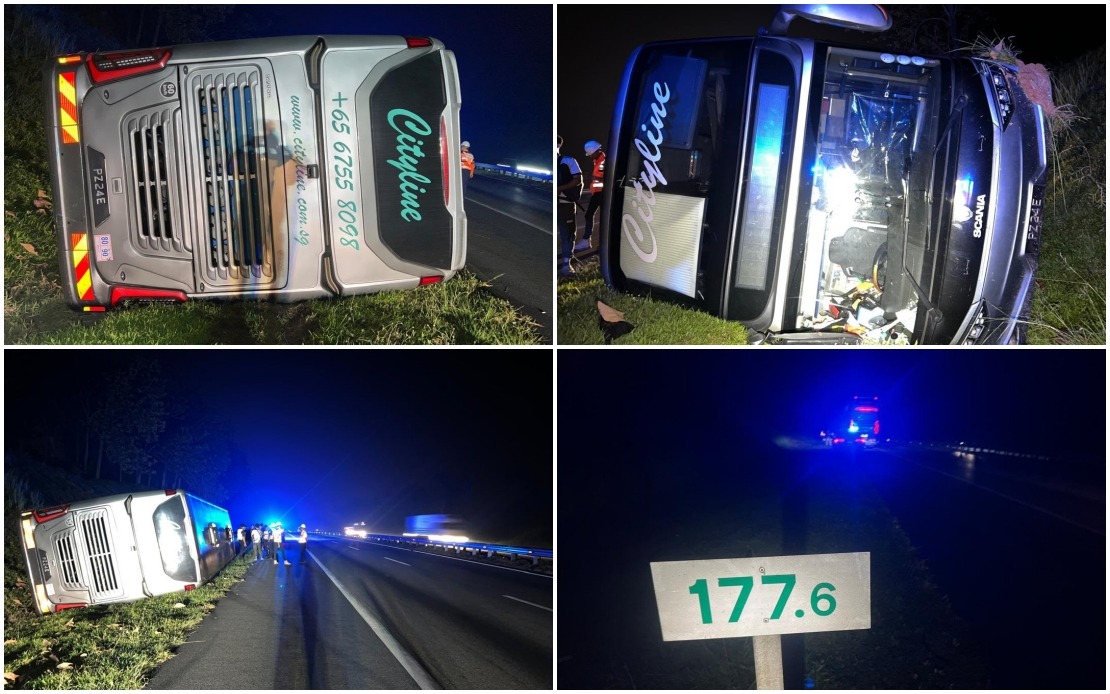
A tour bus carrying passengers from Singapore to Kuala Lumpur overturned on the North-South Expressway in the Jasin district of Melaka early Monday morning, leaving three people injured and prompting a swift response from emergency services. The incident occurred at Kilometre 177.6 of the northbound carriageway at approximately 5 am, affecting an otherwise routine long-distance coach journey that would have typically connected the two major cities without incident. The accident has renewed attention to safety concerns along one of Malaysia's busiest highway corridors, which carries substantial volumes of cross-border traffic daily.
According to Jasin district police chief Supt Lee Robert, those hospitalised included a 59-year-old local tour guide, a 62-year-old Singaporean national, and a 42-year-old British tourist. All three sustained injuries to their heads and legs, necessitating immediate transport to Jasin Hospital for medical evaluation and treatment. The identities of the other nine people aboard the coach—comprising the driver and remaining passengers—were not disclosed in preliminary police statements, though all were accounted for by authorities at the scene.
Police investigations established that the bus was operating with a full complement of twelve passengers and crew members when the critical incident unfolded. Reconstructing the sequence of events, authorities determined that a heavy goods vehicle ahead on the expressway had begun slowing its pace, potentially due to traffic conditions or mechanical concerns. The bus driver, faced with an unexpected deceleration by the vehicle in front, made an emergency decision to steer clear of a rear-end collision by veering sharply to the left.
This evasive manoeuvre, while intended to prevent impact with the lorry, instead caused the bus to leave the designated roadway. Once the vehicle had crossed onto the shoulder and beyond the safe travel surface, the operator lost control completely. The bus subsequently overturned, a particularly hazardous outcome on a high-speed expressway where vehicle dynamics become unpredictable. The inversion likely amplified the force of the impact and increased the severity of injuries sustained by passengers.
The North-South Expressway represents a critical arterial route for both Malaysian domestic traffic and international cross-border movement, particularly for coaches ferrying passengers between Kuala Lumpur and Singapore. This corridor witnesses millions of vehicle movements annually, with tour buses forming a significant portion of this volume. Incidents such as Monday's accident underscore the inherent risks present even on well-maintained, modern highway infrastructure when unexpected situations arise.
For Malaysian authorities and highway safety administrators, such accidents serve as reminders of the importance of driver training standards, particularly for commercial operators managing international services. Tour coaches traversing the North-South Expressway operate under considerable time pressures and must navigate variable traffic conditions throughout their journeys. The ability of drivers to respond appropriately to sudden obstacles—whether through safe braking, controlled lane changes, or hazard communication—remains paramount in accident prevention.
The involvement of international tourists in this incident also highlights Malaysia's role as a significant destination in regional tourism networks. Coach tours connecting major cities across Southeast Asia represent an accessible and economical travel option for visitors, yet the safety of these services directly influences traveller confidence and the industry's reputation. A British national and Singaporean passenger aboard the bus underscores how such accidents can affect the country's tourism standing and perceptions of transport infrastructure reliability among regional visitors.
Emergency response protocols appear to have functioned effectively in this instance, with police and medical personnel reaching the scene promptly and transporting casualties to appropriate medical facilities. The relatively swift identification of the accident by authorities—within minutes of occurrence—suggests functional communication systems along the expressway, though such systems face ongoing challenges in detecting incidents instantaneously across the highway's extensive length.
Investigations by Jasin police continue to examine whether any contributing factors beyond the lorry's unexpected deceleration played roles in the sequence of events. Weather conditions, road surface characteristics, visibility, and vehicle maintenance records would typically feature in comprehensive accident reconstruction analyses. The condition of the coach's braking systems, tyre condition, and driver alertness would receive particular scrutiny.
The incident raises broader questions about heavy vehicle management on high-speed expressways and whether better spacing protocols or advanced warning systems might prevent cascading incidents when leading vehicles suddenly reduce speed. Some international expressway operators employ variable message signage and intelligent traffic management systems to alert drivers to changing conditions ahead, though implementation remains patchy across Malaysian highways.
As the three injured passengers recover from their injuries, authorities will continue processing evidence and witness statements to establish a comprehensive account of the accident sequence. The findings will likely inform safety recommendations for tour operators and expressway management authorities seeking to minimise similar incidents in future.

