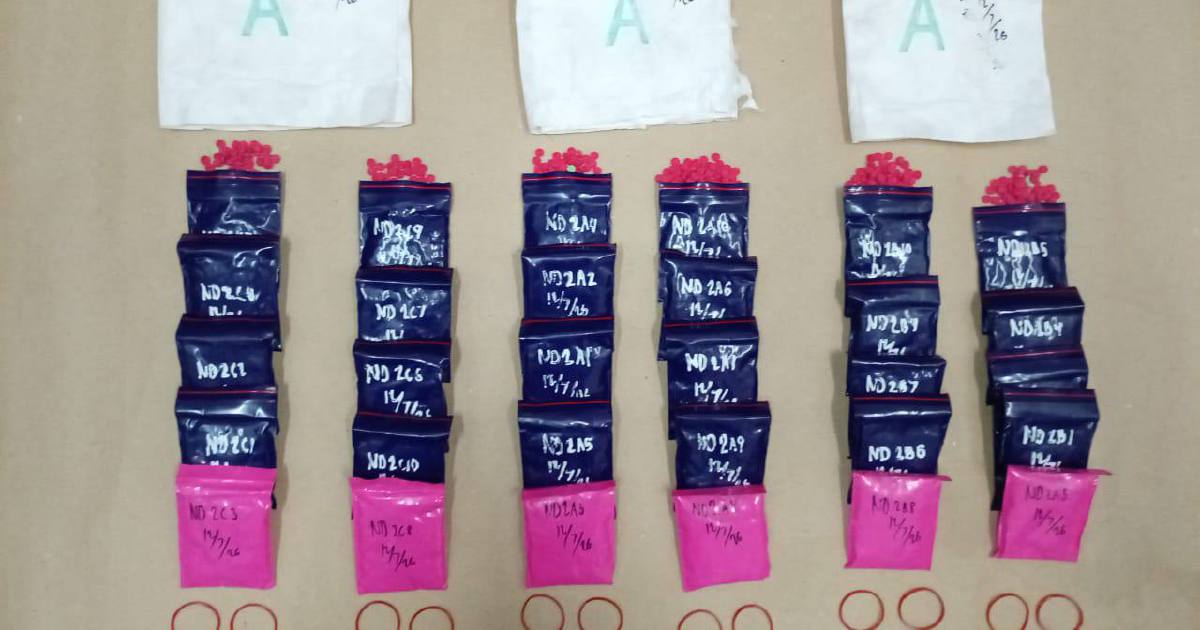
A 35-year-old man working as a tow truck agent in the northern state of Kelantan was apprehended by law enforcement officers on suspicion of drug trafficking following the discovery of a substantial quantity of methamphetamine pills concealed within a motor vehicle. The arrest, made in the Tumpat district, came after officers conducted a search that uncovered approximately 6,000 yaba tablets with an estimated street value of RM60,000 stashed in the car parked along Jalan Kubang Batang near Wakaf Bharu.
The seizure represents a significant operation against synthetic drug distribution networks operating in Malaysia's northern region. Yaba, commonly known as "crazy drug" or "madness drug" among users, has become increasingly prevalent in Southeast Asia over the past two decades, smuggled primarily from clandestine laboratories in Myanmar and neighbouring regions. The high concentration of these pills in a single vehicle suggests involvement in large-scale distribution rather than personal consumption, pointing to an organised supply chain that typically feeds retail-level dealers across multiple states.
The geographic location of the intercept carries strategic significance for Malaysian drug enforcement agencies. Kelantan's position on the Thai-Malaysian border makes it a critical transit corridor for narcotics flowing southward into the peninsula's major markets. Wakaf Bharu, situated within the state's northern reaches, sits particularly close to trafficking routes that smugglers exploit to move contraband across maritime and land boundaries. The arrest illustrates how law enforcement agencies have intensified surveillance of suspicious vehicular movements in these high-risk zones, recognising that distribution networks often employ seemingly ordinary transportation services as cover for illicit cargo movement.
The tow truck industry, by its operational nature, provides certain logistical advantages for those involved in criminal enterprise. Vehicles requiring towing services circulate through diverse neighbourhoods and intersect with mainstream traffic patterns without immediately attracting attention. A person employed in this sector could potentially exploit legitimate business operations as camouflage for narcotics transactions and delivery networks. The arrest suggests that authorities may have identified suspicious patterns in this individual's activities or received intelligence pointing to involvement in drug distribution through his professional role.
Yaba pills contain a potent cocktail of methamphetamine and caffeine, formulated to deliver intense stimulation and extended euphoria lasting several hours. The drug has developed a particularly strong market foothold among younger demographics, including nightclub attendees, long-distance drivers, and construction workers requiring sustained alertness. Users face severe health consequences including cardiovascular stress, psychological dependence, and neurological damage. The 6,000-tablet cache seized represents sufficient supply to service hundreds of individual users, underscoring the scale of demand that sustains these criminal networks.
The estimated street value of RM60,000 indicates the substantial profit margins embedded in methamphetamine distribution. When dealers sell yaba tablets individually at retail markets, prices typically range from RM10 to RM15 per unit, though these figures fluctuate based on local demand and supply conditions. The significant markup between acquisition costs for wholesale quantities and street-level prices creates powerful financial incentives for individuals at all points in the supply chain. These profit differentials explain why drug trafficking, despite severe legal penalties, continues attracting participants willing to accept substantial criminal risks.
Royal Malaysian Police have maintained elevated operational tempo against synthetic drug networks following government directives to combat methamphetamine proliferation, which constitutes one of Malaysia's most serious drug-related challenges. Unlike heroin distribution networks that show signs of decline, methamphetamine trafficking demonstrates upward trajectory in terms of seizures, arrests, and user population growth. The synthetic nature of yaba production, dependent on precursor chemicals rather than cultivated plant material, enables clandestine laboratories to adjust manufacturing capacity and formulations in response to enforcement pressure and market dynamics.
Kelantan's law enforcement agencies have recorded multiple significant yaba seizures in recent years, establishing the state as a crucial focal point in Malaysia's broader counter-narcotics strategy. The consistency of these operations reflects deliberate enforcement resource allocation targeting known trafficking corridors. Intelligence-led policing approaches have enabled officers to move beyond random interdictions toward strategic interception of major supply movements before they reach distribution nodes serving downstream users and dealers.
Investigators will likely pursue inquiries into the suspect's operational networks, examining phone records, financial transactions, and contacts to map the wider distribution chain. Such investigations often reveal connections to major suppliers, downstream dealers, and money laundering mechanisms that conceal proceeds. Malaysian authorities have increasingly focused on dismantling entire criminal organisations rather than prosecuting isolated individuals, recognising that sustained supply reduction requires targeting organised syndicates at multiple levels simultaneously.
The matter will be pursued through Malaysia's drug trafficking statutes, which impose substantial mandatory penalties. Conviction for trafficking methamphetamine pills in quantities exceeding commercial thresholds carries potential sentences including long-term imprisonment and substantial fines. The severity of sentencing reflects government policy treating synthetic drug distribution as a grave national security concern rather than routine criminal conduct. This case exemplifies the ongoing operational challenge facing Malaysian law enforcement as they work to intercept the steady flow of yaba entering the nation through established trafficking routes while pursuing the criminal networks orchestrating these operations from within the country and across borders.

