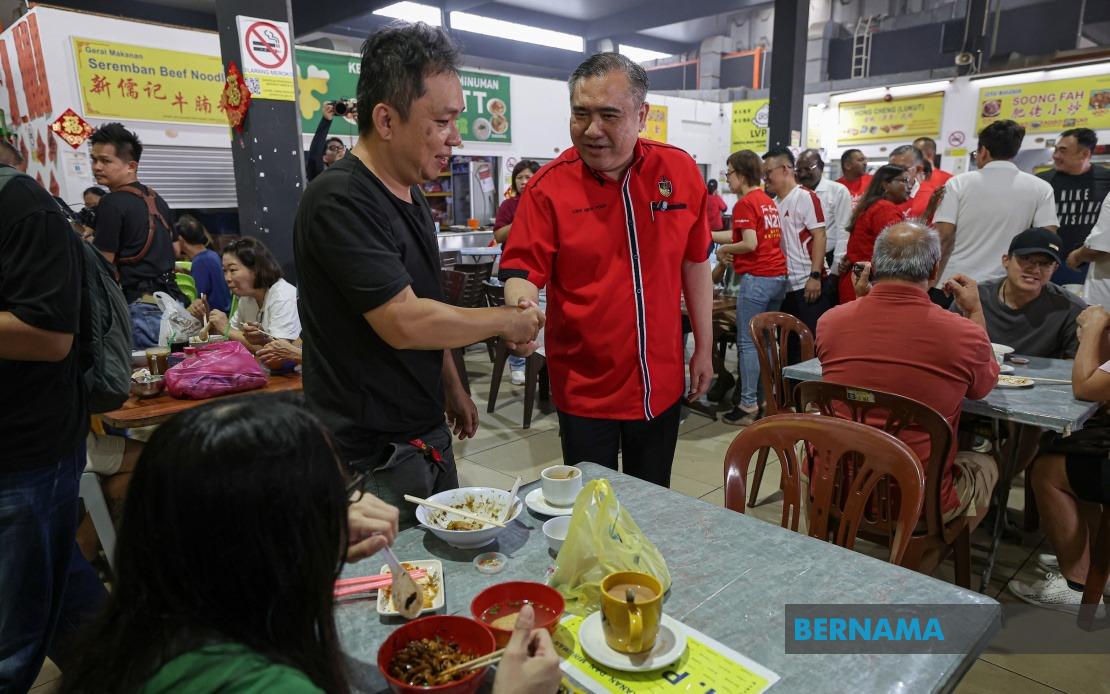
Transport Minister Anthony Loke has issued a firm directive that all participants in the ongoing 16th Negeri Sembilan state election campaign must adhere strictly to traffic regulations and road safety protocols, emphasizing that these standards are not subject to negotiation or exception. Speaking in Seremban after a campaign walkabout with Pakatan Harapan candidates, Loke underscored that maintaining accident-free campaigning requires unwavering commitment to safety measures, regardless of political party or individual ambition.
As secretary-general of the Democratic Action Party, Loke has personally instructed his party's campaign teams to wear helmets consistently while riding motorcycles during the election period, setting a precedent he expects all other organizations and candidates to follow. He articulated this position bluntly, stating that while winning electoral support remains important to all contenders, such objectives cannot justify breaching traffic laws or endangering public safety. The helmet requirement, he argued, represents an absolute baseline expectation that no candidate or supporter should consider negotiable.
Loke illustrated his commitment to this principle by referencing his participation in a campaign convoy from Pekan Titi to Kuala Klawang during nomination day proceedings. He made clear that participation in party-organized transportation would be conditional on helmet compliance, drawing no distinction between party officials and ordinary supporters. This hands-on enforcement approach demonstrates a deliberate strategy to normalize safety compliance rather than treating it as optional conduct.
Beyond helmet requirements, Loke specifically cautioned all candidates and their supporters against the dangerous practice of riding on vehicle tailgates, describing this behavior as reckless disregard for personal safety and public welfare. This particular warning suggests a pattern of unsafe campaigning practices that officials have observed during preliminary campaign activities, prompting targeted intervention. The minister's willingness to call out specific dangerous behaviors indicates that road safety concerns during this election period extend beyond theoretical possibilities to documented problems requiring immediate correction.
The minister's emphasis on leadership by example carries particular significance in Malaysian political contexts, where voters and supporters often mirror the conduct of their preferred leaders and party representatives. By demonstrating personal adherence to traffic regulations and visibly enforcing compliance within his party, Loke establishes a standard that positions safety-conscious behavior as politically respectable and aligned with party values. This framing helps redefine campaign participation away from displays of recklessness toward demonstrations of responsible civic engagement.
Loke's dual role as both Transport Minister and Member of Parliament for Seremban provides institutional weight to these directives. His position allows him to speak with authority about road safety implications and potentially coordinate with traffic enforcement agencies to ensure consistent application of regulations throughout the campaign period. This combination of political standing and ministerial responsibility creates multiple channels through which compliance messaging can reach candidates and supporters.
The 16th Negeri Sembilan state election represents a significant political moment for the state, with the state assembly having been dissolved on June 5. The Election Commission has scheduled August 1 as polling day, with early voting opportunities available from July 28. These timelines create a concentrated campaign period during which intensive political activity could increase traffic volumes and create conditions for accidents if proper safety protocols are not maintained.
With 889,490 registered voters eligible to participate—comprising 867,151 ordinary voters alongside 16,884 military personnel and their spouses and 5,455 police officers designated as early voters—the election will draw significant public engagement. Campaigns typically involve motorcades, roadside gatherings, and transportation of supporters to campaign events, all activities that require careful coordination to prevent traffic incidents. The sheer scale of voter participation suggests correspondingly intensive campaign activities across the state.
Loke's campaign appearance with Pakatan Harapan candidates Ho Weng Wah, Lee Kai Yet, Siau Meow Kong, Nicole Tan, S. Mugunthan, and Chew Seh Yong at Pasar Besar Seremban provided an opportunity to publicly demonstrate these safety standards in action. Using high-visibility campaign activities as platforms for road safety messaging reinforces the integration of compliance expectations into ordinary campaign processes rather than treating safety as peripheral to political objectives.
The minister's broader call for all parties and leaders to embrace traffic regulation compliance suggests recognition that this election campaign could establish precedents extending beyond this particular contest. Should road safety become associated with responsible political participation in Negeri Sembilan, this could influence electoral behavior in future campaigns and potentially influence how other states approach campaign organization. Conversely, if candidates treat safety regulations as inconvenient obstacles rather than essential requirements, subsequent elections might witness escalating traffic safety risks.
Loke's emphasis on non-negotiable compliance standards reflects international best practice in election management, where many democratic countries implement specific campaign conduct regulations addressing safety concerns. By positioning Malaysia's approach as similarly rigorous, Loke frames traffic safety as consistent with professional, credible election administration. This messaging may help international observers and rating agencies evaluate Malaysian elections as well-organized and properly regulated.
The specific mention of helmet requirements and tailgate safety concerns provides practical guidance that candidates and supporters can easily understand and implement. Rather than vague appeals to "be careful," Loke identified concrete behaviors that must change, reducing ambiguity about what compliance actually entails. This specificity increases the likelihood that party organizations will translate ministerial directives into enforceable rules within their own campaign structures.
As the campaign period intensifies toward polling day, the extent to which candidates across all parties embrace Loke's safety standards will provide an important indicator of how seriously Malaysian political organizations treat road safety concerns. Election campaigns have historically been occasions when traffic accidents spike, yet this Negeri Sembilan election campaign may establish that professional political competition and uncompromising safety standards can coexist successfully, potentially influencing future campaign conduct throughout the country.

