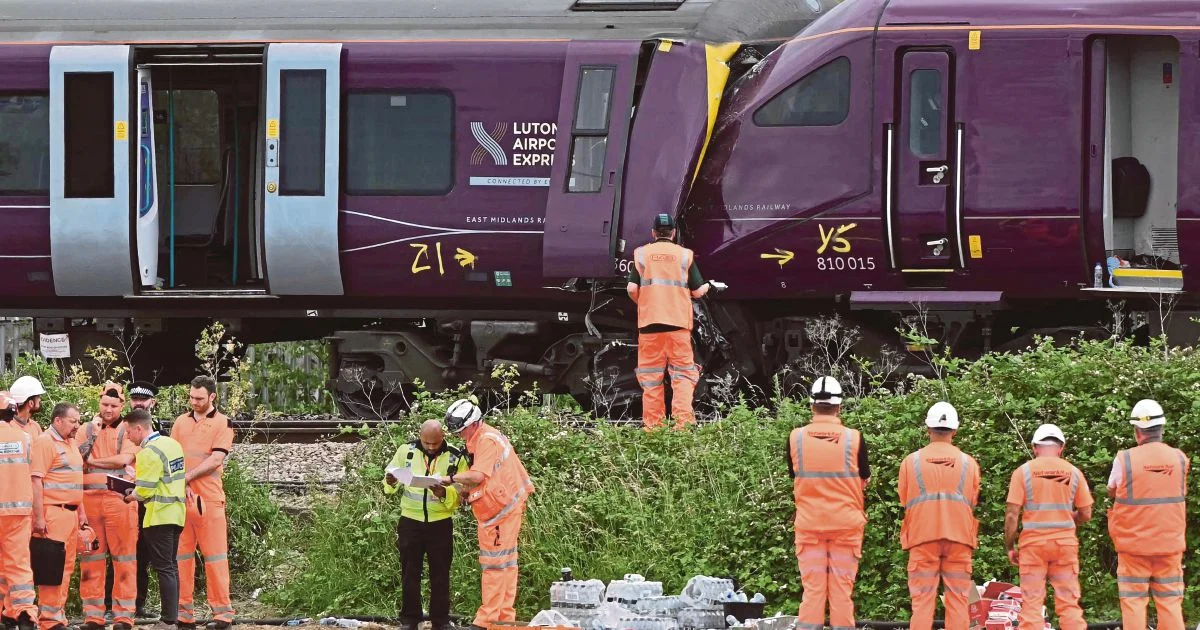
A tragic train collision in the area north of London has claimed the life of a driver and left 28 people requiring hospital care, with nine among them in critical condition. The incident, which unfolded in the vicinity of Bedford, triggered an immediate and comprehensive investigation by UK accident authorities determined to establish what led to the catastrophic impact.
Emergency services responded swiftly to the scene, where rescue teams worked to extract passengers from the damaged carriages. The severity of injuries sustained by those aboard speaks to the force of the collision, which appears to have caused significant structural damage to at least one of the trains involved. The distribution of injuries across the casualty count reflects the random nature of how impact forces affect passengers depending on their location within the carriages at the moment of collision.
Accident investigators specialising in railway incidents have begun their methodical examination of the wreckage and surrounding infrastructure. Their work will encompass technical analysis of the trains themselves, inspection of track conditions, and review of signalling systems and safety mechanisms that exist to prevent such collisions. The investigation will also scrutinise whether human error, mechanical failure, or environmental factors contributed to the tragedy.
For Malaysian readers and Southeast Asian observers, this incident underscores the critical importance of rigorous safety protocols in rail transport systems. Many countries in the region are expanding their railway networks significantly, with new high-speed rail corridors planned across multiple nations. The lessons emerging from thorough investigations into incidents like this collision provide invaluable insights for transport authorities designing and operating their own systems.
The UK rail network, despite its age and heavy use, has developed sophisticated safety systems over more than a century and a half of operation. Yet collisions, while comparatively rare given the volume of traffic, continue to remind the industry that complacency poses a genuine danger. The Bedford incident will likely prompt reviews not only within the UK but across European rail operators who share similar track layouts and signalling technologies.
For families affected by this tragedy, the immediate priority shifts to supporting those injured during their recovery. Nine individuals in critical condition will require intensive medical intervention in the coming days, and their status will partly determine the ultimate toll of this incident. The families of the deceased driver face an immeasurable loss, having lost someone engaged in an occupation essential to modern transport infrastructure.
The investigation process in the UK typically involves multiple agencies and can take months to complete. The final report will detail technical findings, identify any failings in maintenance, operations, or design, and recommend measures to prevent recurrence. Such reports become mandatory reading for transport operators worldwide, as the international rail community operates with strong knowledge-sharing protocols regarding safety matters.
Regulatory bodies in Britain will await the investigators' conclusions before determining whether enforcement actions, penalties, or operational changes must be implemented. This measured approach, while sometimes frustrating to those seeking immediate answers, ensures that responses are evidence-based and proportionate to the actual causes identified. Rush to judgment before facts emerge can lead to ineffective remedies that fail to address root causes.
The psychological impact on surviving passengers and crew extends beyond physical injuries. Trauma from such incidents frequently requires counselling and support, particularly for those who witnessed the worst moments of the collision. Railway operators typically establish support services for affected individuals, recognising that the human cost extends far beyond hospital admissions.
In Southeast Asia, where railway expansion projects are advancing rapidly, incidents abroad serve as important reminders that investment in infrastructure must be matched by commitment to safety culture and proper maintenance regimes. Countries like Malaysia, Thailand, and Vietnam are developing or upgrading rail connections as part of broader transport strategies, and learning from international incidents helps shape better outcomes locally.
The Bedford collision, tragic as it is, will likely generate constructive outcomes through the investigation process. The detailed analysis of what went wrong, combined with recommendations for improvement, contributes to the collective global knowledge about rail safety. This incremental advancement in safety understanding, purchased at considerable human cost, reflects the necessary vigilance required to maintain rail transport as one of the safest modes of travel despite such occasional catastrophic failures.
%22%2F%3E%3C%2Fpattern%3E%3C%2Fdefs%3E%3Crect%20width%3D%22100%25%22%20height%3D%22100%25%22%20fill%3D%22url(%23ph504jeg)%22%2F%3E%3Crect%20width%3D%22100%25%22%20height%3D%22100%25%22%20fill%3D%22url(%23ph504jep)%22%2F%3E%3Ctext%20x%3D%2250%25%22%20y%3D%2250%25%22%20text-anchor%3D%22middle%22%20dominant-baseline%3D%22central%22%20fill%3D%22rgba(255%2C255%2C255%2C0.95)%22%20font-family%3D%22Georgia%2C%20'Times%20New%20Roman'%2C%20serif%22%20font-weight%3D%22700%22%20font-size%3D%22320%22%20letter-spacing%3D%22-0.02em%22%3EMOH%3C%2Ftext%3E%3C%2Fsvg%3E)
%22%2F%3E%3C%2Fpattern%3E%3C%2Fdefs%3E%3Crect%20width%3D%22100%25%22%20height%3D%22100%25%22%20fill%3D%22url(%23ph1idx5g)%22%2F%3E%3Crect%20width%3D%22100%25%22%20height%3D%22100%25%22%20fill%3D%22url(%23ph1idx5p)%22%2F%3E%3Ctext%20x%3D%2250%25%22%20y%3D%2250%25%22%20text-anchor%3D%22middle%22%20dominant-baseline%3D%22central%22%20fill%3D%22rgba(255%2C255%2C255%2C0.95)%22%20font-family%3D%22Georgia%2C%20'Times%20New%20Roman'%2C%20serif%22%20font-weight%3D%22700%22%20font-size%3D%22320%22%20letter-spacing%3D%22-0.02em%22%3EIJN%3C%2Ftext%3E%3C%2Fsvg%3E)
%22%2F%3E%3C%2Fpattern%3E%3C%2Fdefs%3E%3Crect%20width%3D%22100%25%22%20height%3D%22100%25%22%20fill%3D%22url(%23ph2ia34g)%22%2F%3E%3Crect%20width%3D%22100%25%22%20height%3D%22100%25%22%20fill%3D%22url(%23ph2ia34p)%22%2F%3E%3Ctext%20x%3D%2250%25%22%20y%3D%2250%25%22%20text-anchor%3D%22middle%22%20dominant-baseline%3D%22central%22%20fill%3D%22rgba(255%2C255%2C255%2C0.95)%22%20font-family%3D%22Georgia%2C%20'Times%20New%20Roman'%2C%20serif%22%20font-weight%3D%22700%22%20font-size%3D%22272%22%20letter-spacing%3D%22-0.02em%22%3EPerak%3C%2Ftext%3E%3C%2Fsvg%3E)