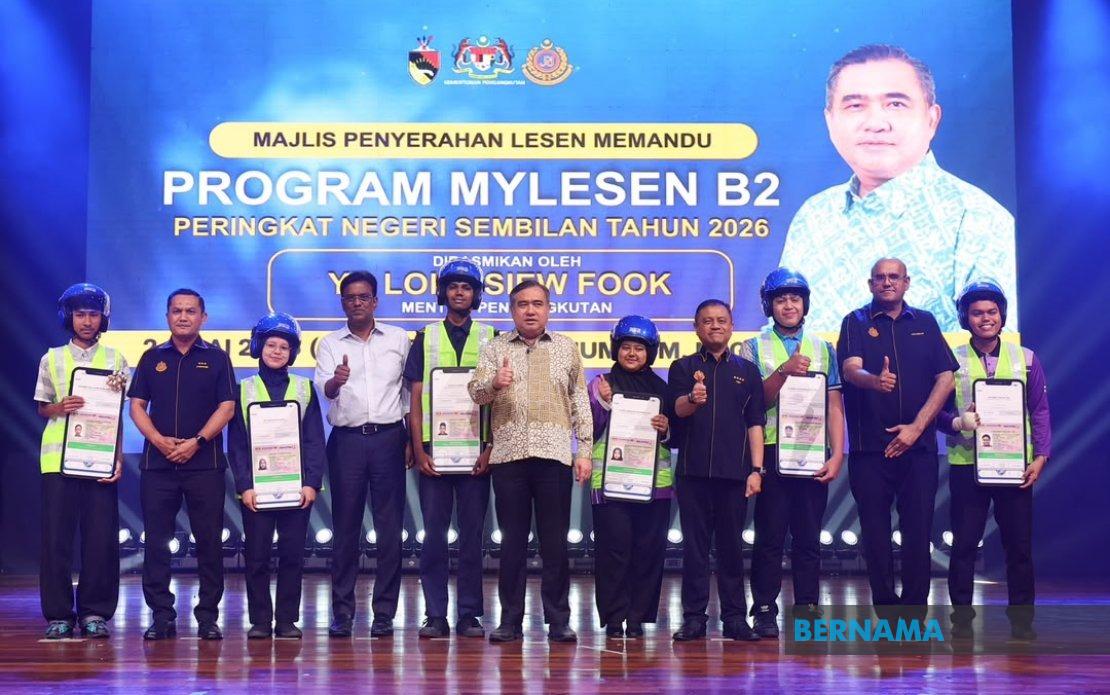
Transport Minister Anthony Loke has issued a pointed reminder to young motorcyclists in Malaysia, particularly those benefiting from the government's MyLesen B2 Programme, that acquiring a motorcycle licence represents a commitment to responsible riding rather than licence to engage in dangerous behaviour on public roads. Speaking during a Negeri Sembilan-level licence presentation ceremony in Seremban on July 2, Loke underscored that the free licensing initiative aims to provide legal mobility options for youth while establishing clear expectations around compliance with traffic regulations and safe conduct.
The urgency of Loke's message reflects genuine public health concerns surrounding motorcycle accidents in the country. Road fatalities involving motorcyclists and pillion riders account for approximately 60 per cent of all fatal traffic incidents recorded annually, with a disproportionate concentration among individuals under 30 years of age. This demographic skew suggests that inexperienced riders, particularly those newly licensed, represent a significant vulnerability within Malaysia's road safety landscape. The scale of the problem positions responsible messaging around licence acquisition as a critical intervention point for preventing premature deaths among the youth population.
The MyLesen B2 Programme itself has expanded substantially since its inception in 2023, demonstrating the government's commitment to democratizing motorcycle licensing across socioeconomic groups. To date, the initiative has facilitated licensing for more than 100,000 participants nationwide, creating pathways to employment, further education, and improved economic mobility through legal transportation access. In Negeri Sembilan specifically, the programme quota has nearly doubled from 1,000 participants last year to 2,300 this year, reflecting growing demand and government confidence in the model's scalability.
Progression through the MyLesen B2 system requires demonstrated competency and structured learning. Current figures for Negeri Sembilan show that 1,979 participants have successfully obtained their Learner's Driving Licence, with 1,879 having completed formal training and passed competency assessments to earn their Probationary Driving Licence. This staged approach, which separates learning from independent riding privileges, builds in quality controls designed to ensure that licence holders possess baseline skills before operating vehicles unsupervised. The completion rates suggest the programme maintains reasonable standards despite its accessibility focus.
Loke's caution against illegal racing carries particular weight given that Parliament has recently moved to strengthen enforcement mechanisms in this area. The Dewan Rakyat has passed the Road Transport (Amendment) Bill 2026, which specifically targets illegal racing and speed testing across all vehicle categories. Under the amended legislation, individuals apprehended for participating in illegal street racing now face not merely financial penalties but potential imprisonment, elevating the seriousness with which authorities treat this offence. For young riders accustomed to viewing weekend gatherings as recreational opportunities, this shift in enforcement posture represents a material change in consequences.
The messaging directed toward MyLesen B2 recipients reflects a sophisticated understanding of youth behaviour and peer influence. Loke's specific reference to weekends as a flashpoint for dangerous riding acknowledges that recreational culture among young motorcyclists often concentrates on social activity during non-school hours, precisely when supervision and social accountability may diminish. By explicitly naming this temporal pattern, the minister signals that authorities are aware of existing behavioural trends and are calibrating intervention accordingly. The framing avoids blanket prohibition in favour of emphasizing choice and consequence, potentially more persuasive to adolescent audiences.
Safety equipment standards represent another dimension of the compliance framework being promoted. Loke emphasized the importance of wearing SIRIM-certified helmets for both riders and pillion passengers, linking equipment standards to government quality assurance mechanisms. This specification demonstrates that responsible riding extends beyond behavioural choices to include material precautions that demonstrably reduce injury severity in accidents. The emphasis on certification standards also suggests that authorities recognise and wish to combat the prevalence of substandard protective equipment among youth riders, who may prioritize aesthetics or cost over safety specifications.
The attendance of senior officials at the licence presentation ceremony, including Transport Ministry Secretary-General Datuk Seri Jana Santhiran Muniyan, Road Transport Department Director-General Datuk Aedy Fadly Ramli, and other JPJ leadership, underscores institutional commitment to the programme's success and the seriousness accorded to road safety messaging. This level of high-level presence signals to participants and their families that the licensing achievement merits formal recognition while simultaneously emphasising that government treats motorcycle safety as a priority concern requiring coordination across multiple administrative levels.
For Malaysian readers, the broader context reveals a government attempting to balance access to mobility against genuine public health imperatives. The MyLesen B2 Programme addresses legitimate economic inclusion objectives by removing cost barriers to legal licensing, yet its success depends fundamentally on creating a cultural environment where recipients internalise responsibility rather than view licensing primarily as administrative certification. The emphasis on legal consequences, safety standards, and institutional oversight suggests authorities are pursuing a multi-pronged strategy combining deterrence, education, and equipment regulation to reshape behaviours that have historically proven resistant to conventional enforcement.
Regional implications extend beyond Malaysia's borders, as Southeast Asian nations face similar challenges with motorcycle accident fatalities concentrated among youth populations with limited resources for formal transport alternatives. Malaysia's approach to scaling accessible licensing while strengthening accountability mechanisms may offer instructive lessons for neighbouring jurisdictions grappling with comparable road safety challenges. The combination of free licensing with enhanced penalty frameworks and safety equipment standards represents a distinct policy model worth monitoring for effectiveness and potential application elsewhere in the region.

