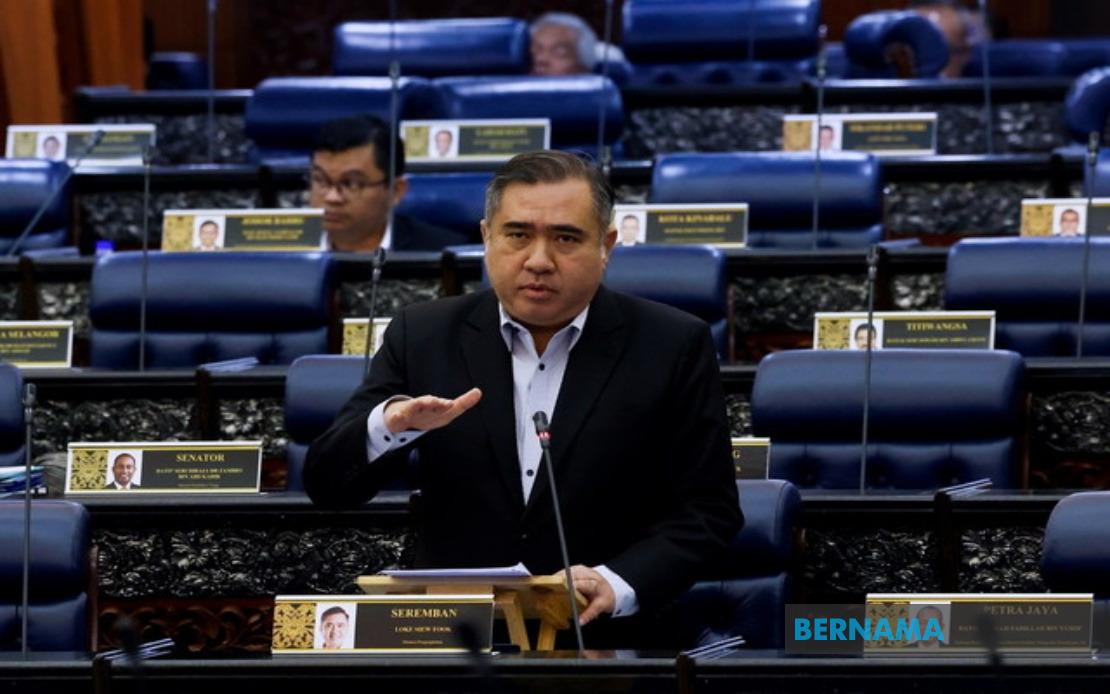
The Transport Ministry has unveiled a comprehensive legislative agenda designed to provide financial recourse for families devastated by fatal and serious road accidents while simultaneously tightening enforcement against illegal street racing, signalling a shift towards holding dangerous drivers accountable through both civil and criminal frameworks. Minister Anthony Loke disclosed the proposal during parliamentary proceedings on July 14, framing the initiative as evidence of the government's determination to treat vehicular offences resulting in death or catastrophic injury as serious crimes rather than routine traffic violations.
Under the proposed amendments to the Road Transport Act 1987, courts would gain authority to mandate that drivers convicted of grave offences under the legislation pay compensation directly to victims or their lawful heirs based on the specific circumstances of each incident. This mechanism represents a meaningful departure from traditional penalty structures that typically rely on fines flowing to the state rather than benefiting those directly harmed by reckless behaviour. The judicial discretion would extend to assessing multiple factors when determining appropriate compensation levels, including the severity of injuries sustained, the permanence of any disability or loss of life, quantifiable financial losses incurred by families, and the convicted person's capacity to satisfy such payments.
The compensation proposal carries particular significance for Malaysian road safety discourse, as it acknowledges a persistent gap between criminal penalties and victims' civil remedies. Families who lose breadwinners or face lifetime care obligations for permanently injured relatives often pursue expensive civil litigation to recover damages, a process that can span years and impose substantial legal costs. By embedding compensation authority directly into criminal sentencing, the courts would be positioned to provide faster, more accessible relief without requiring separate civil proceedings.
Complementing this victim-centred approach, the government has already advanced the Road Transport (Amendment) Bill 2026, which the Dewan Rakyat has endorsed. The legislation creates a distinct criminal offence specifically targeting illegal racing under a new Section 42A, recognising that street racing occupies a unique category of dangerous conduct that deserves standalone criminalization. For first-time offenders participating in illegal racing, penalties encompass fines ranging from RM2,000 to RM10,000, imprisonment up to two years, or both. Those convicted of second or subsequent offences face substantially harsher consequences: fines between RM5,000 and RM20,000, imprisonment extending to five years, or both.
A critical innovation embedded within the amendment lies in its preventative architecture. Previously, authorities could only initiate prosecutions after an accident occurred, meaning illegal racers could evade legal consequences if their activities did not culminate in collisions. The revised framework dissolves this temporal constraint, permitting enforcement action against individuals engaged in illegal racing at any point, regardless of whether accidents materialise. This adjustment acknowledges a fundamental truth about traffic safety: the act of illegal racing itself, irrespective of outcomes, constitutes socially unacceptable risk-taking that endangers innocent road users and warrants pre-emptive intervention.
The Transport Ministry's enforcement apparatus has already mobilised under this tougher legislative framework. A recent operation concentrated in Johor resulted in the apprehension of 16 individuals involved in illegal racing activities and the confiscation of 260 motorcycles, demonstrating operational capacity and institutional commitment to dismantling street racing networks that have metastasised in certain metropolitan corridors and highway stretches. These enforcement sweeps carry particular weight given Malaysia's persistent mortality burden from road trauma, with annual fatalities exceeding 6,000—a figure that positions road accidents as a leading cause of preventable death and disability among working-age adults.
The government's heightened attention to illegal racing was catalysed partly by a tragedy on June 1 at Km27 of Jalan Renggam-Simpang Renggam in Johor, which claimed five lives. The Attorney-General's Chambers responded by directing investigators to pursue cases under Section 302 of the Penal Code, the provision addressing culpable homicide not amounting to murder, signalling that the legal system is prepared to treat fatal street racing incidents with the gravity they deserve. This prosecutorial posture contrasts with historical patterns whereby such deaths were sometimes treated as mere accidents requiring minimal institutional response.
Beyond legislative architecture and enforcement operations, Loke emphasised that sustainable reductions in road fatalities demand transformation at the behavioural and cultural level. He positioned road safety as a national priority transcending partisan politics, calling for cooperation spanning government ministries, community institutions, religious leaders, and citizens themselves. This framing reflects growing evidence that compliance-based approaches relying solely on penalties prove insufficient when confronted with deeply embedded cultural attitudes glorifying speed, risk, and disregard for traffic regulations. Behavioural change campaigns addressing beliefs about masculinity, peer pressure, and mortality risk appear essential if legislative reforms and enforcement increases are to yield measurable improvements in crash reduction.
The Transport Ministry's multi-pronged approach reflects recognition that road safety constitutes a complex challenge requiring simultaneous action across punishment, restitution, deterrence, and behaviour modification. By expanding courts' compensation powers, establishing specific offences for illegal racing, increasing penalties, enabling pre-accident prosecutions, and intensifying enforcement, the government has constructed a more comprehensive regulatory architecture than previously existed. However, the Minister's cautionary statement warning against politicisation of road safety issues acknowledges a genuine tension: if different political factions attempt to weaponise traffic fatalities for partisan advantage rather than uniting around shared harm-reduction objectives, the political consensus necessary to sustain enforcement commitment and public cooperation may fracture.
For Malaysian motorists and road safety advocates, the reforms represent tangible institutional recognition that deaths and injuries from reckless driving warrant serious consequences and that victims deserve financial recognition. For those caught in illegal racing culture, particularly young motorcyclists in urban areas, the amendments signal a narrowing window for participation without facing substantial legal jeopardy. Regionally, Malaysia's legislative evolution also charts a course that other Southeast Asian nations grappling with similar traffic mortality challenges might observe and potentially emulate as they confront the escalating costs of road trauma to families, economies, and public health systems.

