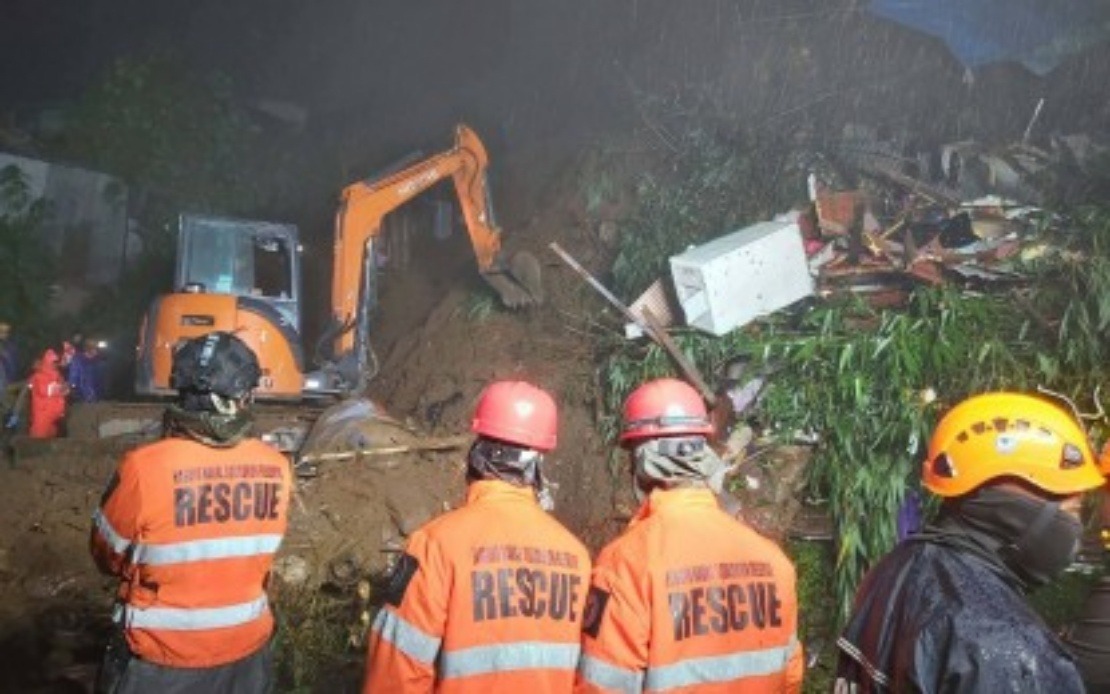
The Philippines faces a humanitarian crisis following consecutive weather disturbances that have claimed at least 19 lives and impacted over 2.2 million residents across multiple regions. The Office of Civil Defence confirmed the death toll on Tuesday, linking fatalities to Tropical Depressions Luis and Maymay alongside the southwest monsoon system that swept through the archipelago. The toll underscores the vulnerability of Philippine communities to tropical weather systems that strike with increasing frequency during the typhoon season, a reality that resonates across Southeast Asia where similar weather patterns affect vulnerable populations annually.
The geographic distribution of casualties reveals concentrated impacts in the northern and central parts of the country. Benguet Province bore the heaviest losses with 12 confirmed deaths, followed by four fatalities in Rizal and three in Batangas. Beyond those killed, the OCD verified 15 injured persons, with Benguet accounting for the majority at 12 cases. Additionally, four individuals remain unaccounted for, suggesting the final humanitarian toll may still be climbing as search and rescue operations continue in affected areas. This pattern of casualties concentrated in upland regions like Benguet reflects the terrain-specific hazards of tropical depressions, where mountainous geography amplifies flooding and landslide risks.
The scale of human displacement underscores the disaster's breadth across the nation's diverse geography. Approximately 646,676 families representing 2.27 million individuals experienced disruption from these weather events, spreading across ten distinct regions and administrative zones. The affected areas span from the Ilocos Region in the northwest through Central Luzon and down to the Bicol Region, Western Visayas, and as far south as the Zamboanga Peninsula and Calabarzon zone. Such wide geographic dispersal indicates that these were not localized phenomena but rather systemic weather patterns affecting the entire country's stability and infrastructure simultaneously.
Emergency response infrastructure has been stretched to accommodate the displaced populations. The OCD activated 919 evacuation centres nationwide to house roughly 26,174 families comprising nearly 95,000 individuals. This deployment of shelters reflects the Philippine government's acknowledgment that immediate, large-scale displacement was unavoidable. For Malaysian observers, this scenario presents a cautionary parallel, as Southeast Asian nations with comparable exposure to tropical systems face similar preparedness challenges during peak seasons. The requirement for nearly 1,000 shelters simultaneously demonstrates the logistical burden placed on national disaster management agencies when multiple systems develop in succession.
Physical infrastructure sustained considerable damage requiring extensive reconstruction efforts. Official assessments documented 639 partially damaged residential structures and 45 buildings completely destroyed, primarily in affected regions. These figures represent not merely numbers but entire communities facing prolonged recovery periods. The destruction of homes during tropical weather events often creates secondary crises, including disease outbreaks in crowded evacuation centres and delayed school resumptions that disrupt children's education. Recovery timelines for affected communities typically extend months beyond the initial weather event, straining local government resources and requiring sustained assistance from national authorities.
The economic toll extends substantially beyond housing into critical sectors. Infrastructure damage was calculated at PHP1.46 million, equivalent to approximately RM97,000 in Malaysian currency. While this figure appears modest, it likely represents only directly assessed damage to government infrastructure; private sector and utility infrastructure losses frequently exceed official government estimates. More significantly, agricultural damage reached PHP135.33 million, a substantial figure reflecting the impact on farming communities during a critical season. For an agricultural nation like the Philippines where farming populations depend on seasonal cycles, such crop losses translate directly to food security concerns and economic hardship for rural households already operating at subsistence margins.
The agricultural sector's vulnerability to tropical weather systems carries implications throughout Southeast Asia's food supply networks. Damage exceeding PHP135 million indicates losses across multiple crop types during the monsoon-affected growing season. Philippine agricultural zones, particularly those in Cagayan Valley and the Cordillera Region identified in the affected areas, supply domestic food markets and regional export networks. When production in one nation declines due to weather disasters, regional food prices often increase, affecting neighbouring countries' import costs. For Malaysia, which imports agricultural products from the Philippines and other ASEAN neighbours, such disruptions create inflationary pressures on food baskets.
The southwest monsoon component of these weather disturbances warrants particular attention from Southeast Asian meteorologists and planners. Unlike discrete tropical storms, monsoon systems persist over extended periods, compounding flooding and landslide risks across entire regions. The simultaneous occurrence of two tropical depressions during an active monsoon phase created a perfect storm scenario where rainfall accumulation exceeded critical thresholds. Understanding these compound weather patterns remains essential for all monsoon-influenced nations across Southeast Asia, where climate change is altering precipitation intensity and monsoon timing.
Crisis response coordination across the Philippines' diverse administrative regions presented complex logistical challenges that relevant authorities managed through the OCD's unified reporting framework. The ability to compile casualty figures, displacement numbers, and damage assessments from ten separate regions within days demonstrates functional disaster management infrastructure, though capacity constraints remained evident in the scale of emergency sheltering required. This institutional capacity, while tested, provides a baseline against which other Southeast Asian nations measure their own preparedness protocols.
The human element of these disasters extends beyond statistics to encompass psychological trauma, displacement stress, and disrupted livelihoods affecting millions. Families in 646,676 households faced sudden evacuation, property loss, and separation from employment opportunities during critical earning periods. For casual labourers and agricultural workers forming substantial portions of rural Philippine populations, even brief interruptions to income generation create acute financial stress. Recovery thus requires not only physical reconstruction but also livelihood restoration programmes supporting affected families' return to economic self-sufficiency.
Government assessments continue as search operations proceed in remote areas where communication remains disrupted. The verification process itself reveals ongoing uncertainty, with casualty figures potentially subject to revision as missing persons are either found or confirmed dead. This dynamic nature of disaster data complicates response planning, as resource allocation must account for figures that may change as recovery operations progress. For Malaysian policymakers observing these events, the importance of maintaining flexible disaster response budgets and rapid deployment capabilities becomes apparent.
Looking forward, these weather events will inform Philippine disaster preparedness reviews and regional climate adaptation strategies. The concentration of casualties in upland areas like Benguet suggests that early warning systems and evacuation protocols for mountainous communities require enhancement. Similarly, the scale of agricultural damage indicates that crop insurance schemes and emergency agricultural support programmes warrant expansion. For Southeast Asia collectively, the Philippines' experience provides empirical data on contemporary tropical weather system impacts, informing evidence-based policy development across the region's vulnerable nations.

