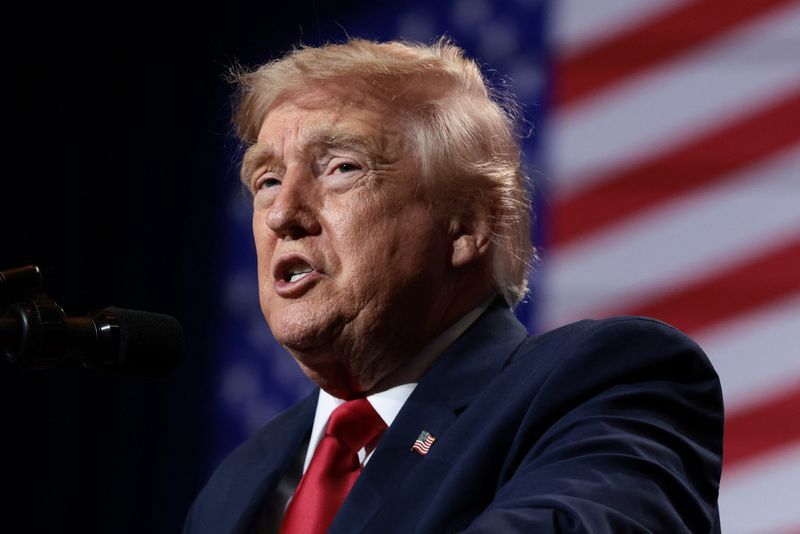
President Donald Trump has authorized a sweeping new approach to combating international cybercrime by signing a national security presidential memorandum that permits the U.S. federal government to engage private sector expertise in cyber operations against transnational criminal organizations based in foreign countries. The directive, signed on Wednesday, represents a significant expansion of how Washington approaches digital threats emanating from abroad, with the White House positioning the framework as essential to defending Americans against escalating ransomware attacks, financial frauds, and other sophisticated crimes orchestrated by foreign-based criminal syndicates.
The memorandum fundamentally restructures how cyber defence capabilities are deployed in the national security architecture. Rather than relying solely on government agencies, the policy encourages private sector companies to enter formal agreements with federal, state, local, tribal, and territorial authorities. These partnerships are designed to facilitate the sharing of threat intelligence on transnational criminal organizations while simultaneously enabling approved private entities to propose and execute targeted cyber operations under strict government oversight and control. This collaborative model reflects recognition within the Trump administration that defeating modern criminal enterprises requires tapping into the innovation and technical sophistication that exists within Silicon Valley and the broader technology industry.
The Department of Homeland Security will serve as the primary coordinator, with the Homeland Security Task Force's National Coordination Center tasked with establishing a dedicated program to conduct cyber operations specifically aimed at disrupting the infrastructure and capabilities of foreign transnational criminal organizations. This program will operate under joint supervision by DHS and the Department of Justice, creating a centralized governance structure designed to ensure accountability and prevent rogue operations. The arrangement attempts to balance operational flexibility with robust oversight mechanisms, though questions remain about how effectively federal agencies can monitor private sector contractors operating in cyberspace.
Participating private companies face substantial regulatory requirements intended to prevent abuse and ensure reliability. The memorandum mandates that vetted firms maintain a financial bond or escrow account holding a minimum of $1 million, serving as a performance guarantee and potential compensation mechanism should operations cause unintended harm. Beyond financial safeguards, approved contractors will conduct two categories of cyber operations: surveillance activities designed to monitor criminal infrastructure and activities, and what the memo terms "cyber effects operations"—a deliberately expansive definition encompassing potential manipulation, disruption, denial, degradation, or destruction of information systems, networks, and critical infrastructure controlled by such systems.
The scope of authority granted to private operators raises significant technical and legal questions. By authorizing private companies to conduct offensive cyber operations that could involve disrupting or degrading foreign-based computer systems and networks, the administration is venturing into territory that cybersecurity experts have long warned about regarding potential escalation. The vagueness of terms like "disruption" and "degradation" leaves considerable discretion to both government supervisors and private contractors about what actions fall within acceptable parameters. This ambiguity becomes particularly concerning when considering that cyber operations can produce unintended consequences, spreading beyond intended targets and affecting unrelated third parties or critical infrastructure.
For Southeast Asian nations including Malaysia, this development carries important implications. The region hosts significant populations of international cybercriminals who leverage its relative lack of robust cyber enforcement to operate ransomware campaigns, financial fraud schemes, and other attacks targeting victims worldwide. American cyber operations authorized under this framework could potentially involve disrupting criminal infrastructure located within Southeast Asian jurisdictions or operated by regional actors. Such operations could create diplomatic complications if conducted without proper notification or coordination with host countries, or if they inadvertently damage legitimate systems operated by businesses or government agencies in the region.
The controversy surrounding private sector involvement in offensive cyber operations is not novel. Previous administrations have explored similar arrangements, but concerns about escalation risks, coordination failures between multiple government agencies, and potential liability issues have consistently complicated implementation. Critics worry that enlisting private companies in active cyber warfare blurs the distinction between defensive and offensive operations, potentially triggering retaliatory actions by foreign governments or criminal organizations. The financial incentives facing private contractors could also create pressure to expand operations beyond their original mandate or to interpret ambiguous orders aggressively.
The Trump administration presented this memorandum as addressing a critical gap in America's capacity to combat international cybercrime, positioning private sector innovation as essential to modern security. The White House emphasized that transnational criminal organizations conducting ransomware attacks and financial frauds from foreign bases represent an urgent threat requiring innovative responses. However, the administration did not immediately provide detailed information about how it would prevent mission creep, ensure proper inter-agency coordination, or address potential diplomatic complications arising from cyber operations in foreign jurisdictions.
The framework's reliance on private sector companies introduces market dynamics into what traditionally constitutes core government security functions. Companies bidding to participate in this program face economic incentives to demonstrate capability and aggressiveness, potentially creating pressure to propose expansive operations. The $1 million bond requirement, while providing some financial protection, may prove inadequate if cyber operations cause widespread disruption or collateral damage. Questions also persist about how the government will vet companies sufficiently to ensure their cyber operators maintain appropriate judgment and restraint when authorized to disrupt foreign infrastructure.
Regional cybersecurity analysts note that this policy could reshape the global cyber threat landscape by introducing American-authorized private sector cyber operations targeting foreign criminal infrastructure. For countries throughout Southeast Asia that host significant numbers of cybercriminals while also operating vulnerable critical infrastructure, the development warrants careful monitoring. Malaysian policymakers, in particular, should consider how to coordinate with American authorities to ensure any operations targeting criminal infrastructure operating from Malaysian territory occur with proper notification and safeguards for legitimate Malaysian businesses and government systems.
The memorandum represents a strategic shift toward privatizing aspects of cyber warfare that governments previously conducted exclusively through military and intelligence agencies. Whether this approach ultimately strengthens American security or introduces new vulnerabilities through coordination challenges and unintended consequences remains to be seen as the program begins implementation. The coming months will reveal how the Department of Homeland Security and Department of Justice establish operational guidelines, vet private contractors, and manage the complex oversight required to keep offensive cyber operations aligned with stated policy objectives while minimizing collateral damage and diplomatic friction.

