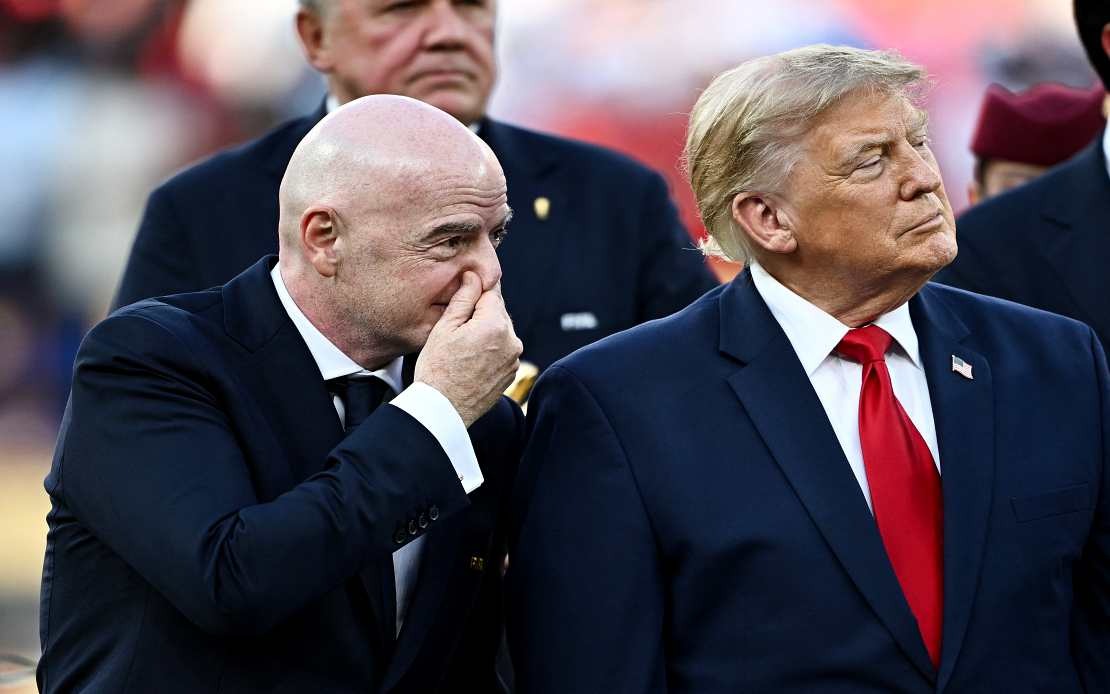
United States President Donald Trump has stepped into a widening controversy surrounding FIFA President Gianni Infantino's leadership, offering vigorous public support for the embattled sports executive through a post on Truth Social. Trump described Infantino as a fantastic and irreplaceable figure in international football, emphasising his track record in delivering what the American leader characterised as the most commercially successful World Cup tournament in history—by a factor of four times over any prior iteration. The statement represents a significant intervention in an internal football governance dispute that has escalated into open conflict between FIFA's leadership and some of the sport's most influential regional bodies.
The controversy erupted after UEFA, the Asian Football Confederation, and CONCACAF issued a coordinated open letter criticising Infantino's stewardship of FIFA. The three confederations, which collectively represent football federations across Europe, Asia, and the Americas, demanded an independent investigation into the circumstances and terms of a proposed transaction involving FIFA's commercial rights. This coordinated action underscored deepening divisions within global football's governing structure, with major regions expressing loss of confidence in the current administration's strategic direction and decision-making processes.
At the centre of the dispute lies an ambitious but controversial commercialisation strategy announced in July. FIFA proposed raising approximately US$4.2 billion by divesting roughly 20 per cent of a newly created entity that would assume control of the International Federation's media and commercial rights portfolio. This would include lucrative broadcasting and sponsorship arrangements for future World Cup tournaments. The initiative represented an attempt to unlock substantial capital by partial privatisation of FIFA's income streams, a move that would fundamentally alter the financial architecture of world football.
Media investigations revealed potential involvement by the investment foundation of Joshua Kushner, brother of Jared Kushner who served as a senior advisor to Trump during his previous administration. This connection between the proposed deal and Trump's family network created additional controversy and accusations of improper influence peddling. The perception of backroom connections between American business interests and FIFA's commercial strategy fuelled criticism that the confederation was prioritising profit extraction over broader stakeholder interests within global football.
Infantino faced escalating pressure following the disclosure of these deal structures. In early August, he convened an emergency assembly of FIFA's senior leadership to address mounting criticism and what observers characterised as a significant erosion of his organisational influence. During this tense meeting, federation executives ultimately expressed formal support for the president, though Infantino was compelled to publicly apologise for errors of judgment regarding the FIFA Forward Enterprise commercial venture. The apology signalled acknowledgment that the process and terms of the proposed transaction had fallen short of acceptable governance standards.
The opposition from UEFA proved particularly significant. Europe's dominant football confederation announced that all its member associations would initiate a boycott of FIFA competitions unless the commercial rights proposal was completely abandoned. This threat struck at the heart of FIFA's financial model, given that UEFA's tournaments and competitions represent substantial revenue generators for the global federation. The prospect of a European boycott transformed the dispute from an administrative disagreement into an existential challenge to FIFA's operational capacity and legitimacy.
Facing this unprecedented coalition of opposition, Infantino ultimately reversed course. FIFA formally announced abandonment of the commercial rights sale proposal, effectively surrendering the cornerstone of what had been positioned as a transformative financial initiative. The about-face represented a significant defeat for the FIFA president, demonstrating that even the federation's chief executive cannot impose major strategic decisions when ranged against united opposition from major confederations.
Trump's defence of Infantino appears calculated to shore up the beleaguered FIFA executive at a vulnerable moment. The American president argued that replacing Infantino would represent a catastrophic error that would permanently diminish FIFA's capacity to generate profits and deliver high-calibre tournaments. Trump's intervention suggests an interest in preserving Infantino's position, though the basis for American presidential involvement in the internal governance disputes of an international sports body remains unclear beyond potential commercial connections through the Kushner family network.
For Malaysian and Southeast Asian readers, the FIFA governance turmoil carries implications for the AFC and its members. Asian football bodies joined the unified confederate opposition to the commercial rights transaction, positioning themselves alongside Europe and the Americas in rejecting what was widely characterised as a problematic privatisation scheme. This coordination among major regional confederations demonstrates growing assertiveness by non-European football powers in defending their interests within FIFA's decision-making structures, a shift that could reshape the balance of power within international football governance.
The episode also illustrates broader tensions in global sports governance between commercialisation pressures and traditional stakeholder interests. Infantino's proposal reflected a contemporary trend toward treating sports administration as an investment opportunity, extracting value through asset sales and privatisation. The confederations' united resistance exposed limits to how far governing bodies can pursue such strategies when those moves conflict with the preferences of established regional power structures. The outcome reaffirmed that football's international architecture, despite FIFA's formal authority, remains constrained by the political and economic power wielded by major confederations.
Moving forward, Infantino's position remains somewhat precarious despite the public support from Trump and the formal endorsement from FIFA's leadership. His authority has been demonstrably weakened by the failed commercial initiative and the humiliation of forced reversal. Whether he can rebuild sufficient organisational influence to address FIFA's underlying governance challenges and restore confidence among member confederations remains uncertain. The intervention by Trump, meanwhile, has injected American political dimensions into what should be purely technical football administration matters, potentially further complicating efforts to resolve the federation's structural and ethical questions.

