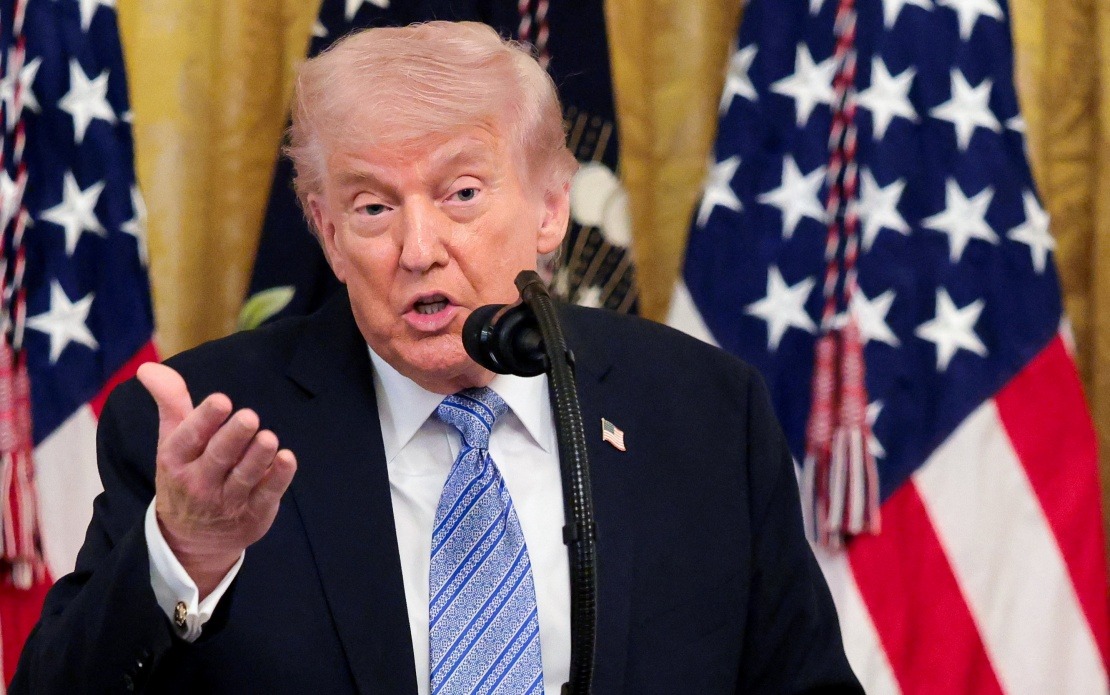
United States President Donald Trump has expressed a desire to see FIFA President Gianni Infantino assume the role of UN secretary-general, according to reporting by the New York Post citing sources close to the American leader. The proposal represents an unconventional nomination that would bring a sports administrator into one of the world's most influential diplomatic positions, a move that underscores Trump's continued willingness to challenge institutional norms and conventional thinking about international governance.
Trump's confidence in Infantino stems from what aides characterise as the FIFA president's exceptional interpersonal skills and global standing. According to the president's assessment, the 56-year-old executive possesses the capacity to unite disparate nations and interests—a quality Trump views as essential for navigating contemporary geopolitical tensions. This perspective reflects the incoming administration's emphasis on leadership qualities that transcend traditional diplomatic backgrounds.
The relationship between Trump and Infantino strengthened considerably during this year's World Cup competition, when the Swiss-born federation chief made deliberate overtures toward the American president. Most notably, Infantino awarded Trump FIFA's inaugural Peace Prize in December, a gesture that appears to have solidified their professional rapport and demonstrated the FIFA leader's attentiveness to cultivating relationships with global power brokers. These interactions laid groundwork for the current consideration of Infantino's potential elevation to UN leadership.
Antonio Guterres, the incumbent secretary-general, will conclude his tenure before the January 1, 2027 commencement date for his successor's five-year appointment. This timing provides a window for candidate identification and international positioning among UN member states. The selection process represents one of the organisation's most significant quadrennial decisions, with far-reaching implications for how global challenges are prioritised and addressed.
The institutional pathway to securing the secretary-general position demands navigating complex diplomatic architecture outlined in the UN Charter. Article 97 specifies that the General Assembly appoints the secretary-general based upon Security Council recommendation. This structure grants the Council's fifteen member states considerable gatekeeping authority, with the five permanent members—the United States, Russia, China, France, and Britain—each wielding absolute veto power over any proposed candidate. Any single permanent member's objection would terminate Infantino's candidacy immediately.
For Malaysian policymakers and Southeast Asian observers, this nomination possibility carries particular significance. The region has previously advocated for secretary-general candidates reflecting broader geographic and cultural representation at the UN's apex. An appointment of a sports executive without traditional diplomatic credentials would establish unprecedented precedent regarding the qualifications deemed acceptable for this position. This could reshape expectations for how future candidates from developing nations present themselves on the international stage.
Trump's sustained criticism of UN performance provides crucial context for understanding this nomination proposal. The American president has repeatedly articulated frustrations with what he perceives as the organisation's inadequacy in addressing major international conflicts and crises. His dissatisfaction extends beyond rhetorical critique into concrete policy action—since returning to the White House, his administration has substantially curtailed US financial contributions to the UN and withdrawn American participation from several UN-affiliated bodies.
Most significantly, the United States has exited the World Health Organization, signalling Trump's willingness to sever ties with institutions his administration deems ineffective or misaligned with American interests. This pattern of disengagement suggests that the secretary-general nomination represents not merely personnel selection but rather Trump's broader strategy for fundamentally reorienting America's relationship with multilateral institutions. Installing a president he trusts personally and believes shares his reform vision would theoretically enable more assertive American influence over UN operations and priorities.
Last year's establishment of a US-led Board of Peace sparked considerable international speculation regarding whether the Trump administration was constructing an alternative institutional framework to supplant UN mechanisms for conflict resolution. While Trump denied such intentions, the creation of parallel structures suggested dissatisfaction with existing multilateral architecture. The secretary-general nomination could represent another element of this broader repositioning—by placing an ally in the top UN position, Trump might circumvent rather than reform traditional obstacles to American foreign policy objectives.
For Southeast Asia specifically, a Infantino-led UN might signal shifting priorities away from regional concerns that have traditionally commanded Security Council attention. The region's stakes in maritime security, trade infrastructure, and inclusive development frameworks could be recalibrated under leadership more responsive to American preferences. Conversely, other permanent Security Council members—particularly China and Russia—would likely oppose any candidate they perceive as insufficiently independent from Washington's interests, making confirmation highly uncertain.
The nomination prospect also raises broader questions about expertise and legitimacy in international governance. While Infantino has demonstrated considerable skill managing FIFA's complex global stakeholder relationships and navigating geopolitical sensitivities, the UN secretary-general role demands distinct competencies encompassing conflict mediation, humanitarian crisis management, and multilateral negotiation across radically diverse national interests. Whether sports administration experience translates effectively to UN leadership remains fundamentally unexamined.
Infantino's viability as secretary-general ultimately depends upon securing consensus among Security Council permanent members and General Assembly support—hurdles considerably higher than Trump's personal endorsement. China's opposition alone would prove disqualifying, and several other nations might question whether appointing someone perceived as aligned with American interests serves the organisation's mandate for impartial global advocacy. The coming months will reveal whether this proposal advances beyond speculation into genuine diplomatic positioning.

