A legal challenge has emerged against a controversial paid subscription service that offers investors and wealthy clients early access to posts from Donald Trump and other senior U.S. officials on the Truth Social platform. The Intercept and the Freedom of the Press Foundation filed suit in Manhattan federal court this week, seeking to shut down Truth API, a feed managed by Trump Media & Technology Group that charges up to $100,000 per month for subscribers to view posts from ten high-profile accounts before they reach the general public. The service, which launched on August 1, has quickly become a flashpoint for concerns about market manipulation, unequal information access, and potential conflicts of interest involving the president.
The timing of Truth API's rollout adds another layer to the controversy. The service became operational just four days after Democratic Senators Elizabeth Warren of Massachusetts and Adam Schiff of California formally requested that the U.S. Securities and Exchange Commission investigate whether the arrangement undermines financial market integrity while disproportionately benefiting Wall Street insiders, wealthy subscribers, and Trump himself. The senators raised alarm about the precedent such a system could establish, particularly given Trump's documented history of using Truth Social to announce material information affecting markets.
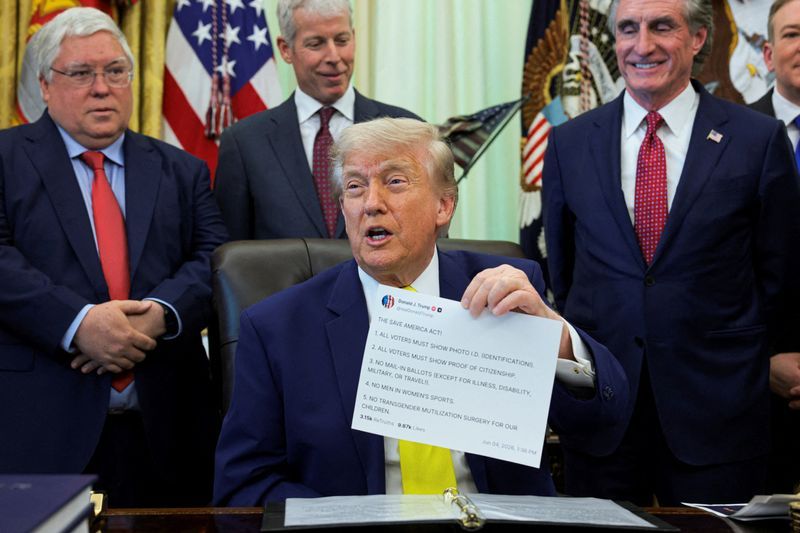
Trump's use of Truth Social for market-moving announcements is well established. Throughout his second term, the president has disclosed significant policy decisions on the platform, ranging from tariff announcements to Middle East diplomatic developments, information that can immediately affect stock valuations, commodity prices, and currency markets. This pattern of behaviour has raised questions about whether a paid early-access system creates an impermissible two-tiered information environment that advantages paying subscribers over ordinary citizens and retail investors.
The lawsuit argues that Truth API violates the U.S. Constitution's First Amendment by creating unequal access to government announcements. The plaintiffs contend that the president's official communications should reach all Americans simultaneously, particularly when they involve matters of significant public interest. They further argue that there is no legitimate government purpose served by allowing Trump and other officials to profit personally from selling exclusive early access to their posts. The complaint specifically highlights the conflict of interest inherent in the arrangement, where the president stands to gain financially whenever new subscribers sign up for the service.
According to the court filing, Trump posted or reposted between 9,000 and 11,000 messages on Truth Social during his current White House term, many of which were never followed by formal White House announcements through traditional channels. This pattern suggests that Truth Social has become a primary outlet for presidential communication, raising questions about whether subscribers are effectively gaining advance access to official policy decisions that could influence market behaviour. The lawsuit seeks an injunction preventing the White House from posting exclusive government announcements on Truth Social while the paid feed remains in operation.
Trump's financial stake in Truth Media amplifies concerns about the arrangement's legitimacy. As the largest shareholder with a 41.3% stake worth approximately $950 million held through his Donald J. Trump Revocable Trust, the president has substantial financial interest in the company's commercial success. His oldest son Donald Trump Jr., who oversees management of the trust, serves as a director of Trump Media, creating a direct family involvement in company operations. This ownership structure means that every new subscriber to Truth API directly increases the value of Trump's personal holdings.
The service extends beyond the president's account. Truth API also offers early access to posts from Vice President JD Vance, Health and Human Services Secretary Robert F. Kennedy Jr., FBI Director Kash Patel, and the official White House account. This broader scope suggests that the service provides subscribers with advance notice of announcements across the entire executive branch, potentially affecting regulatory decisions, law enforcement actions, and public health communications. The involvement of multiple cabinet-level officials raises systemic questions about whether the entire executive branch's communication strategy has been compromised by commercial interests.
Trump Media has vigorously defended the service. A company spokesperson characterised Truth API as merely offering subscribers access to information "fractionally faster" than other distribution channels, arguing that countless media outlets and platforms already disseminate Trump's posts through subscription feeds. The company suggested that the lawsuit represents weaponisation of the courts by "left-wing activists" seeking to censor the president and harm shareholders. During a Monday earnings call, interim Chief Executive Kevin McGurn similarly downplayed the service's significance, framing it as offering negligible speed advantages rather than genuine exclusive access.
The SEC's current composition may influence how regulatory concerns are addressed. With three Republican commissioners, the agency's willingness to investigate or take action remains uncertain, particularly given the Trump administration's broader skepticism toward regulatory constraints on market activities. The lack of swift SEC intervention despite Senator Warren and Senator Schiff's formal request suggests that regulatory remedies may prove insufficient, leaving the courts as the primary arena for challenging the arrangement.
For Malaysian and Southeast Asian observers, this dispute illuminates broader questions about the intersection of political power, financial markets, and information access in democracies. The case raises fundamental concerns about market fairness and the prerequisites for functioning capital markets, issues that are particularly relevant as regional economies increasingly integrate with global financial systems. The precedent established here—whether governments can legitimately monetise advance access to policy announcements—carries implications that extend far beyond the United States.
The outcome of this litigation will likely establish important boundaries around executive communication in an era dominated by social media platforms. If the courts side with the plaintiffs, it would represent a significant constraint on the president's ability to monetise official announcements, potentially setting a precedent that extends to other elected officials. Conversely, if the courts uphold Truth API, it would signal that such arrangements face limited legal obstacles, potentially encouraging similar services elsewhere. The case thus represents a pivotal test of whether traditional legal principles regarding government transparency and market fairness can adequately address novel challenges posed by the fusion of official communication and commercial interest.

