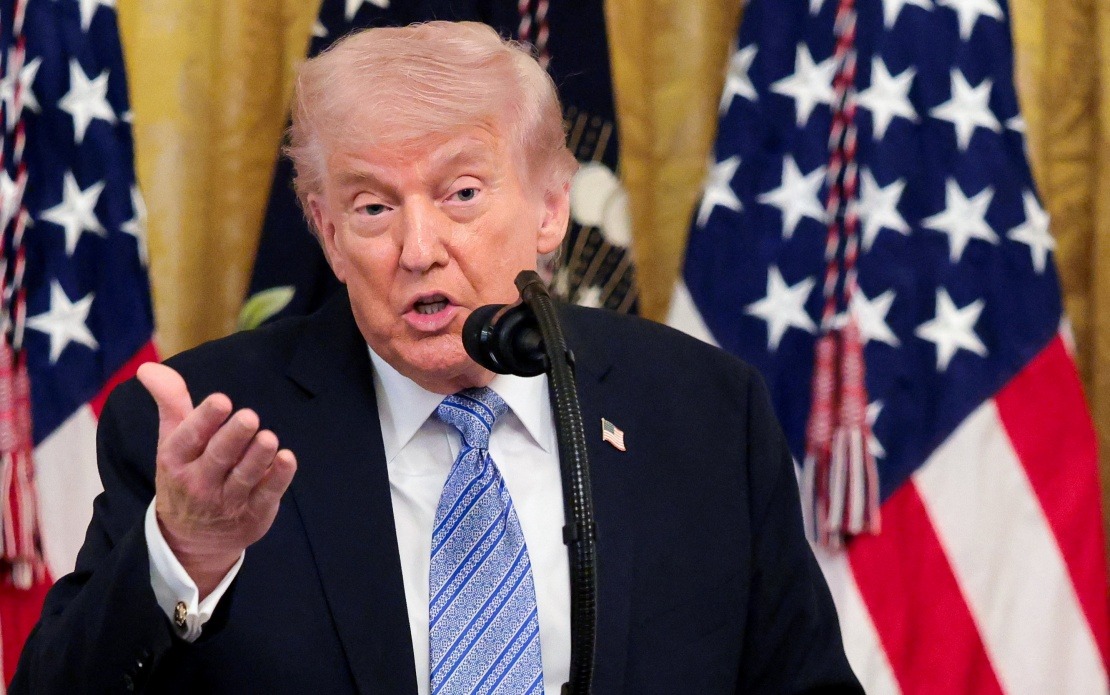
President Donald Trump declared on Tuesday that the United States is not engaged in any discussions with Iran and has no plans to initiate them, a statement that represents a significant hardening of Washington's posture toward Tehran after several months of diplomatic uncertainty. Speaking through his Truth Social platform from Istanbul, Trump reinforced that America's naval presence in the region remains intact, with the Strait of Hormuz continuing to operate normally under US operational control while all maritime hazards have been cleared or neutralised.
The announcement comes at a pivotal moment in the volatile relationship between Washington and Tehran, one that has seen dramatic swings in approach over recent weeks. Internal US administration communications, according to reporting from CNN citing official sources, indicate that Trump has instructed his core negotiating team—including Vice President JD Vance, special envoy Steve Witkoff, and senior adviser Jared Kushner—to cease any engagement attempts with Iran. This explicit directive follows what administration insiders characterised as a period of productive dialogue, suggesting that diplomatic progress was actually achieved before the decision to abandon the negotiating track.
The shift in strategy itself carries significant implications for regional stability and reflects evolving calculations within the Trump administration. Where previous messaging had emphasised swift and aggressive action against Iran, White House officials have begun articulating a different approach: one focused on prolonged containment and economic strangulation rather than immediate military escalation. This recalibration suggests internal debate about the most effective way to constrain Iranian regional influence and nuclear ambitions, with some officials apparently advocating for patience and sustained pressure over rapid confrontation.
Kushner's presence in Israel on Monday, where he met Prime Minister Benjamin Netanyahu to discuss regional security architecture and the Gaza situation, appears to have preceded Trump's statement. Following that meeting, Kushner told Fox News that communications between Washington and Tehran had actually intensified and become more substantive than at any prior point, a characterisation that now seems inconsistent with the president's declaration of zero dialogue. This contradiction raises questions about whether the negotiating team was operating without full alignment with Trump's intentions or whether circumstances changed rapidly between Monday's meetings and Tuesday's announcement.
The historical context of US-Iran relations under Trump's administration underscores the unpredictability that has defined this period. In April, both nations had agreed to a ceasefire framework, demonstrating that despite decades of enmity, moments of mutual interest could produce agreements. This progress was formalised in June through a memorandum of understanding that both sides positioned as a pathway toward ending military hostilities and establishing durable peace arrangements. The international community watched these developments with cautious hope, viewing them as potential opportunities to de-escalate tensions that have repeatedly threatened broader Middle Eastern security.
That fragile diplomatic architecture collapsed last month under circumstances that remain contested between the parties. Iran and the United States engaged in tit-for-tat military strikes over nearly two weeks, with each side responding to provocations from the other in ways that threatened to spiral into full-scale conflict. The immediate causes of this deterioration have been variously attributed to intelligence assessments, alleged weapons transfers, cyber operations, and regional proxy activities, though neither government has provided comprehensive public accounting of the specific triggers. Trump's decision to halt this exchange of fire, initially framed by some analysts as a responsible exercise of restraint, now appears to have been motivated by interest in reviving negotiations rather than fundamental resolution of underlying disputes.
For Malaysia and other Southeast Asian nations, this instability carries real consequences that extend well beyond the Middle East. The Strait of Hormuz remains one of the world's most critical chokepoints for energy supplies, with roughly one-third of globally traded petroleum passing through its waters annually. Any prolonged confrontation between the US and Iran threatens shipping routes that economies throughout Southeast Asia depend upon for manufacturing inputs, power generation, and export competitiveness. Malaysian trade and supply chain managers have repeatedly expressed concern about disruptions originating in this theatre, and geopolitical volatility creates the potential for insurance costs, routing adjustments, and delivery delays that ultimately affect regional growth.
The stated maintenance of an open Strait of Hormuz under US naval blockade presents an interesting paradox that deserves closer examination. Trump's assertion that the waterway remains operational under American military supervision suggests that Washington intends to prevent Iran from closing or restricting transit while simultaneously escalating pressure through other means—sanctions, diplomatic isolation, and coercive containment. This approach mirrors strategies employed in previous administrations but with Trump's characteristic directness in public messaging about the underlying coercive intent. For international shippers and maritime insurers, the distinction matters considerably, as uncertainty about whether Washington will maintain this commitment affects risk assessments and operational planning.
The removal of naval mines and clearing of other underwater hazards that Trump mentioned in his statement reflects serious recent incidents that threatened maritime commerce. The Houthis, an Iranian-aligned group based in Yemen, have deployed mines and conducted attacks on shipping in the Red Sea and broader Indian Ocean region, creating genuine navigation dangers. That these threats have been ameliorated through US naval operations will likely provide some reassurance to commercial operators, though the announcement also implicitly confirms that such incidents had reached levels serious enough to warrant specific public reassurance about resolution. This dimension of the conflict, often overshadowed by headlines about military strikes and diplomatic negotiations, represents a direct threat to Southeast Asian interests.
The Trump administration's internal pivot toward viewing Iran through a containment rather than confrontation lens reflects lessons learned from its previous tenure and contemporary reassessment of what policies can actually achieve. Rapid military escalation carries unpredictable risks, potentially dragging allied powers into conflicts they did not choose and disrupting global energy markets in ways that damage Western economic interests. By contrast, a long-term squeeze—combining naval interdiction, sanctions, diplomatic isolation, and support for regional allies—provides time for internal political dynamics within Iran to potentially shift while limiting risks of catastrophic miscalculation. Whether this strategy will prove more successful than previous approaches remains unclear, but it suggests a more analytically grounded approach than earlier rhetoric suggested.
The termination of talks with Iran also reflects broader shifts in Trump's Middle East strategy, which increasingly prioritises direct engagement with Israel and Arab states while marginalising the Iranian government and its proxies. The administration appears to be betting that a united regional front combining Israel, Saudi Arabia, and the UAE, backed by American military might, can impose sufficient costs on Iranian regional activities to alter Tehran's calculations without formal negotiations. This approach carries risks of its own, particularly if it hardens Iranian leadership positions and forecloses off-ramps from confrontation at moments when de-escalation becomes desirable. For Malaysia and Southeast Asia, the stability implications of this regional realignment deserve close monitoring, particularly given how Middle Eastern conflicts have historically complicated Asian security and prosperity.

