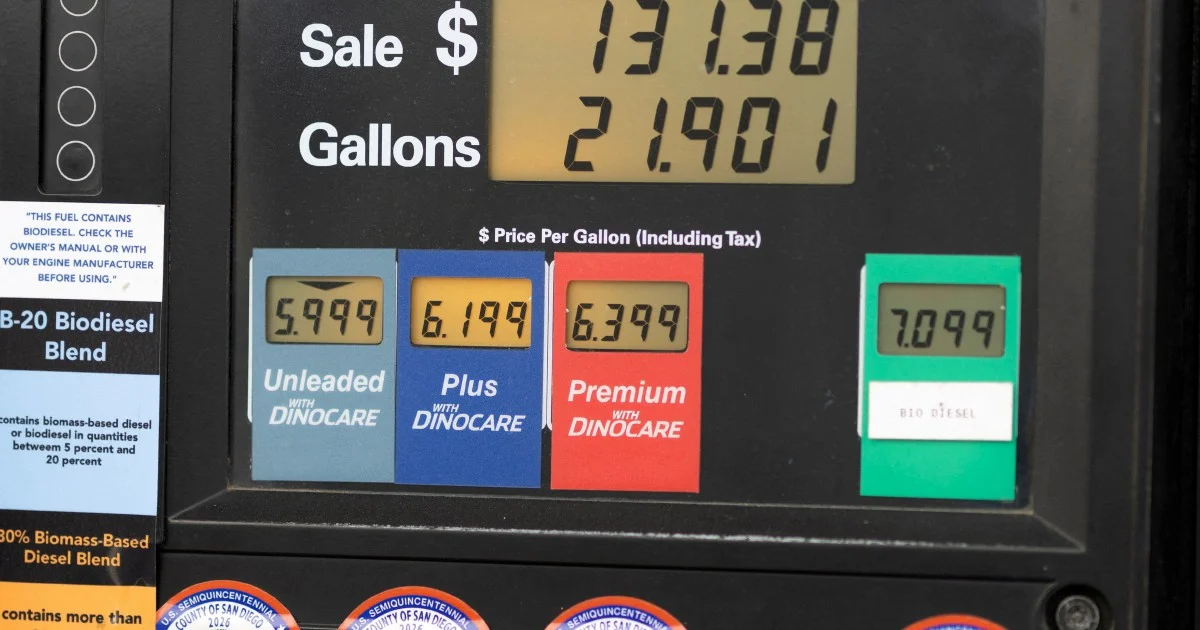
President Donald Trump announced on Wednesday that he has instructed authorities to launch a comprehensive investigation targeting the nation's leading petroleum enterprises, citing continued elevated gasoline prices as the rationale for the move. The directive comes as the American leader faces growing political pressure, particularly regarding how geopolitical developments in the Middle East have influenced fuel costs at the pump.
The timing of Trump's announcement reflects broader domestic concerns about fuel affordability. Petrol prices have remained stubbornly high despite expectations that they would decline more substantially by this point. The president's decision to scrutinize oil company operations and pricing strategies represents a direct intervention in energy markets, signalling his administration's willingness to challenge corporate decision-making when public sentiment turns negative around cost-of-living matters.
Middle East conflicts have created genuine supply-side pressures on global petroleum markets. Regional instability, particularly involving major energy-producing nations, creates uncertainty that reverberates through international oil trading. This geopolitical backdrop has provided a legitimate context for sustained price elevation, though consumers naturally hold political leaders accountable for any hardship they experience at fuel pumps regardless of the underlying causes.
The investigation itself raises fundamental questions about petroleum industry dynamics and profit margins. Oil companies operate within complex global supply chains where crude extraction, refining, transportation, and retail distribution all factor into final prices. Any serious inquiry will need to disentangle what portions of current pricing reflect legitimate operational costs versus what might represent excess profiteering during periods of geopolitical uncertainty.
For Malaysian observers, Trump's aggressive stance on energy companies carries particular relevance. Southeast Asia remains vulnerable to petroleum price fluctuations given the region's reliance on energy imports and consumption growth linked to industrialisation and transportation expansion. How American policymakers address domestic fuel pricing reverberates through global markets, potentially affecting energy costs across the region.
The political dimension cannot be overlooked. Trump faces domestic criticism over petrol prices, a cost-of-living issue that directly impacts voter satisfaction. By initiating an investigation into oil companies, he frames his administration as acting decisively on behalf of consumers. Whether such inquiries yield meaningful reforms or operate primarily as political theatre remains uncertain, though historical precedent suggests investigations into energy sector pricing often produce limited structural change.
International oil markets remain notoriously difficult to influence through individual national investigations. Crude oil prices reflect global supply-demand dynamics, OPEC production decisions, and geopolitical risk premiums that operate beyond the reach of any single government's regulatory authority. Petroleum companies argue that their refining and retail margins have actually compressed during periods of elevated crude prices, meaning they function as middlemen rather than primary beneficiaries of price increases.
The broader context involves how democratic governments balance energy affordability against multiple competing priorities. Aggressive investigation into energy sectors might eventually lead to stronger regulations, mandatory transparency, or investigation findings that illuminate pricing mechanisms. Conversely, overly antagonistic approaches toward energy companies risk discouraging investment in refining capacity and exploration, potentially exacerbating future supply constraints.
For Southeast Asian policymakers and businesses, observing how the Trump administration addresses energy pricing provides a preview of potential policy directions in a major global economy. If investigations result in meaningful reforms or if political pressure induces oil companies to modify pricing strategies, such developments could establish precedents that other nations attempt to replicate. Conversely, if investigations prove ineffectual, they offer cautionary tales about the limitations of regulatory approaches to commodity price volatility.
The investigation also reflects underlying tension between market-based energy pricing and political expectations around fuel affordability. Democratic governments face perpetual pressure to ensure energy remains accessible to ordinary citizens, yet petroleum remains a globally traded commodity where local price controls can create distortions and inefficiencies. Trump's intervention sits within this familiar tension between free market principles and populist demands for price moderation.
Energy security considerations add another dimension to this equation. Nations worldwide maintain strategic petroleum reserves and monitor global markets carefully because energy independence and supply reliability matter enormously for economic stability and national security. Investigations into pricing practices implicitly acknowledge that energy markets possess strategic significance beyond mere commercial transactions.
The duration and scope of Trump's ordered investigation remain unclear. Whether authorities will examine decades of pricing data, focus on specific recent periods, or concentrate exclusively on profit margins during geopolitical crises will substantially shape findings and recommendations. Comprehensive investigations require significant analytical resources and time to complete properly, whereas rushed inquiries risk producing shallow conclusions.