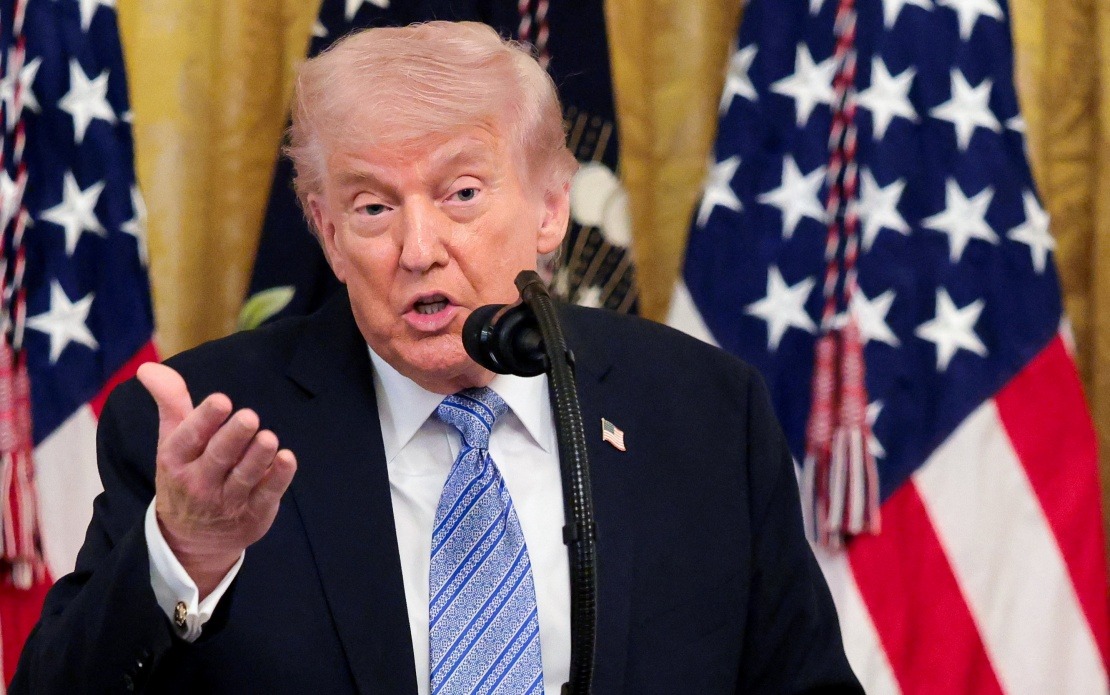
President Donald Trump has firmly rebuffed concerns raised by Israeli Prime Minister Benjamin Netanyahu regarding American plans to sell advanced F-35 fighter jets to Türkiye, signalling a significant shift in Washington's approach to a contentious regional issue. Speaking to journalists aboard Air Force One on Monday, Trump made clear that defence export decisions remain squarely within American jurisdiction, rejecting any external pressure on the matter.
The US president's forceful language underscores deepening tensions within the historically close Israeli-American alliance on matters of regional security policy. Trump characterised his decision-making authority in blunt terms, stating that no foreign leader dictates what the United States should or should not sell in the global defence market. This declaration carries particular weight given the typically influential role Israel has played in American defence export deliberations in the Middle East.
Trump's framing of Türkiye as a strategic cornerstone of American interests in the eastern Mediterranean and beyond demonstrates a calculated recalibration of regional partnerships. He praised President Recep Tayyip Erdogan as a personal "friend" and described the Turkish leadership as having managed complex regional challenges, particularly Syria, with competence. The characterisation of Türkiye as a "tremendous ally" reflects an effort to position Ankara as indispensable to American strategic architecture in Eurasia.
The president acknowledged the fundamental diplomatic reality that Türkiye maintains cool relations with Israel, explicitly recognising that Ankara is "not a big fan" of Israel or Netanyahu personally. Rather than allowing this friction to derail broader American interests, Trump suggested that the bilateral Washington-Ankara partnership transcends these regional tensions and remains robust. This pragmatic separation of strategic interests from ideological or cultural affinities highlights a transactional approach to international relations.
Trump's assessment of Turkish military capabilities further reinforced his argument for deepening defence cooperation with Ankara. Describing Türkiye's armed forces as "tremendous" and the country itself as "very powerful," he positioned the potential F-35 sale as a natural extension of recognising Ankara's regional importance. The rhetoric suggests that withholding advanced weaponry from a NATO member state would contradict rational strategic interests.
The comments amplify signals Trump sent during the NATO summit held in Türkiye in July, when he stated he would "certainly consider" reopening American F-35 sales to Ankara after a years-long suspension. At that gathering, he framed Türkiye as demonstrating greater loyalty to Washington compared with other allied nations, a comparison laden with implications for burden-sharing and strategic alignment within the alliance.
According to statements attributed to Erdogan, the Turkish president believes Trump has adopted a "positive approach" toward resolving the F-35 impasse. This characterisation suggests ongoing diplomatic engagement between the two leaders on removing obstacles that have prevented Turkish participation in one of the world's most advanced fighter jet programmes. Such coordination, if accurate, indicates alignment on the broader geopolitical question of Türkiye's role within Western security arrangements.
The original trigger for American reluctance stems from 2019, when Washington suspended Türkiye from the F-35 programme following Ankara's acquisition of Russia's S-400 missile defence system. That decision reflected American concerns about security vulnerabilities and NATO interoperability if advanced Turkish platforms gained access to Russian air defence technology. However, Turkish officials have consistently maintained that the two systems pose no technical incompatibility and have proposed establishing a joint commission to examine compatibility questions.
Türkiye's counter-argument emphasises that it fulfilled all contractual obligations associated with the F-35 programme prior to suspension, and that the exclusion violated established rules and protocols. Beyond technical disputes, Turkish officials contend that reinstating the country's access to F-35 jets would strengthen not only Türkiye's defence capabilities but also enhance overall NATO military cohesion and interoperability in a critical strategic region. For Malaysian readers, this debate underscores how great power competition and divergent strategic interests within traditional alliances increasingly shape defence technology transfers and military partnerships across multiple regions.
Trump's reported irritation at Netanyahu's public criticism of the prospective F-35 transaction reportedly exceeded typical diplomatic friction. Media accounts characterised the president's reaction as notably forceful, suggesting that Israel's attempt to influence American policy triggered broader frustrations about alliance dynamics and decision-making authority. This reaction highlights evolving tensions within the US-Israel relationship regarding spheres of influence and consultation protocols.
The F-35 dispute reflects deeper strategic choices about which nations merit access to America's most sensitive military technology and on what terms. Türkiye's status as a NATO member complicates straightforward denials, yet security concerns about Russian integration keep the question contested. Trump's intervention prioritises the Washington-Ankara relationship and frames Türkiye's strategic value as outweighing Israeli security objections.
For Southeast Asian observers, this episode illustrates how American alliances operate under renewed transactional calculations, with traditional security partners potentially losing influence over Washington's defence trade decisions. The outcome may establish precedent for how the Trump administration reconciles conflicting ally interests when advancing what it perceives as broader American strategic objectives.

