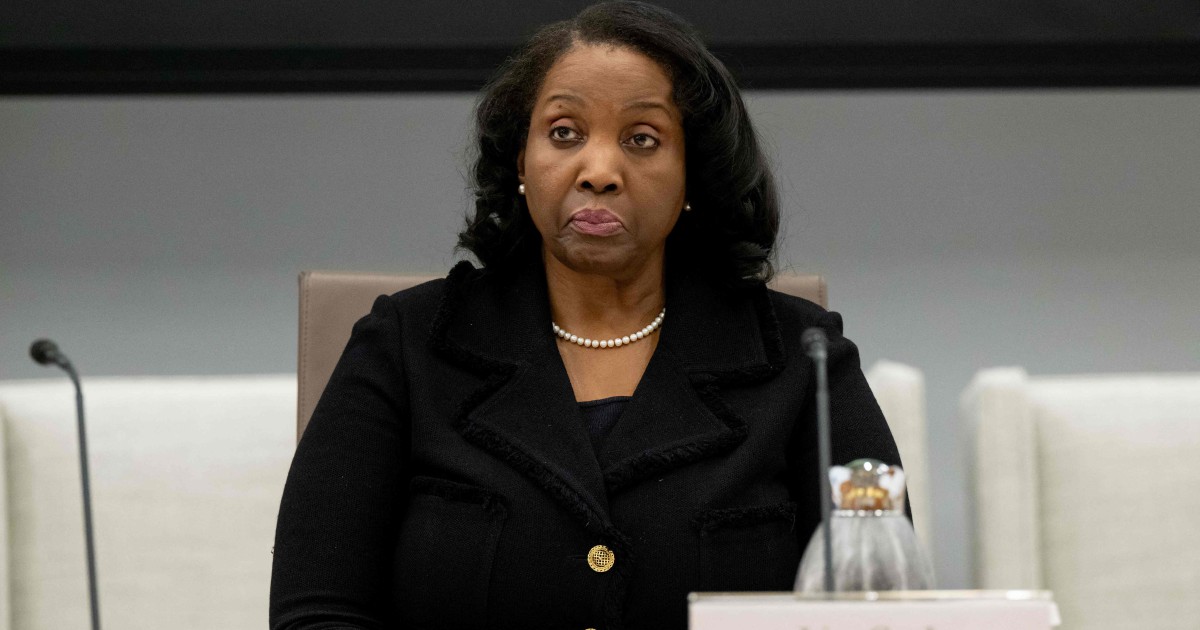
President Donald Trump has initiated a renewed campaign to remove Federal Reserve Governor Lisa Cook from her position, according to documentation released by the White House on Friday. The manoeuvre comes months after the nation's highest court rejected his initial attempt to unseat the central banking official over unresolved questions about her involvement in mortgage fraud matters. This latest move signals Trump's determination to reshape the composition of the Federal Reserve's leadership despite significant constitutional and legal obstacles.
The Fed's governance structure has long been a focal point of presidential interest, particularly when leadership diverges from an administration's economic philosophy or policy preferences. Cook's position within the institution has attracted scrutiny from Trump and his supporters, who have questioned her financial history and regulatory record. The resurrection of removal efforts suggests the White House believes it may have identified new procedural or evidentiary grounds to challenge her tenure, even after the Supreme Court's earlier intervention.
Federal Reserve governors occupy some of the most insulated positions within the American executive apparatus, deliberately shielded from direct presidential control to ensure monetary policy independence. The statutory framework governing their removal exists to prevent political interference with the Fed's core mission of managing inflation and employment. However, Trump's persistent challenge to this arrangement reflects broader tensions between executive authority and institutional autonomy that have intensified during his political career.
The mortgage fraud allegations at the centre of this dispute remain historically contentious. Cook's financial dealings, some dating back years, have been subject to various interpretations by her supporters and detractors. While supporters argue that previous scrutiny found no wrongdoing, critics contend that questions remain unanswered. The evidentiary foundation for Trump's removal effort will likely determine whether courts view this as a substantive legal claim or a politically motivated exercise in presidential overreach.
For Malaysian and Southeast Asian observers, this episode illuminates the internal American political dynamics that shape US economic policy. The Federal Reserve's independence influences global financial markets, currency valuations, and capital flows throughout the region. Any disruption to the Fed's institutional stability or perceived politicisation of its decision-making could have ripple effects across emerging markets and open economies heavily dependent on US trade and investment.
The Supreme Court's June decision represented a significant legal victory for preserving Fed governance independence. The justices essentially recognised that permitting unfettered presidential removal power over central bankers would undermine the institution's credibility and operational effectiveness. Trump's renewed campaign therefore represents an attempt to circumvent or reinterpret that judicial reasoning, suggesting the administration may be exploring alternative constitutional arguments or procedural mechanisms previously considered unavailable.
Cook herself has maintained her position while these political storms have swirled around her career. A doctoral economist with expertise in monetary policy and development economics, she has contributed substantive intellectual work to Fed deliberations on inflation control and labour market dynamics. Her retention by the institution despite presidential opposition underscores the structural protections built into the Federal Reserve system, though those safeguards remain perpetually vulnerable to legal innovation or constitutional reinterpretation.
The timing of this renewed effort warrants consideration. Federal Reserve policy has become increasingly contentious as inflation fluctuations and interest rate decisions affect household finances across America. Each policy decision generates political reactions, with some constituencies blaming Fed leadership for economic outcomes. Trump's effort to reshape the Fed through leadership changes reflects a desire to influence future monetary policy direction through personnel rather than through the traditional channels of economic argument or legislative negotiation.
The legal landscape surrounding this matter remains unsettled. While the June Supreme Court decision established important principles about presidential removal power, it did not permanently foreclose all avenues for challenging Fed governor tenure. The White House letter suggesting renewed action indicates that Trump's legal team believes they have either discovered overlooked precedent or developed novel constitutional arguments that might succeed where previous efforts failed. The courts will ultimately determine whether these arguments possess sufficient legal merit to warrant serious consideration.
This situation also reflects deeper questions about accountability and democratic legitimacy within independent institutions. Central banks worldwide grapple with tensions between operational autonomy and public accountability. The Federal Reserve, despite its technical independence, derives legitimacy partly from democratic acceptance. When political leadership perceives Fed decisions as harmful to economic interests or ideologically misaligned, it creates pressure for greater control. Trump's sustained effort to remove Cook exemplifies this ongoing tension between insulating monetary policy from electoral cycles and ensuring that unelected technocrats remain ultimately answerable to the elected branches of government.
For markets and economies throughout Southeast Asia, the outcome of this dispute carries significance beyond American borders. A successful removal might signal that presidential pressure can influence Fed independence, potentially affecting how the institution approaches future policy decisions. Conversely, another court rejection would reaffirm institutional protections and limit executive prerogative, potentially reassuring international investors concerned about the reliability and consistency of American economic governance.

