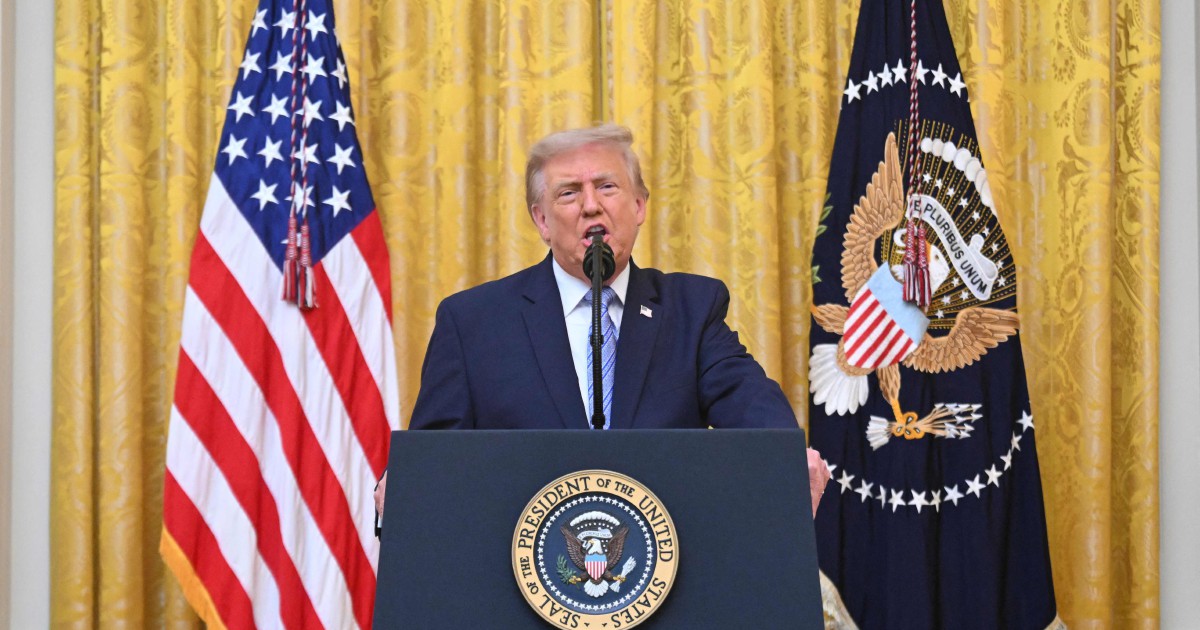
US President Donald Trump has reignited controversial allegations about the integrity of the 2020 presidential election, resurrecting claims that independent fact-checkers and election officials have repeatedly dismissed as baseless. In remarks delivered Thursday, the president alleged that China orchestrated the theft of millions of American voter registration files, while simultaneously suggesting that Venezuela possessed the capability to manipulate the nation's voting infrastructure. These assertions mark a continuation of arguments that have dominated Trump's political messaging but lack credible evidence to substantiate them.
The allegations carry particular weight given Trump's position as sitting US president and his continued influence over Republican party politics and a significant portion of the American electorate. His renewed focus on 2020 election fraud claims comes amid ongoing political polarisation in the United States, where questions about electoral integrity remain deeply divisive. For Malaysian observers and Southeast Asian political analysts, Trump's persistent return to these themes illustrates how electoral legitimacy disputes can persist and resurface in democratic systems, potentially destabilising political consensus even years after voting has concluded.
Election officials across multiple American states, including those from Trump's own Republican party, have previously certified the 2020 results as secure and accurate. The Department of Homeland Security's Cybersecurity and Infrastructure Security Agency called the 2020 election "the most secure in American history." Trump's own former Attorney General William Barr investigated fraud allegations and found no evidence of widespread irregularities that would have changed the outcome. Despite these official determinations, the president has continued to amplify claims that contradict findings from Republican-appointed officials and Trump-appointed judges.
The specific allegation regarding Chinese involvement in stealing voter files lacks any substantive documentation or technical evidence presented publicly. Cybersecurity experts note that while foreign state actors consistently attempt to penetrate American electoral systems, documented breaches have not typically resulted in large-scale data theft of the nature Trump describes. The claim about Venezuelan interference with voting machines similarly lacks corroboration, though it reflects longstanding geopolitical tensions between the Trump administration and Nicolas Maduro's government in Caracas.
For Malaysia and other ASEAN nations, these developments underscore challenges that democratic systems face when misinformation about elections becomes weaponised for political advantage. The durability of false narratives—particularly when repeated by influential political figures—presents a cautionary tale about how democracies must actively protect their informational ecosystems. Malaysian observers have witnessed similar patterns in their own political discourse, where unverified claims can spread rapidly through social media and alternative news sources, complicating the public's ability to distinguish fact from speculation.
The strategic value of continued focus on 2020 fraud allegations appears connected to Trump's 2024 presidential campaign positioning and efforts to maintain support within his political base. Polling data suggests that many Trump supporters continue to believe the 2020 election was stolen, despite the absence of evidence. This dynamic reveals how repeated affirmation of a disputed narrative can reinforce belief among adherents, regardless of fact-checking efforts or official investigations. The phenomenon has important implications for understanding political behaviour across different democracies.
Fact-checking organisations have extensively documented and debunked virtually every major claim surrounding 2020 election irregularities. Audits in contested states, recounts, litigation in over 60 court cases, and reviews by election officials have consistently failed to identify fraud at a scale that would meaningfully affect the outcome. Trump's continued invocation of these claims despite this extensive scrutiny demonstrates the challenge democratic systems face in establishing shared factual baselines for public discourse.
The broader context of Trump's statements reflects an ongoing tension within American politics regarding institutional trust and electoral legitimacy. When sitting elected officials question fundamental democratic processes without credible evidence, it can erode public confidence in democratic institutions themselves. This concern extends beyond the United States, as other democracies monitor how major powers handle challenges to electoral legitimacy and what precedent such conduct might establish.
Malaysia's own recent electoral history, including the 2018 and 2022 general elections, has seen occasional disputes over specific results or processes, though major fraud allegations have remained limited. The contrast between American electoral controversy and Malaysia's experiences highlights differing levels of institutional resilience and public acceptance of electoral outcomes. Nonetheless, both contexts demonstrate the importance of transparent election administration and clear communication about security measures to maintain public confidence.
Moving forward, the persistence of Trump's election fraud claims suggests this will remain a significant feature of American political discourse during the 2024 campaign season. The challenge for American institutions—and by extension, for global observers—involves determining how democracies should respond when political figures continue advancing demonstrably false claims about elections. Solutions involving greater voter education, improved digital literacy, and stronger standards for political accountability in media remain subjects of ongoing debate among American governance experts and democratic reformers globally.

