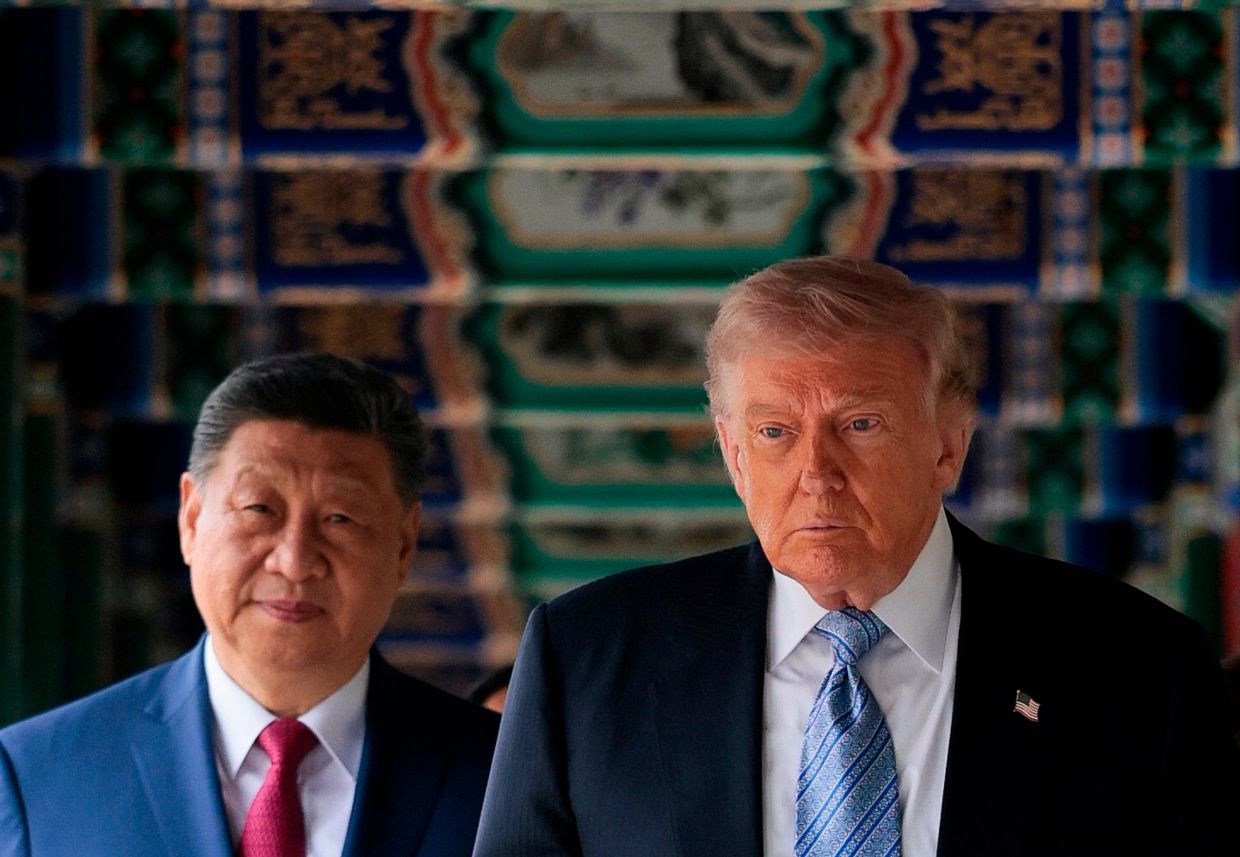
The incoming Trump administration faces mounting scrutiny over its approach towards China, as the US President sends confounding messages about Beijing's conduct in the Middle East whilst simultaneously preparing for a high-level state visit that could reshape bilateral relations. On Wednesday, Trump responded to reports of Chinese weapons shipments to Iran by suggesting he would be "quite disappointed" if the allegations proved true, even as he acknowledged that Xi Jinping had previously assured him of China's non-involvement in the Iranian conflict. This latest statement underscores a pattern of rhetorical swings that has come to characterise Trump's China strategy—one that alternates between aggressive accusations and diplomatic overtures.
The controversy centres on intelligence suggesting that advanced weapons systems were being transported from western China through Pakistani territory to Iranian forces, with estimates valuing the arrangement between US$60 million and US$70 million. Beijing's foreign ministry swiftly denied these claims, categorically rejecting them as "untrue and not factual at all" whilst reiterating China's commitment to de-escalation in the Middle East conflict. Such denials follow a similar pattern when Beijing previously dismissed reports of weapons supplies to Iran ahead of Trump's May visit to the Chinese capital, labelling those allegations "completely groundless". The consistency of these rejections suggests that Beijing is determined to maintain a public stance of non-interference in regional conflicts.
Trump's measured response to the weapons reports stands in sharp contrast to his simultaneous assault on Dr Anthony Fauci, the long-time US health official whom the President blamed for consistently attempting to "protect China" and downplaying the laboratory origins of COVID-19. Through social media posts, Trump renewed his longstanding assertion that the coronavirus originated from a facility in Wuhan, positioning himself against the broader scientific consensus that leans towards natural spillover from animals to humans. By coupling this attack with criticism of Chinese conduct, Trump effectively linked separate policy domains—pandemic accountability and military assistance to Iran—into a broader narrative of perceived Chinese deception and duplicity.
The President's framing of his May meeting with Xi reveals the transactional nature of contemporary US-China relations under his leadership. Trump stated that he had taken Xi's word that China would not provide military support to Iran "under any circumstances," adding that "considering our relationship, I take him at his word." Yet this expression of trust came qualified by an implicit warning: Trump noted that if China violated this pledge, it would be "very bad for them" and "certainly not in their best interests." Such language blends diplomatic language with veiled threats, creating an ambiguous framework within which both sides must operate.
What makes this moment particularly notable is the stark contradiction between Trump's recent inflammatory rhetoric and his continued diplomatic preparation. Just twelve days before his Wednesday comments about potential Chinese disappointment, Trump had delivered a primetime address accusing Beijing of conducting "the largest compromise of election data in history," alleging that China had illicitly obtained 220 million American voter files. The President went further, declassifying documents purportedly supporting these claims and warning of an "unprecedented election security nightmare." Such language typically precedes substantial diplomatic and economic retaliation.
Yet despite the severity of these accusations, the Trump administration has failed to announce any corresponding sanctions, trade penalties, or formal diplomatic consequences targeting China over the alleged interference. Instead of escalatory measures, the administration has allowed planning for Xi's September 24 visit to Washington to proceed unimpeded. This disconnect between accusation and action raises questions about whether Trump's election security claims were primarily domestic political positioning or genuine foreign policy concerns requiring tangible response. For Malaysia and other Southeast Asian nations watching the trajectory of US-China relations, this ambiguity carries significant implications for regional stability and the credibility of American commitments.
The broader pattern reflects what observers have termed Trump's "carrot and stick" approach to China, though the application of each tool remains unpredictable and often divorced from conventional diplomatic logic. Trump's earlier claim that China and Russia were not "participating" in the Iran war represents another layer of this inconsistency, appearing to downplay Chinese involvement whilst simultaneously expressing concern about weapons transfers. This rhetorical flexibility may be intentional, designed to keep Beijing off-balance and uncertain about how far it can test American tolerance. Alternatively, it may reflect genuine confusion about competing objectives—maintaining a working relationship with China whilst simultaneously addressing legitimate security concerns.
For Southeast Asian countries, including Malaysia, these mixed signals carry practical consequences that extend beyond abstract diplomatic concerns. Regional states depend on predictable US engagement to balance against Chinese military and economic expansion, yet Trump's inconsistent positioning creates uncertainty about American reliability. If the United States cannot maintain coherent messaging on critical issues like weapons proliferation and election security, how can regional partners confidently plan their own strategic alignments? The September visit by Xi will offer critical insights into whether Trump intends to subordinate all other considerations to improved US-China relations, or whether he will eventually follow through on his accusations with concrete penalties.
The upcoming meeting between Trump and Xi represents a crucial inflection point for US policy towards Asia writ large. If the visit proceeds smoothly and culminates in agreements demonstrating warming ties, it could signal that the administration has deprioritised concerns about Chinese conduct in the Middle East and election interference. Conversely, if tensions erupt during or after the visit, it might suggest that Trump's earlier accusations will eventually materialise into sanctions and confrontation. Either outcome carries implications for Malaysia and its neighbours, particularly regarding trade arrangements, investment flows, and military partnerships that depend on maintaining balanced engagement with both superpowers.
The credibility gap between Trump's accusations and subsequent inaction also deserves scrutiny. Authoritarian leaders like Xi Jinping have evolved sophisticated strategies for testing Western resolve, and deliberate inconsistency—however unintentional—provides opportunities for miscalculation. When a US President threatens consequences for alleged election interference yet imposes none, it potentially emboldens further intrusions. The September visit offers an opportunity for clearer signalling, though based on Trump's established pattern, observers should expect continued ambiguity rather than clarity. For Malaysia's policymakers assessing China engagement, the lesson is clear: American statements regarding Chinese conduct cannot be taken at face value without evidence of follow-through.

