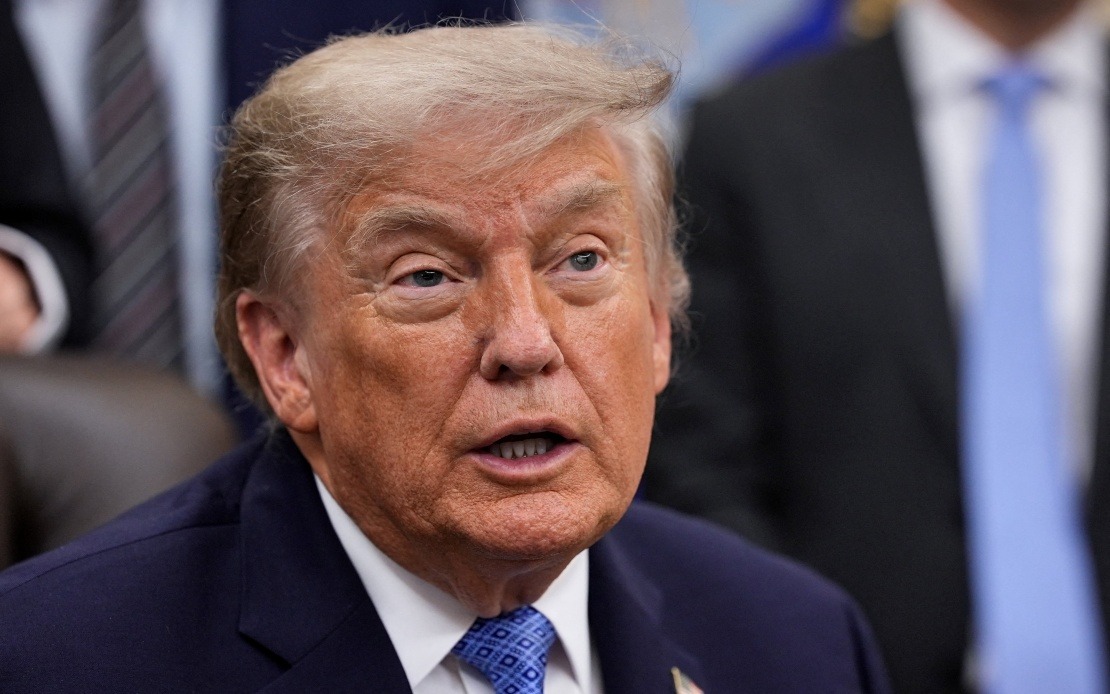
President Donald Trump is set to deliver a televised address to the American people on Thursday evening, with the speech scheduled for 9 pm Eastern Time (0100 GMT Friday), according to an announcement posted on his Truth Social account. The timing slots the speech into one of the most coveted television time slots available to a sitting US president, ensuring maximum national viewership during prime viewing hours.
When a sitting president opts for a televised national address, it typically signals the communication of matters of significant national importance or moments of considerable consequence for the American public. Such speeches carry substantial political weight and serve as opportunities for presidents to shape public discourse during pivotal moments. However, Trump has not specified the precise subject matter of Thursday's address, leaving analysts and commentators to speculate about what prompted the scheduling of this high-profile appearance.
Several pressing matters could plausibly serve as the focus of Trump's remarks. The conflict with Iran has dominated American news cycles for months and has recently intensified, making it a likely topic for presidential commentary. The accompanying surge in petrol prices has compounded concerns among American households, with energy costs emerging as a significant political issue heading into electoral season. The convergence of military tensions abroad and domestic economic pressures creates an environment where a presidential address would carry particular resonance with voters already anxious about both national security and household budgets.
For Malaysian and Southeast Asian observers, the potential focus on Iran carries regional implications. Any escalation of US-Iran tensions inevitably affects global energy markets, with consequences rippling through Asia's economies. Malaysia, as both an energy consumer and a regional power with interests in Middle Eastern stability, would feel reverberations from any significant shift in American policy toward Iran. Higher crude oil prices directly impact transportation, manufacturing, and inflation across Southeast Asia, making the geopolitical situation more than a distant concern.
This marks Trump's second major national address since beginning his second presidential term in January 2025. In December, amid mounting domestic criticism and political pressure, Trump previously took to the airwaves to defend and articulate his administration's economic record. That address came at a time when his government faced questions about fiscal policy and economic stewardship. The pattern of scheduled addresses suggests the Trump administration uses these televised moments strategically to recalibrate public perception during periods of political vulnerability or uncertainty.
The timing of Thursday's address also bears significance for Trump's broader political trajectory. The nation approaches midterm elections some four months hence—a crucial juncture for determining control of Congress. Recent polling data has presented challenging numbers for Trump's Republican Party, with public surveys indicating electoral headwinds heading into the midterms. Presidents historically use national addresses to boost their political standing and reframe narratives before consequential electoral contests. Whether Trump intends to rally his base, appeal to swing voters, or reshape the political conversation around his administration's performance remains to be seen.
For international observers including those in Southeast Asia, understanding Trump's messaging priorities offers insights into how American foreign policy may evolve. Regional governments and businesses monitor presidential rhetoric closely, as shifts in American policy toward major powers like Iran affect everything from maritime security to trade patterns. The unpredictability inherent in Trump's communication style—and his tendency to use televised addresses to announce unexpected policy directions—means the regional diplomatic and business communities will be watching closely.
The choice of Thursday evening for the address suggests deliberate scheduling to maximize viewership during the traditional American television-watching window. This contrasts with weekend or daytime slots, which would reach smaller audiences. The investment in prime-time television underscores the administration's assessment that this message warrants the largest possible domestic audience. Whether the address aims to shore up support among core constituencies or to convince skeptical voters of the administration's competence and vision remains unclear until Trump takes the microphone.
The absence of a disclosed topic creates a vacuum that has already prompted extensive media speculation. Some analysts suggest economic announcements, while others anticipate foreign policy pronouncements. This uncertainty itself becomes newsworthy, with the mystery surrounding the address's subject generating coverage that builds anticipation. By Thursday evening, American news networks will have devoted considerable airtime to previewing and discussing what Trump might say, effectively extending the address's political impact well beyond the speech itself.

