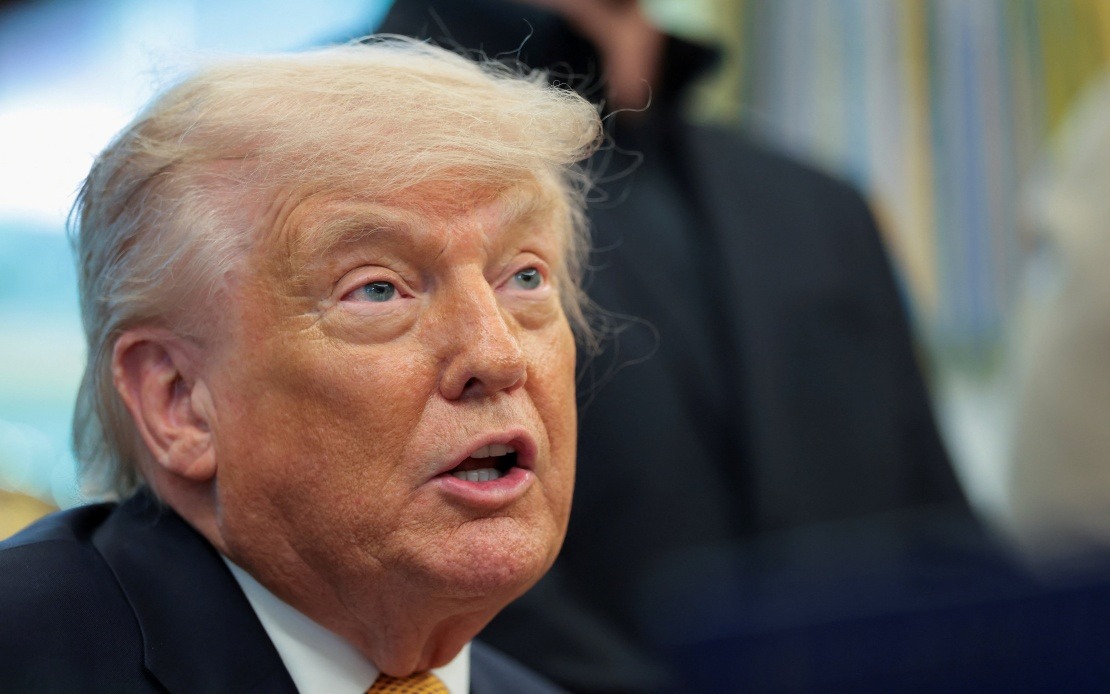
Donald Trump declared on Wednesday that negotiations surrounding Iran's nuclear programme are proceeding positively, offering an optimistic assessment as American envoys continue discussions in Qatar. The US President made these comments before travelling to North Dakota, emphasizing that the envoys he dispatched to Doha—Steve Witkoff and Jared Kushner—had achieved meaningful results during their consultations.
The remarks represent a notable pivot towards diplomatic engagement at a moment when tensions between Washington and Tehran remain historically elevated. Trump's characterisation of the talks as progressing "very well" contrasts sharply with the volatile military situation that has dominated the relationship between the two powers in recent months. His statement that Iran has "come a long way" suggests he perceives a fundamental shift in Tehran's willingness to negotiate the terms of any potential agreement on its nuclear capabilities.
The Trump administration's preference for diplomatic channels over military escalation became evident in his assessment that despite recent military operations against Iranian targets, the negotiating process currently offers a more promising avenue forward. He acknowledged that American forces had "hit them very hard last week," yet maintained that dialogue rather than further military strikes represents the administration's current strategy. This measured approach signals an attempt to balance deterrence with constructive engagement.
A Wall Street Journal investigation had previously reported that Trump discussed possibilities of renewed large-scale military conflict with senior defence officials, including Defence Secretary Pete Hegseth, though he ultimately determined that prioritising negotiation served American interests better at this juncture. The President's public statements appear designed to reinforce this diplomatic emphasis and potentially encourage Iranian counterparts to view engagement as their preferred course of action.
Technical discussions occurring in Qatar have reportedly yielded incremental progress, according to Bloomberg reporting on Wednesday. These talks represent part of a broader effort by Washington and Tehran to resolve the underlying conflict that erupted in late February and establish a comprehensive framework addressing multiple contested issues between the two nations. The focus extends well beyond nuclear matters to encompass military de-escalation, economic sanctions, regional stability, and maritime commerce.
A significant diplomatic development preceded these latest statements: Washington and Tehran electronically executed a memorandum of understanding brokered by Pakistan, which subsequently entered into effect. Iranian President Masoud Pezeshkian and Trump both formally signed this accord, establishing a structured pathway for negotiations. The agreement encompasses cessation of hostilities across all operational theatres, including the conflict extending into Lebanon, comprehensive sanctions relief negotiations, resolution of the nuclear file, restoration of full traffic through the Strait of Hormuz, and wider arrangements addressing regional security architecture.
Despite the optimistic messaging from the White House, Iranian officials have maintained public distance from claims of direct negotiations with American representatives. Tehran has categorically denied that any scheduled face-to-face meetings with US officials are occurring, insisting instead that all substantive communication proceeds through intermediary channels. This discrepancy between American and Iranian public positions reflects the persistent mutual suspicion characterizing the relationship, even as both sides engage in concrete talks.
For Malaysian and Southeast Asian observers, these developments carry significant implications. The resolution of US-Iran tensions directly affects regional stability, maritime security through the Strait of Hormuz—a critical shipping chokepoint for Asian trade—and the broader geopolitical balance in the Middle East. Malaysia, as a trading nation heavily dependent on stable shipping lanes and global energy markets, has considerable interest in de-escalation outcomes. Any agreement reducing tensions between Washington and Tehran would likely stabilise oil prices and reduce risks to commercial shipping, benefiting regional economies.
The multilayered nature of the proposed agreement—spanning nuclear issues, sanctions, military de-escalation, and maritime commerce—reflects the complexity of resolving decades of mutual hostility. Pakistan's role as broker demonstrates how regional powers can facilitate great-power diplomacy, a model with potential relevance for Southeast Asian conflict resolution mechanisms. The inclusion of Lebanon as a specific conflict theatre requiring de-escalation highlights how Iran's regional influence extends far beyond its borders, affecting stability from the Persian Gulf to the Mediterranean.
The nuclear dimension remains central to any lasting agreement, though it represents only one component of the comprehensive framework under negotiation. Iran's nuclear programme has historically served as the focal point of Western concern, triggering multiple rounds of international sanctions and military threats. Any verifiable arrangement limiting Iranian nuclear capability while providing sanctions relief could fundamentally reshape Middle Eastern politics and reduce military confrontation risks that periodically destabilise global markets.
The timing of Trump's upbeat statements, coinciding with ongoing technical discussions, suggests a deliberate strategy to build momentum for agreement while maintaining public credibility with both domestic audiences and international partners. His emphasis on Iran's demonstrated willingness to negotiate positions compromise as achievable, potentially influencing Tehran's internal political calculations regarding the benefits of engagement versus continued confrontation. The months-long conflict has imposed significant costs on both nations, creating mutual incentives for negotiated resolution.
Moving forward, the efficacy of these talks will depend substantially on whether both sides can bridge remaining gaps on sanctions, nuclear verification mechanisms, and regional security guarantees. The involvement of high-level envoys such as Witkoff and Kushner suggests the Trump administration considers the negotiations sufficiently significant to warrant direct presidential representation. As discussions continue in Doha, the international community watches to determine whether diplomatic channels can successfully resolve one of the most intractable conflicts of recent years.

