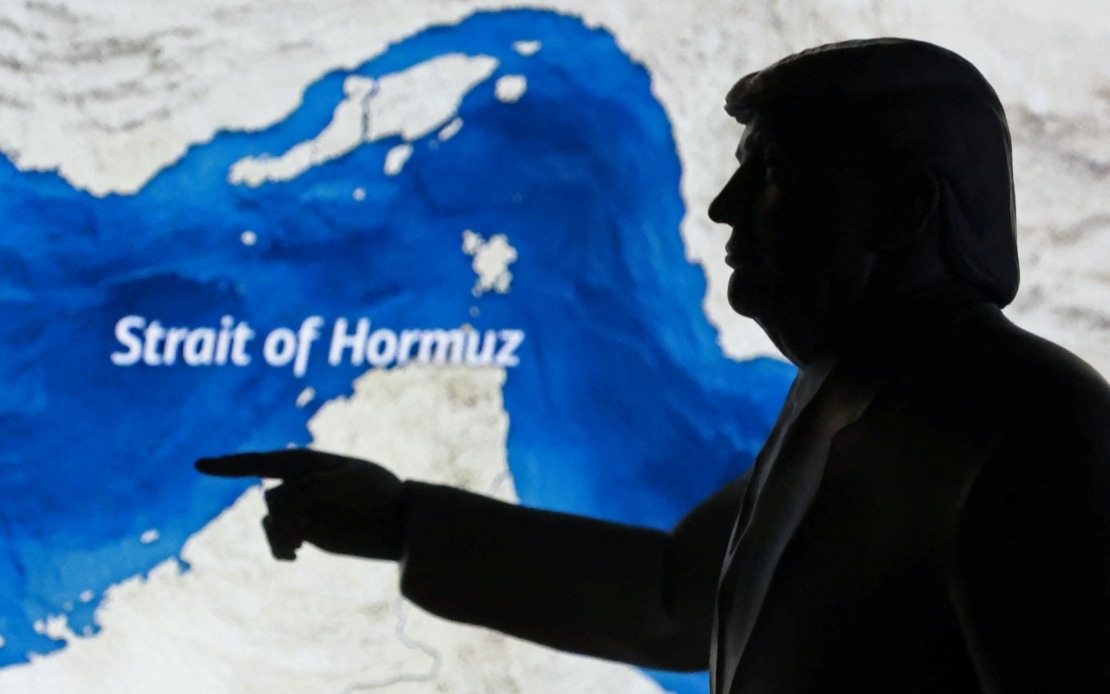
United States President Donald Trump has escalated tensions dramatically by announcing that Washington will conduct retaliatory strikes against Iranian infrastructure for every attack on commercial shipping in the Strait of Hormuz. In a statement posted to his Truth Social platform on Wednesday, Trump specified that the US would target bridges or power plants, including facilities near or within Iran's capital Tehran, in response to any Iranian use of missiles, rockets, drones, or other weapons against vessels transiting the critical waterway.
The pronouncement represents a significant hardening of the Trump administration's stance toward Tehran and signals a departure from the relatively cautious posture adopted during recent diplomatic engagements. The statement came amid an intensifying cycle of military exchanges between Washington and Tehran that has continued despite international efforts to contain the conflict. The Strait of Hormuz, through which roughly one-fifth of the world's oil passes daily, remains one of the most strategically vital and contested maritime zones, making threats to shipping there particularly consequential for global energy markets and Southeast Asian economies dependent on stable oil supplies.
The backdrop to Trump's warning involves months of escalating hostilities that began with a wider conflict in February. The United States has conducted multiple strike operations across Iranian territory over the past week, targeting various military installations. In response, Iranian forces have launched their own counterattacks aimed at what they characterize as American military facilities and bases distributed across several regional countries. This tit-for-tat pattern demonstrates how quickly military confrontation can spiral in the region, particularly given the stakes involved in maintaining freedom of navigation through critical chokepoints.
International diplomatic efforts have attempted to interrupt this dangerous cycle. In June, Pakistan facilitated the signing of a framework agreement between the United States and Iran that was intended to establish conditions for ending the broader conflict that commenced in February and create pathways toward a comprehensive peace settlement. However, the continued military exchanges suggest that this framework agreement has failed to achieve its primary objective of reducing tensions or establishing effective mechanisms for preventing unilateral escalation by either party.
For Malaysia and other Southeast Asian nations, the implications of escalating tensions in the Middle East extend well beyond the immediate region. Many Southeast Asian economies, including Malaysia's, depend significantly on stable energy prices and unimpeded access to Middle Eastern oil and natural gas supplies. Any disruption to shipping through the Strait of Hormuz threatens to drive up energy costs throughout the region and potentially destabilize broader economic growth. The shipping attacks that Trump references have already created insurance complications and raised transit costs for vessels navigating these waters, effects that ultimately reach consumers and businesses across Asia.
The strategic calculations underlying Trump's threat appear designed to establish clear costs for Iranian military action while preserving the diplomatic framework theoretically still in place. However, the effectiveness of such deterrent rhetoric depends heavily on credible execution and on Tehran's assessment of whether escalation serves its interests. Historical precedent suggests that publicly announced red lines can sometimes provoke rather than restrain aggressive action, particularly when domestic political considerations encourage leaders to demonstrate resolve to their domestic constituencies.
The targeting language Trump employed—specifically mentioning bridges and power plants that could affect civilian populations—raises significant humanitarian and international law considerations. Critical civilian infrastructure typically enjoys protections under international humanitarian law, and strikes targeting such facilities could constitute violations of established wartime conventions. The international community, including potential allies, may view indiscriminate threats against civilian infrastructure with considerable alarm, potentially complicating broader regional diplomacy.
Iran's calculus regarding potential further attacks on shipping will likely weigh the costs of American retaliation against perceived benefits and strategic necessities. The Iranian government has historically used proxy forces and maritime harassment as asymmetric tools to counter American military superiority. Whether Trump's explicit threats prove sufficient to deter such tactics remains uncertain, as Tehran may believe it has little to lose by maintaining pressure on shipping or may view military escalation as necessary to demonstrate strength to domestic audiences and regional allies.
The persistence of military exchanges despite the June framework agreement underscores the difficulty of translating political agreements into sustained behavioral change, especially when underlying strategic competition remains unresolved. Both Washington and Tehran appear locked in a competition where demonstrating military capability and resolve becomes difficult to abandon without appearing to concede advantage. The cycle threatens to continue spinning unless fundamental shifts occur in how both parties perceive the costs and benefits of confrontation versus negotiation.
For regional observers and particularly for maritime nations dependent on Hormuz transit, the current trajectory presents genuine concerns. Shipping insurance costs continue climbing, and the psychological impact of regular conflict reporting already influences some commercial decisions regarding regional trade routes. Malaysia's role as a major shipping hub and its economic interests in stable Middle Eastern relations mean that developments in the Strait of Hormuz command serious attention from policymakers in Kuala Lumpur.
The coming weeks will prove instructive regarding whether Trump's explicitly stated deterrent threats actually reduce Iranian military activity or whether such announcements primarily serve domestic political purposes. Previous regional conflicts have shown that escalatory rhetoric, while sometimes cooling tensions temporarily, more often establishes precedents for further escalation when either party feels compelled to demonstrate that threats will be honored. The stakes in this particular confrontation extend far beyond American-Iranian relations to affect global energy security and economic stability throughout Asia.

