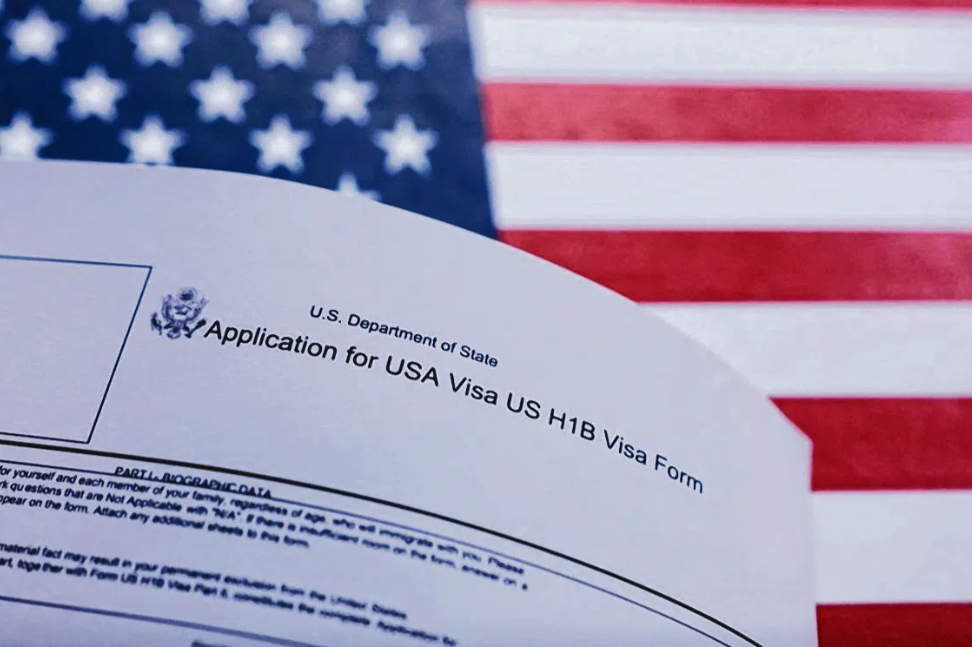
The calculus of the American Dream has fundamentally shifted for skilled migrant workers in technology. When Deepak, a 44-year-old Indian tech professional, made the difficult decision to leave the United States in May alongside his wife and two children, he was severing ties with a fifteen-year investment in American life. Despite securing new employment after a October layoff, he concluded that the mounting regulatory uncertainty surrounding his H-1B status posed too great a risk. The prospect of losing his visa sponsorship within 60 days of unemployment felt unbearable when measured against the relative stability waiting in his home country. His choice to uproot his family, sell two American properties, and resettle in Kerala exemplifies a broader reversal now reshaping international talent flows.
The Trump administration's aggressive posture toward foreign workers has introduced unprecedented friction into hiring practices. The initial announcement of a $100,000 application fee for new H-1B visas created immediate panic, multiplying costs by 25 times over existing rates. When a federal judge invalidated this policy in June, the administration responded not by retreating but by announcing a $4,000 surcharge on visa extensions and renewals beginning in September. For companies already grappling with market volatility, these mounting fees represent a material disincentive to recruiting international talent. Deepak recalled the confusion this generated: companies could not determine whether new fee structures applied to transfers, renewals, or fresh applications, forcing them to reconsider international hiring altogether.
The consequences are quantifiable and accelerating. Data from Xpheno, a Bengaluru-based talent consulting firm, reveals that 15,100 Indian professionals returned home in 2025, compared with 9,800 the previous year. Already by early 2026, approximately 7,300 had made the return journey, suggesting the exodus is accelerating rather than stabilizing. While Chinese return figures remain less precisely documented, indicators from the Ministry of Education in China show that 536,000 students returned after graduation in 2025, an 8.3 percent increase year-on-year, suggesting diminished confidence in long-term American opportunity among younger cohorts. These statistics represent not merely individual departures but a systemic recalibration of where high-skilled professionals perceive their futures lie.
H-1B visa approvals themselves are contracting sharply among the technology sector's largest employers. Analysis of United States Citizenship and Immigration Services data reveals that the top 100 sponsoring companies—including Amazon, TCS, Infosys, Apple, and Microsoft—are tracking toward a more than 10 percent decline in approved petitions for fiscal year 2026 compared with 2025. This decline reflects both employer caution regarding new regulations and deteriorating demand. The technology sector has been convulsed by simultaneous waves of layoffs and hiring freezes. Meta, Visa, Amazon, and numerous other major corporations have eliminated thousands of positions, creating conditions where American-born workers themselves compete fiercely for remaining opportunities. Within this contracting labor market, foreign professionals with H-1B sponsorship requirements face increasingly prohibitive odds.
The personal toll on individual migrants has become profound and visible. Carrie, a Chinese data analyst in her third year on an H-1B visa, found herself terminated without securing alternative employment. At her peak effort, she submitted as many as 30 job applications daily; desperation has now reduced that to five. Without employment-based sponsorship, her legal authorization to remain expires at the end of August. She describes a market where even aggressive job-seeking produces rejection after rejection, as companies systematically screen out applicants requiring visa sponsorship. The cumulative effect is a systematic exclusion of foreign workers precisely when they possess the qualifications and experience most valuable to innovation-driven sectors. These are not marginal workers being displaced; Indian and Chinese nationals constitute approximately 70 and 12 percent respectively of all H-1B visa holders, with the vast majority concentrated in technology.
Beyond policy mechanics, the broader social and political environment has deteriorated. Reports from the AAPI Equity Alliance document intensified social hostility and online racist attacks targeting Indian and Chinese immigrants—America's most educated and highest-earning immigrant populations. The combination of regulatory restriction, employer hesitation, market contraction, and heightened social tension creates an environment where remaining in the United States has become not merely economically precarious but psychologically burdensome. For professionals accustomed to the material security and cultural acceptance the country once provided, this represents a profound dissonance. The American Dream, historically a powerful magnet for global talent, has lost its gravitational pull.
India, as the primary receiving country for returnees, presents a complex landscape of opportunity and adjustment. While traditional IT services and outsourcing sectors have experienced hiring slowdowns, Global Capability Centres—multinational firms' domestic operations centers—have emerged as significant employers. Approximately 2,000 such centers operate across India, collectively hiring roughly 100,000 workers annually since 2023. According to Xpheno co-founder Kamal Karanth, the top 125 GCCs absorbed around 7,000 mid and senior-level professionals with more than a decade of experience over the past year, including 2,800 who had previously worked in the United States. These positions represent legitimate career paths, though returnees frequently confront salary reductions and limited premium valuation unless they possess specialized expertise in data science or artificial intelligence.
However, not all returnees immediately re-enter the conventional labor market. Ram, a 38-year-old product manager who relocated to Bengaluru with his wife and toddler daughter in early 2025 after nine years in Connecticut, has chosen a different trajectory. He has sustained himself through accumulated savings while deliberating fundamental questions about his professional identity. Having never experienced extended time between jobs during his H-1B tenure, Ram now contemplates alternatives ranging from entrepreneurship to agricultural pursuits—luxuries the American employment treadmill never permitted. His situation illustrates an unexpected dimension of the exodus: for some returnees, the forced departure provides unexpected psychological space to reconsider fundamental career and life direction.
Consultants specializing in expatriate repatriation report seeing unprecedented volume. Nupur Dave, a Bengaluru-based advisor who has facilitated thousands of return migrations, describes observing more departures than ever before. Despite years of increasingly stringent visa regulations, many professionals harbored hope of weathering the restrictions. Recent waves of corporate layoffs appear to have shattered this resilience, triggering decisions to relocate entire families. The speed of this reversal suggests that tipping points in confidence can shift rapidly once accumulated pressures exceed psychological and material thresholds. What appeared manageable uncertainty in previous years now registers as intolerable instability.
For Malaysia and broader Southeast Asia, these developments carry significant implications. The outflow of talent from the United States represents not merely a reordering of individual career paths but a recalibration of where global innovation capacity concentrates. India's absorption of returning high-skilled professionals and simultaneous expansion of GCC operations suggests that technology sector dynamism may increasingly locate in Asia rather than Silicon Valley. This regional shift creates both challenges and opportunities for Southeast Asian economies attempting to establish themselves as technology hubs. Simultaneously, the visible demonstration that American immigration policy can rapidly become hostile toward high-skilled immigrants may influence talent flows toward ASEAN nations, should they position themselves as more welcoming alternatives. The historic moment when talented professionals from across Asia automatically aspired toward American careers appears to be concluding, with consequences that will reshape regional economic development for decades.
The broader lesson extends beyond immigration mechanics. Decades of American preeminence in attracting global talent rested partly on genuine innovation ecosystems but substantially on the psychological and material promise of stability and opportunity. That promise, once broken through policy aggression and market deterioration, proves remarkably difficult to restore. The Trump administration's hardline stance achieves its stated objective of reducing H-1B dependence, but at the cost of fracturing a system that had delivered consistent competitive advantage to American technology sectors. The professionals departing are not marginal economic participants but precisely the advanced-degree holders in cutting-edge fields whose contributions drove innovation. China and India, meanwhile, benefit from both the return of experienced professionals and the demonstration that betting on the United States no longer represents the obvious career choice it once did. The reshaping of global talent flows underway will likely prove as consequential for the twenty-first century international economy as the original postwar migration to America.

